
Alibaba Restructures AI Operations with New 'Token Hub' Unit Led by CEO Eddie Wu
Major Chinese technology firms are accelerating their organizational adjustments to better capitalize on the artificial intelligence boom, with recent disclosures revealing a significant restructuring at one of the country's largest internet giants. A new dedicated business group has reportedly been established to integrate disparate AI initiatives under a single strategic umbrella.
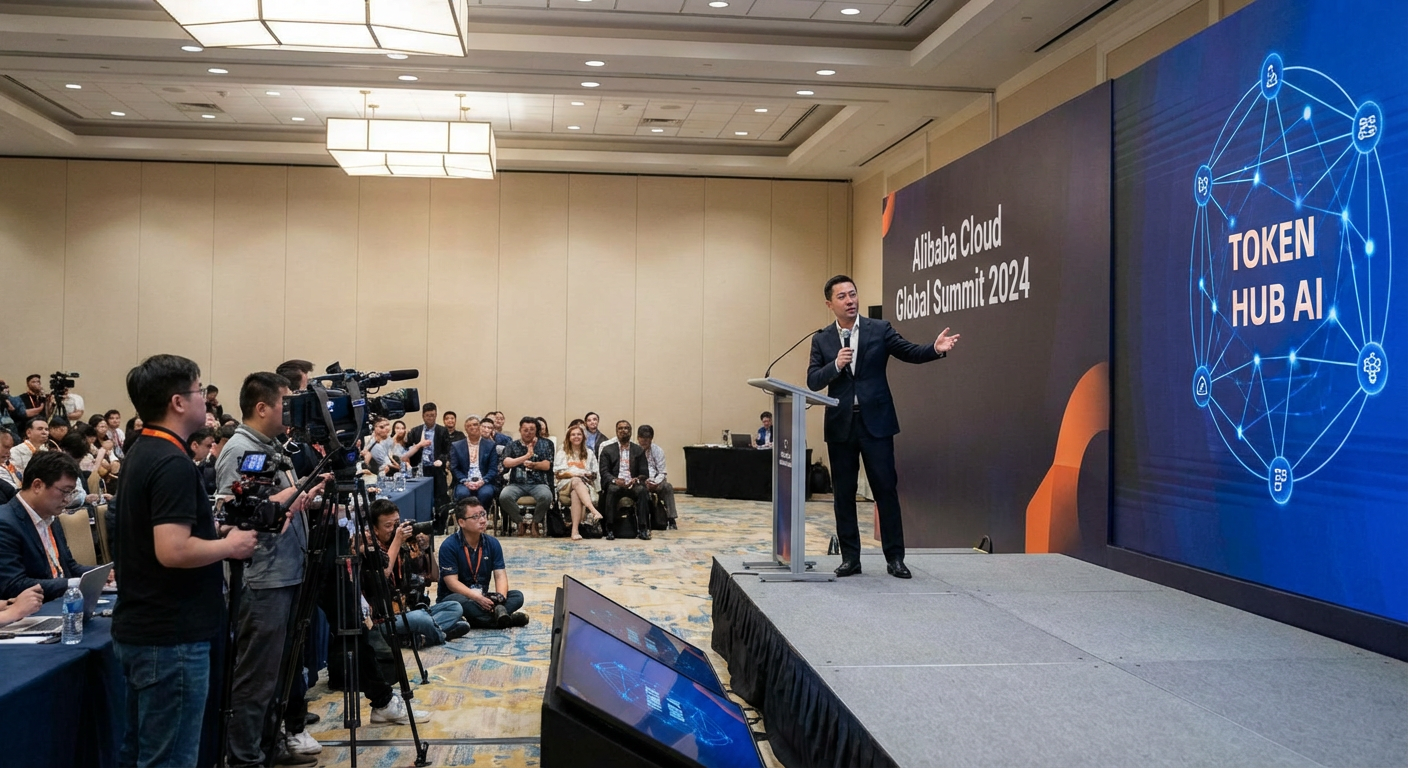
According to reports from Chinese local media published on March 16, Alibaba Group Holding has officially announced the formation of the "Alibaba Token Hub" (ATH) business group. The new division will be directly overseen by Group CEO Eddie Wu, signaling the high strategic priority placed on this initiative. The move is designed to streamline the company's approach to generative AI, covering everything from foundational model research to commercial applications.
The ATH business group consolidates several key existing departments, including the Tongyi Laboratory, the Model-as-a-Service (MaaS) business line, and the AI Innovation business unit. Notably, the report reveals the debut of the "Wukong" business unit, a previously undisclosed department. Positioned as an AI-native work platform for the enterprise sector (B-side), the Wukong unit aims to integrate large language model capabilities directly into corporate workflows.
This restructuring represents a strategic shift for Alibaba Group Holding to build its organization around the lifecycle of "Tokens"—specifically their creation, distribution, and application. By leveraging the Wukong unit, the company intends to deploy billions of AI Agents to replace traditional digital tools, utilizing its historical strength in business-to-business services to drive monetization in the "deep water" zone of enterprise software.
In the broader consumer technology sector, competition in AI hardware is also heating up alongside software developments. Dreame Technology recently launched its "Glow" AI ring, a wearable device focused on health monitoring. The product was released with a promotional price of RMB 1,499 (US$208), highlighting the trend of integrating artificial intelligence into varied consumer form factors beyond smartphones.
The establishment of the ATH group suggests that Alibaba is moving past the experimental phase of AI implementation toward a more aggressive commercialization strategy in 2026. As domestic tech giants race to prove the profitability of their AI investments, this reorganization could serve as a blueprint for how large platforms balance foundational research with the immediate need for enterprise-grade revenue solutions.
Related Coverage:
Alibaba Cloud Accelerates RMB 40 Billion Shanghai Computing Center with Xuanwu Chips
Alibaba, Tencent Forge Rare Alliance in $69M Bet on China’s Neuralink Challenger