
Alibaba's Qwen-Image-3.0, brings AI Image Generation to Enterprise Productivity
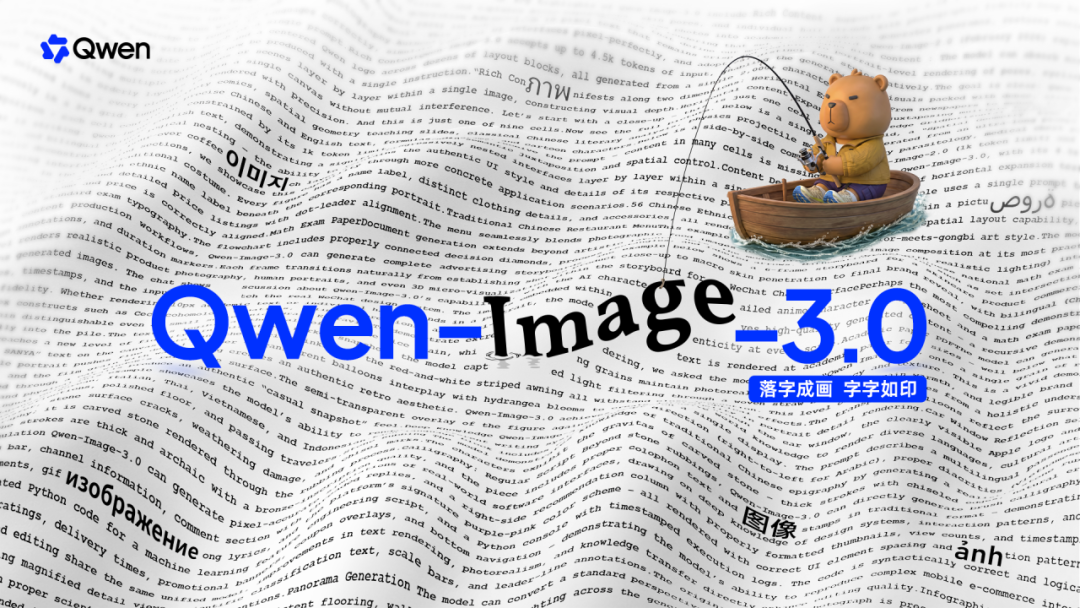
Alibaba has released Qwen-Image-3.0, the third-generation image generation foundation model in its Qwen series, positioning the technology not as a creative novelty but as a deployable commercial production tool — a strategic pivot that directly challenges incumbents across design, e-commerce, education, and media workflows.
The model went live on July 21, 2026, with API access opened for invited testing via Alibaba Cloud's Bailian platform and the Qianwen AI platform. Broader public access through Qwen Studio and the Qianwen App is imminent, signaling that Alibaba intends to compress the gap between model release and mass commercial adoption — a timeline pressure that rivals including Baidu and ByteDance have also been navigating aggressively in 2026.
Three Capability Pillars Redefine What "Useful" Means for Image AI
Qwen-Image-3.0 is built around a single design thesis that Alibaba's engineering team summarizes as "practical utility" — a deliberate departure from the prior generation's emphasis on visual fidelity and stylistic diversity.
The model delivers on three measurable dimensions:
Content density: Support for inputs up to 4,500 tokens enables single-pass generation of complex, multi-element layouts — newspaper spreads, storyboards, examination papers, and multi-panel academic diagrams incorporating mathematical formulae, geometric constructs, and logical derivation sequences. This directly addresses a persistent gap in existing diffusion-based models, which excel at photorealistic portraiture but degrade sharply when tasked with structured, information-dense layouts.
Micro-detail fidelity: Rendering precision down to 10-pixel small text, combined with fine-grain reproduction of skin texture and hair strands, brings the model into territory previously requiring post-production human correction. For e-commerce product imagery and film/animation storyboarding — both high-volume, cost-sensitive workflows — this reduces iteration cycles.
Knowledge breadth: Native rendering across 12 languages and more than 20 font families, combined with interface simulation capabilities spanning mainstream web, gaming, and live-streaming UI paradigms, positions Qwen-Image-3.0 as infrastructure for multinational content pipelines. Multilingual product posters and localized marketing assets — historically requiring separate design passes per market — can now be generated in a single workflow.
Enterprise Cost Logic Drives the Generational Shift
The commercial case for Qwen-Image-3.0 is grounded in production cost compression rather than capability showcasing. Alibaba's framing is explicit: the model is designed to reduce the per-unit cost of "readable and usable" commercial assets — a category that encompasses multilingual promotional materials, comic and film storyboard panels, and UI mockups for software development.
This framing is strategically significant. The global AI image generation market, dominated at the frontier by Stability AI, Midjourney, and OpenAI's image capabilities, has largely competed on aesthetic benchmarks. Alibaba is instead targeting the enterprise procurement conversation, where the relevant metric is not image quality per se but cost-per-deployable-asset — a distinction that resonates with the procurement priorities of China's vast e-commerce ecosystem, where platforms such as Taobao and JD.com process millions of product listing updates daily.
The prior two generations established a clear capability trajectory: Qwen-Image-1.0 prioritized accuracy; Qwen-Image-2.0 expanded to accuracy, multilingual support, layout consistency, aesthetics, and photorealism. The third generation's consolidation around practical utility suggests Alibaba's internal benchmarking has identified enterprise workflow integration — not benchmark leaderboard performance — as the primary competitive moat in the 2026 AI image market.
API Rollout Strategy Signals Monetization Acceleration
The decision to open API access through Alibaba Cloud's Bailian platform before broader consumer availability follows a pattern Alibaba has used effectively with its Qwen large language model series: seed enterprise developers first, generate integration case studies, then scale to consumer channels with demonstrated utility proof points.
Alibaba Cloud has been expanding its AI model-as-a-service revenue line aggressively through 2025 and into 2026, with Bailian serving as the primary commercial gateway for third-party API consumption. Qwen-Image-3.0's integration into this infrastructure suggests the company is treating image generation as a billable API service category, not merely a product feature.
The simultaneous announcement of free access via Qwen Studio and the Qianwen App indicates a dual-track strategy: monetize enterprise API consumption while building consumer-facing brand equity and training data feedback loops — a model that mirrors how Alibaba has scaled its language model ecosystem over the past 18 months.
Competitive Implications for China's AI Foundation Model Landscape
Qwen-Image-3.0 enters a domestic market where image generation capabilities have become a standard component of AI platform offerings. Baidu's ERNIE ecosystem, Tencent's Hunyuan model family, and a cohort of specialized startups including Kuaishou Technology's Kling have all made image and video generation central to their 2026 product roadmaps.
The differentiation Alibaba is staking with Qwen-Image-3.0 — structured content generation, multilingual rendering, and enterprise workflow integration — targets a segment of demand that aesthetic-first models have systematically underserved. Whether this positioning translates into API revenue at scale will depend on developer adoption velocity and Alibaba's ability to demonstrate measurable cost savings in pilot enterprise deployments over the coming quarters.
Related Coverage:
Alibaba's Qwen3.8 Joins a 2.4T Parameter Arms Race as China's AI Giants Surge in Unison