
Alibaba's Qwen Turns Siri Into a Gateway to China's App Ecosystem
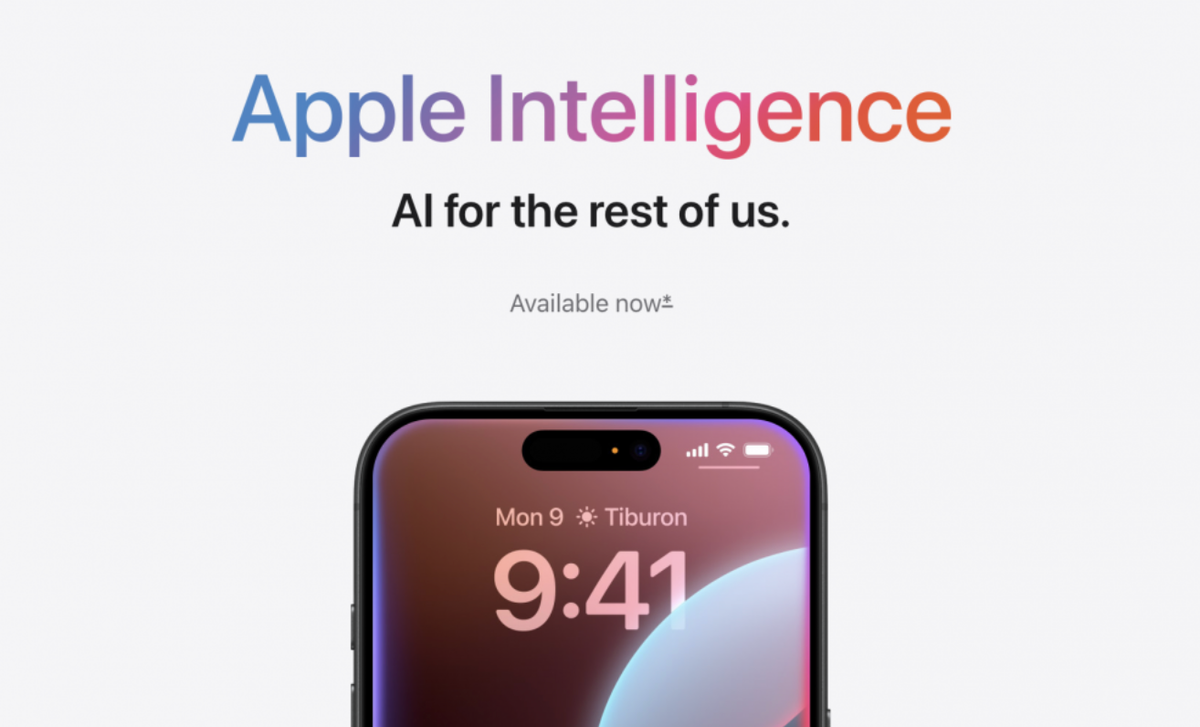
Apple's long-delayed AI rollout in mainland China enters developer beta via iOS 27.3, powered partly by Alibaba Group's Qwen large language model — but arrives into a market where domestic rivals have already normalized AI-driven smartphones.
The developer beta of Apple Intelligence opened to mainland China users this week, with a full commercial launch scheduled alongside iOS 27.3 in December 2026. The release marks the end of roughly a two-year absence of Apple's on-device AI suite from the world's largest smartphone market by volume, a gap that domestic manufacturers including Huawei Technologies, Xiaomi Corporation, Honor Device, OPPO, and vivo have aggressively filled with competing AI feature sets.
The timing matters. Apple is not introducing consumers to the concept of AI on a handset; it is entering a market where that education has already been completed — largely by its competitors.
Partnership With Qwen Defines China's Apple Intelligence Architecture
The China build of Apple Intelligence is not a straight port of its global counterpart. Apple has integrated Alibaba Group's Qwen model at multiple system layers, a partnership that shapes both the feature set and the user journey in ways that differ materially from other markets.
Qwen's visual understanding engine underpins the "Ask" function within Visual Intelligence, allowing users to point the rear camera at an object and receive contextual answers. The search pivot in Visual Intelligence defaults to Baidu image search, with optional routing to third-party apps that have enabled visual search capabilities — including Poizon, the sneaker and fashion resale platform.
Within Siri, complex queries — flight pricing, logistics tracking, travel planning — trigger a handoff to the Qwen app, which in turn connects to partner services including Taobao, SF Express, and Hellobike. The architecture positions Qwen less as a backend inference engine and more as an agentic relay layer sitting between Apple's native assistant and China's existing super-app ecosystem.
Writing tools follow a similar split: Apple's native system handles proofreading, reformatting, and summarization, while a "Qwen Compose" entry point handles open-ended content generation and image creation from natural language prompts.
First-Party Testing Surfaces Stability and Quality Gaps
Hands-on testing on an iPhone 16 Pro running the developer beta revealed several friction points that Apple will need to resolve before the December general availability window.
The Photos app's Clean Up eraser tool — one of three announced AI photo features alongside natural-language search and memory video generation — delivered inconsistent edge reconstruction. In a test removing a bicycle from a flower foreground, the subject was eliminated but artifact traces remained visible along petal boundaries. The Photos app also logged intermittent crashes during repeated use. Natural-language photo search and memory video generation entry points were not locatable in the current build.
Thermal performance under sustained AI workloads was notable: continuous use of on-device inference features produced measurable heat output from the iPhone 16 Pro chassis even at standard room temperature, a hardware constraint that becomes commercially relevant as Apple positions AI functionality as a purchase driver for its Pro lineup, which carries a retail premium.
Siri's improved contextual continuity — the ability to process mid-sentence corrections and retain conversation state — functioned as described. However, complex multi-step tasks required explicit app-switching to Qwen rather than autonomous cross-app execution, a limitation that separates the current implementation from the agentic capabilities Apple previewed at WWDC 2026. Those next-generation Siri features, including deeper personal context modeling and autonomous cross-application task execution, are not included in this release cycle.
Domestic Rivals Force Apple Into an Unfamiliar Defensive Position
The competitive calculus Apple faces in China in 2026 is structurally different from any prior product cycle. Huawei's Mate and Pura series, Xiaomi's MIX and flagship lines, Honor's Magic series, and OPPO's Find X and vivo's X-series have each iterated through multiple generations of AI features — including eraser tools, call and meeting summarization, cross-app agents, and real-time translation — over the preceding 24 months.
Consumer expectations have been calibrated not by Apple's roadmap but by the aggressive feature cadence of manufacturers who operate under fewer regulatory constraints and face stronger incentives to differentiate on software in a market where hardware specifications have largely converged. The result is that Apple's initial China feature set — write, erase, summarize, translate — reads as table-stakes to a segment of Chinese consumers that has already trialed comparable functionality on sub-RMB 3,000 (US$417) Android devices.
Apple's structural advantage remains its hardware-software integration and the brand premium it commands among urban, higher-income consumers in tier-one and tier-two cities. IDC data has consistently shown Apple holding a disproportionate share of the premium tier — handsets priced above RMB 6,000 (US$833) — even as its overall China market share has faced pressure from Huawei's re-entry into 5G-capable devices following its Kirin 9000S chipset debut in 2023.
The Qwen integration adds a dimension that neither validates nor undermines that position: it makes Apple Intelligence functional within China's regulatory and ecosystem environment, but it also introduces a dependency on a competitor's AI infrastructure and creates a user experience that diverges from Apple's globally unified platform narrative.
December Launch Window Sets Up a High-Stakes Holiday Cycle
The iOS 27.3 release date places Apple Intelligence's China debut squarely within the peak consumer electronics purchasing window ahead of the Lunar New Year cycle. For Apple's retail and channel partners in China, the timing creates a potential uplift narrative for iPhone 16 series sell-through and early positioning for the anticipated iPhone 17 lineup.
The more consequential question is whether the feature completeness at general availability in December will differ materially from the developer beta. The absence of natural-language photo search, memory video generation, and the WWDC 2026-announced next-generation Siri capabilities from the current build suggests the December release will itself be a staged rollout rather than a comprehensive deployment.
For investors tracking Apple's Services revenue trajectory in China — a market where the App Store, iCloud, and ancillary services contribute meaningfully to the segment — a credible AI differentiation story is prerequisite to defending the premium hardware ASP that sustains those attach rates. A feature set perceived as underwhelming relative to domestic alternatives risks accelerating the consideration gap that emerged when Huawei returned to market with competitive 5G hardware.
Apple has historically acted as the market educator in China, introducing interaction paradigms — Touch ID biometric authentication, AirPods wireless audio, Dynamic Island notification design — that domestic manufacturers subsequently adopted and distributed at scale across broader price tiers. In the AI smartphone cycle, that dynamic has inverted. The domestic ecosystem ran the consumer education program. Apple arrives as a late entrant into a market it once shaped.
Whether Apple Intelligence ultimately proves that late movers can outperform on execution quality — rather than on novelty — will be the defining product story for Apple in China across the next 12 months.
Related Coverage:
Apple Taps Alibaba and Baidu for China AI Rollout in iOS 27
Apple’s China Memory Push Collides With Washington’s Chip Strategy