
Beijing Galbot Joins China's Top Three Robotics Unicorns with $1.4B Valuation
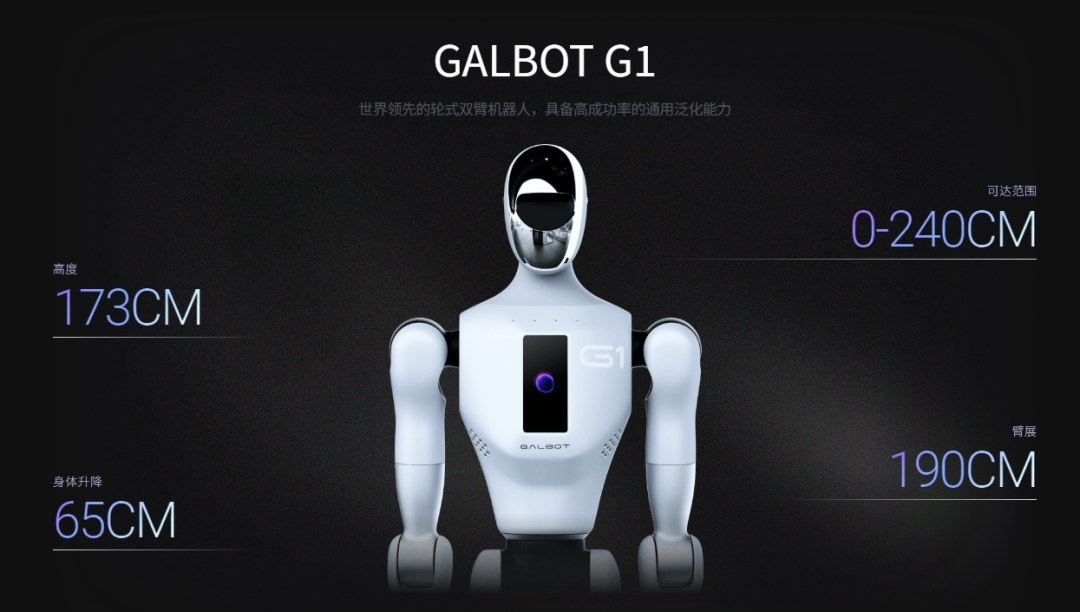
Beijing Galbot, a humanoid robotics startup with ties to Peking University, has seen its valuation surge past 10 billion yuan, cementing its position as a key player in China's increasingly competitive embodied intelligence sector.
The new valuation makes Galbot the third Chinese humanoid robotics firm to cross the 10 billion yuan threshold, placing it in the same league as rivals Agile Robots and Unitree Technology. The milestone is attributed to the company's significant fundraising and tangible progress in deploying its robots in real-world commercial settings.
This surge reflects growing investor confidence in companies that prioritize artificial intelligence and software for robot generalization, a strategic path that distinguishes Galbot from competitors focused primarily on hardware and locomotion. The firm's approach centers on developing a versatile AI “brain” to power its robots for a variety of tasks.
The company has successfully raised over RMB 2.4 billion yuan (approximately US$333 million) from a slate of high-profile investors, including Contemporary Amperex Technology Co. Ltd. and Meituan This strong backing signals industry support for its targeted commercialization strategy in the pharmacy, industrial, and retail sectors.
Strategic Backing From Industry Giants
Galbot's rapid ascent is underpinned by substantial financial support. On June 23, 2025, the company announced a new financing round of 1.1 billion yuan, led by battery giant CATL. Other investors included CATL Capital, SDIC-Innovation the Beijing Robotics Industry Fund, and GGV Capital.
Prior to this, Galbot secured a 500 million yuan strategic round in November 2024 and an angel round of over 700 million yuan in June 2024, pushing its valuation past US$1 billion. Food delivery and e-commerce giant Meituan was an early investor and remains Galbot's largest external shareholder, underscoring the tech giant’s broader investment strategy in robotics. CATL’s lead investment marks its first major foray into the embodied intelligence space.
An AI-First Approach to Robotics
Founded in May 2023, Beijing Galbot is led by a team combining academic research and industrial expertise. Co-founder and CTO Wang He holds a Ph.D. from Stanford University and is an assistant professor at Peking University’s Center on Frontiers of Computing. Chairman and co-founder Yao Tengzhou previously held a key role at ABB Group's robotics R&D center and has extensive experience in mass-producing smart hardware.
Positioning itself in the “software-first” camp of China’s robotics scene, Galbot has focused on developing a full-stack AI platform. The company's core technology utilizes a novel training paradigm, pre-training its models on billions of synthetic data points from simulations before fine-tuning them with real-world data. Its wheeled robot, the Galbot G1, was upgraded at the 2025 World Robot Conference with an NVIDIA Jetson Thor chip, the first such implementation in China.
Targeted Commercial Rollout
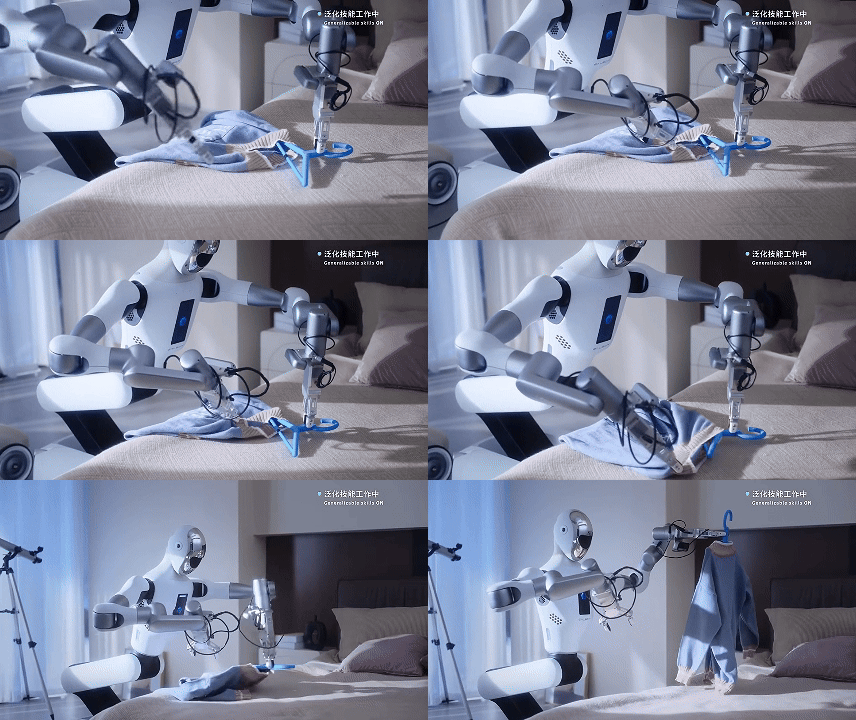
Unlike rivals pursuing multiple product lines, Galbot has focused on demonstrating commercial value for its G1 robot in three specific verticals.
In the medical sector, the company launched its "Smart Pharmacy Solution" in May 2025. The system uses the Galbot G1 to autonomously manage inventory, restock shelves, and fulfill orders 24/7. Galbot has secured orders from 100 pharmacy stores and has already deployed its robots in nearly ten outlets in Beijing.
For industrial applications, the company formed a joint venture with Bosch China in June 2025 to develop robots for high-precision manufacturing tasks like complex assembly and quality inspection. The Galbot G1 is also undergoing trials at automotive plants for clients including Mercedes-Benz and Zeekr.
In retail, Galbot launched the "Galbot Space Capsule" in August 2025—a fully autonomous pop-up store—and has initiated a "Ten Cities, Hundred Stores" plan to scale its presence.
A Crowded and Cautious Market
Beijing Galbot's progress comes as China’s humanoid robot market heats up, with startups generally divided between those emphasizing hardware-driven mobility, like Unitree and EngineAI, and those prioritizing AI-driven intelligence, like Galbot and Agile Robots.
While Galbot’s early commercial traction is notable, industry observers caution that many applications in the sector remain at the proof-of-concept stage. Claims of full-stack, in-house development across the industry are viewed with skepticism, and a definitive technological moat has yet to be established by any single company in the burgeoning field.