
BYD and CATL Race to Lock Up China's EV Charging Grid Before the Window Closes
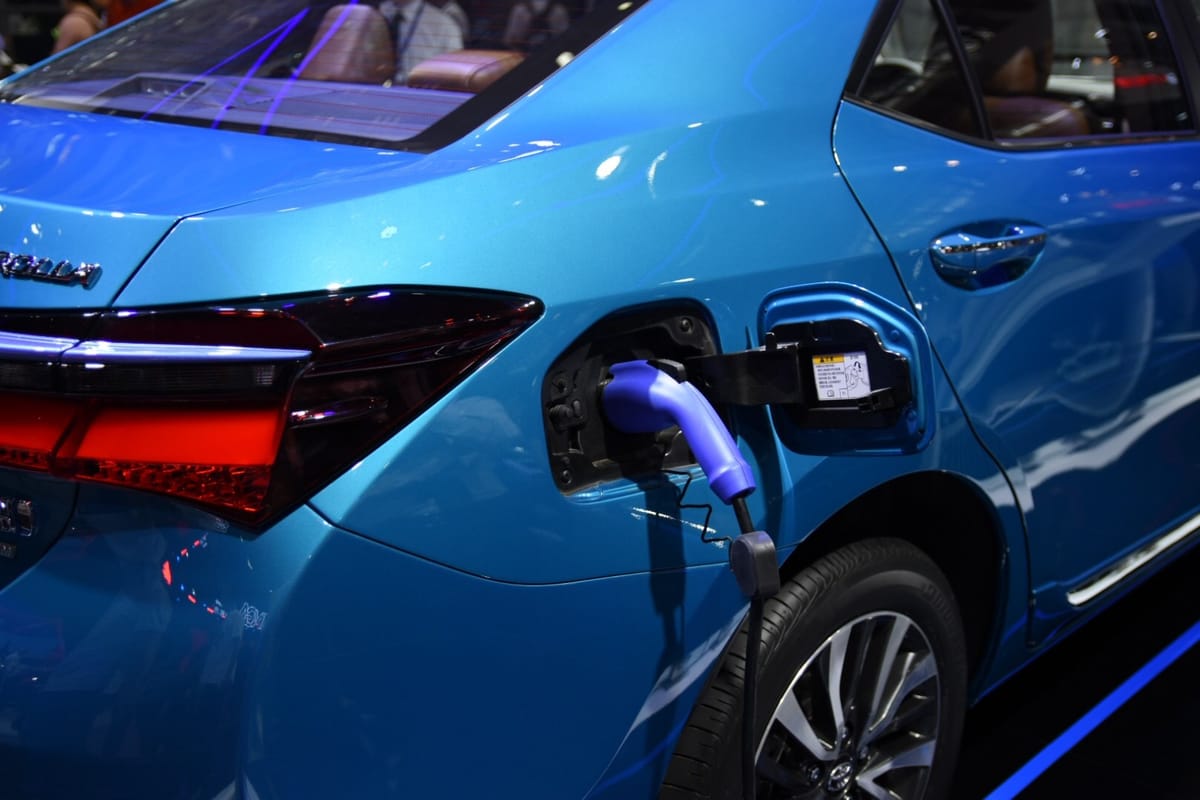
China's two largest new-energy vehicle and battery companies are spending aggressively to build rival charging and battery-swap networks, betting that whoever controls the energy infrastructure will dictate the next phase of EV market-share gains at the expense of internal-combustion holdouts.
BYD crossed 10,000 flash-charging stations on Aug. 28, 2026, with the milestone site opening in Shenzhen — a figure that stood at just 4,239 as recently as March 5, when the company unveiled its second-generation Blade Battery and flash-charging platform. Roughly 3,000 of those stations were added in July and August alone, a deployment tempo that implies BYD is on track to hit its year-end target of 20,000 sites if the pace holds. Separately, Contemporary Amperex Technology's (CATL) charging-infrastructure subsidiary Etime Energy Service is targeting 3,000 battery-swap stations nationwide by December, anchored by a "100-station single-city" rollout that debuted in Kunming and is set to expand to multiple additional cities.
The market read is straightforward: both companies have concluded that charging density is now a sales variable, not merely an amenity. A 4S dealership investor cited in Wall Street CN reporting noted that before a swap-capable version of a vehicle launched, sales forecasts were uncertain — yet within two months of launch, the swap variant captured the overwhelming majority of orders. The infrastructure race has moved from the balance sheet to the showroom floor.
Velocity Gap Exposes a Structural Bottleneck Driving Investment
The proximate catalyst for the current buildout surge is a widening mismatch between vehicle capability and grid readiness. As of end-July 2026, the national average output per public charging gun stood at 49.97 kilowatts — even as 800-volt platforms and high-rate batteries have proliferated across new model lines. A driver pulling the same EV into different public stations can experience charging speeds that differ by several multiples. That gap converts directly into a purchase-decision risk for the roughly 200 million combustion-engine vehicle owners China's EV makers still need to convert.
BYD's internal organization reflects the urgency. The company structured its buildout as a "one center, seven war zones, hundred-regiment campaign," completing the first 4,239 stations in three months by vertically integrating flash-charging piles, host hardware, energy storage, and control software. Construction engineering has been systematized: a Harbin cold-weather site that would normally require 50 days was completed in 28 using insulated tents and electric heating blankets; a Hefei site with poor sub-surface geology switched to prefabricated steel frames, compressing cycle time from weeks to days. Repeatable construction templates lower per-station capital intensity as the network scales — a meaningful unit-economics lever as BYD pushes toward 20,000 sites.
"Station-in-Station" Model Shifts BYD's Urban Strategy
Having built the national backbone, BYD is pivoting to urban densification through a capital-light "station-in-station" model. Of the 20,000-station target, 18,000 will be co-located within existing third-party facilities, with BYD supplying charging equipment and user traffic while the host provides land, electrical capacity, and day-to-day operations. Partners confirmed by BYD include Sinopec, PetroChina, Shell, and Teld.
The strategic logic is twofold. First, securing urban grid connections and physical footprints — not manufacturing equipment — has become the binding constraint; the company received tens of thousands of applications through its crowd-sourced "Dream Station" program in March alone, yet build velocity actually slowed as projects concentrated in core urban districts where electrical headroom and underground infrastructure are scarce. Second, the model embeds BYD's in-car interface and charging entitlements inside third-party operators' order flows, creating a soft lock on point-of-sale charging data even as the physical network remains open to other brands. As of end-August, non-BYD vehicles already accounted for nearly one-third of sessions at BYD flash-charging stations, and cumulative energy dispensed exceeded 210 million kWh within six months of the "Flash Charging China" open-network launch.
Etime Energy Pursues a "Stations First, Cars Second" Flywheel
Etime Energy's challenge is structurally different: unlike BYD, it has no proprietary vehicle fleet to seed initial utilization. Its stated strategy is explicitly "stations before cars" — build network density first, then use that coverage to persuade automakers to engineer swap compatibility into upcoming models. Early station siting follows urban heat-map demand data, with locations refined based on sales feedback from partner brands. Several automaker sales representatives told Wall Street CN that swap-station proximity has become a direct purchase trigger for some buyers.
The long-term target is three-minute access within high-density zones. As of April 2026, CATL disclosed at its Super Tech Day that its "Chocolate Swap" standard had secured cooperation agreements with 11 automakers, 18 passenger-vehicle brands, and 25 specific models. Each incremental compatible model simultaneously generates a battery-supply order for CATL and expands the addressable utilization base for existing swap stations — a compounding flywheel that links cell manufacturing revenue to downstream infrastructure economics.
The company's 2025 annual report noted that Chocolate Swap achieved profitability first in Chongqing, providing an early proof of concept. Etime's 2026 buildout plan encompasses approximately 4,000 "super swap combo stations" covering nearly 190 cities, alongside a "12 vertical, 11 horizontal" highway network. However, sources close to CATL acknowledge that highway stations face slower permitting timelines due to service-area slot constraints and regulatory approvals — a structural lag that BYD, with its larger existing vehicle base, is better positioned to absorb.
Unit Economics Remain Structurally Challenged Across the Industry
The financial architecture of public charging continues to pressure returns. China Charging Alliance monitoring data show public charger average utilization at approximately 6.2% in Q4 2025. As of end-July 2026, 18.584 million private charging guns had absorbed the bulk of routine daily charging demand, leaving public networks competing for a narrower commercial segment: long-haul drivers, ride-hailing fleets, and logistics operators — all of which are time-sensitive but highly concentrated in peak periods.
Holiday highway demand requires high-power equipment to handle compressed traffic surges; the same hardware sits largely idle on weekdays. Remote and extreme-climate stations — high-altitude routes, desert corridors, scenic area access roads — are strategically necessary for network completeness but structurally unlikely to recover costs from local charging volume alone. Industry participants acknowledge these locations are cross-subsidized by vehicle sales and brand-level user retention metrics rather than standalone station P&L.
Swap infrastructure carries heavier asset loads still: stations must maintain battery inventory for circulation, and insufficient compatible vehicle density leaves batteries depreciating in storage. The economics improve non-linearly with compatible model count, which is why CATL's 25-model cooperation pipeline is as much a financial engineering exercise as a technical one.
Roland Berger's EV Charging Index 2026, published in late July 2026, estimated global new public charging point additions at approximately 1.1 million in 2025 — slightly below prior-year levels — as mature markets pivot from network expansion toward utilization rates, fast-charging quality, and commercial sustainability. China remains in aggressive build mode, but the report's framing underscores an inflection point: at network scales of tens of thousands of stations, idle equipment and misjudged traffic assumptions are amplified proportionally.
First-Mover Advantage Hardens Into a Structural Moat
The defining feature of charging infrastructure competition — relative to vehicle product cycles — is the absence of a reset mechanism. A breakout vehicle model can reshuffle sales rankings within a product generation; a competitor cannot replicate core urban charging locations, contracted electrical capacity, or automaker model-integration agreements on a comparable timeline. China's Ministry of Industry and Information Technology 2026 Automotive Standardization Work Plan continues to advance chassis swap standard review and compatibility research, meaning the technical rulebook is still being written. The company that has already signed 25 models to a proprietary standard holds a negotiating position that worsens for latecomers with each additional model launch.
Nio completed its 100 millionth swap in February 2026, having built its highway network earlier than peers. Li Auto and Xpeng have each scaled proprietary supercharging networks into the thousands of stations, tracking their respective high-voltage model rollouts. The current round — BYD shifting from national backbone to urban densification, Etime moving from city clusters toward highway connectivity — represents the maturation of a competitive dynamic in which energy network strategy and vehicle product strategy have become inseparable planning inputs.
China Charging Alliance's July 2026 report on EV user charging behavior found that 95.4% of users prefer DC fast charging as their primary method, 66.85% favor stations with ancillary services, and 87% charge across multiple operators, using an average of six different networks. Users follow location, power output, price, and service quality — not brand loyalty. The implication for operators is that point-of-sale advantages (in-car navigation defaults, brand app integrations, membership incentives) matter as much as physical station count in capturing a structurally mobile user base.
CATL's stated ambition of 100,000 shared charging facilities remains a long-horizon target contingent on compatible vehicle penetration. BYD's 20,000-station year-end commitment is the more immediate test of whether the capital-intensity curve of urban densification can be managed at scale. Both companies are, in effect, making the same wager: that the cost of building the network now is lower than the cost of ceding the infrastructure layer to a competitor later.
Related Coverage:
BYD Brings Flash Charging to the Mass Market, Raising the Stakes in China's EV Price War
CATL’s Nvidia Moment: How China’s Battery Giant Is Trading Margins for Ecosystem Control