
ByteDance Explores Autonomous Driving Push, Led by Seed World Model Team
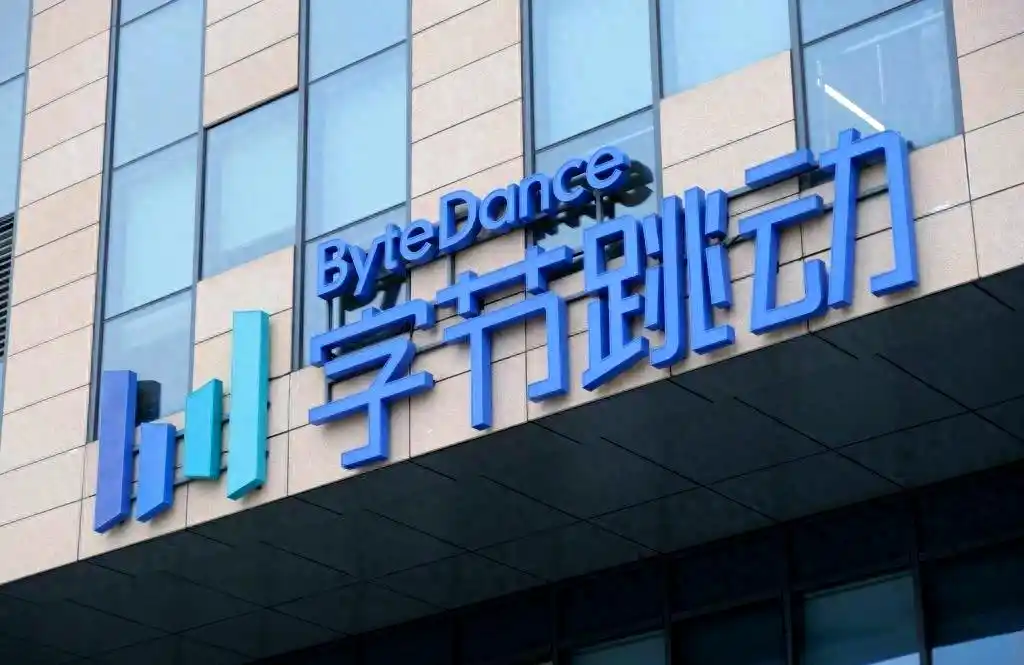
ByteDance is quietly moving into the autonomous driving sector, with its world model research team taking the lead on an early-stage initiative that could signal the Chinese tech giant's broader ambitions in physical AI, according to an exclusive report.
According to 36Kr's exclusive report published on July 13, 2026, ByteDance's autonomous driving effort is being spearheaded by the world model team under Zhou Chang within Seed, the company's flagship large model research division. Seed was established in 2023 and operates as a top-tier strategic unit within ByteDance. Zhou, who joined the company in 2024, has steadily expanded his oversight to encompass multimodal models, visual generation, world models, and most recently, the Seed Robotics team.
Sources familiar with the matter told 36Kr that ByteDance is particularly interested in unmanned logistics as a target application for autonomous driving, a business line that would fall under Volcengine, the company's cloud services brand, which has maintained a dedicated automotive vertical since 2020. The project is described as being in early preparatory stages, with ByteDance having already approached top talent from the assisted and autonomous driving industries. Some engineers are reportedly considering joining the initiative.
When contacted by 36Kr, ByteDance issued a cautious denial: "ByteDance conducts a great deal of early-stage research and exploration in frontier AI areas, including physical AI, but has no plans to develop an intelligent driving business."
The company's move into autonomous driving would be a natural extension of its existing automotive footprint. ByteDance has already entered the in-car cockpit space through its Doubao large model, and Volcengine is considered one of the most active players in automotive cockpit AI agents. In June 2026, Volcengine and SERES jointly launched a new automotive brand, AIVA, with a model featuring the "Doubao Cockpit" expected to reach market later this year. However, AIVA's driver-assistance system is currently provided by DeepRoute.ai — a gap that industry observers say prevents a fully integrated intelligent driving experience.
World models have emerged as a dominant technical paradigm in autonomous driving in 2026, with companies including Geely, Momenta, Xiaomi, and XPeng converging on the approach. This technical alignment gives ByteDance a credible entry point: its existing world model capabilities, while not purpose-built for driving, could be retrained for autonomous vehicle applications given sufficient traffic data and compute resources — both areas where ByteDance holds notable advantages.
Industry insiders quoted in the report suggest ByteDance's deeper motivation may lie beyond autonomous driving itself. Real-world driving data is widely seen as a critical input for training embodied intelligence systems, mirroring how Tesla's FSD road data has reportedly accelerated the development of its Optimus humanoid robot. For ByteDance, autonomous driving could serve as a data pipeline and proving ground for its broader embodied AI ambitions.
Should ByteDance formally enter the sector, its combination of financial resources, AI talent, and substantial GPU infrastructure could meaningfully disrupt a competitive landscape that has been consolidating after nearly a decade of intense rivalry among dedicated autonomous driving firms.
Related Coverage:
SERES Rebrands Unit as Saido, Expanding ByteDance's AI Footprint in EVs