
ByteDance Races to Build Second Phase of Brazil's Largest Data Center
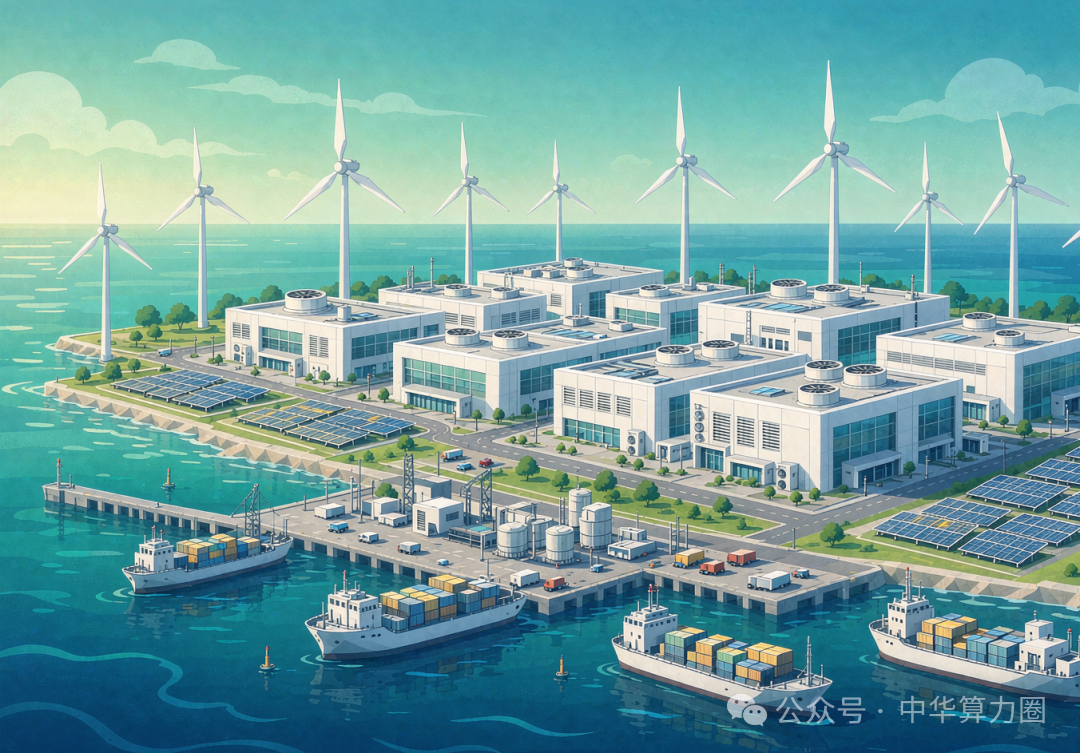
The Chinese tech giant is accelerating construction of what may become the world's most ambitious overseas computing complex, seeking a developer for a Phase 2 facility that could eclipse the already gigawatt-scale first phase at Pecém industrial port in Brazil's Ceará state.
ByteDance is actively soliciting developers for the second phase of its data center campus at the Pecém Industrial Port (Porto do Pecém) in Brazil's northeastern Ceará state, according to people familiar with the matter cited by Bloomberg. The scale of Phase 2, those sources indicate, may exceed the already under-construction Phase 1 — a signal that ByteDance's total infrastructure commitment in Brazil is trending toward, if not beyond, the $39 billion figure reported earlier in 2026. Simultaneously, the company is in preliminary talks to build a comparable, separately sited facility outside the port zone to serve Brazilian domestic clients — a structural distinction that reveals the deliberate legal architecture underpinning the entire project.
The dual-track expansion has drawn fresh attention from infrastructure investors and regional policy observers, who now view Pecém not as a single data center project but as an emerging hyperscale computing hub with strategic implications for Latin America's digital economy. ByteDance declined to comment on Bloomberg's reporting, consistent with its practice of advancing infrastructure investments without public announcements.
Phase 2 Search Signals ByteDance Is Accelerating Its Global Compute Buildout
The timing of ByteDance's developer search is significant. Phase 1, developed by data center operator Omnia, broke ground in early 2026 with an initial IT capacity of approximately 200 megawatts across 20 server halls, targeting initial operations in Q3 2027. That phase alone placed the Pecém campus among the largest data center projects globally by initial capacity — for reference, Equinix Inc.'s most recent São Paulo facility, SP6, carried a capital commitment of $114 million, with capacity measured in rack units rather than hundreds of megawatts.
If Phase 2 exceeds Phase 1 in scale, as sources suggest, the combined campus approaches or breaches the 1-gigawatt total IT capacity threshold previously reported as the project's end-state target. At that scale, Pecém would represent a full hyperscale cloud region in computing terms — not a back-end support facility, but a primary compute node capable of underpinning global-scale application infrastructure.
Omnia has separately signed a long-term wind power agreement with Brazilian renewable energy developer Casa dos Ventos valued at approximately $2 billion to supply the project's substantial electricity demands. The energy contract, locked in before Phase 2 developers have even been selected, suggests Omnia and ByteDance are treating the eventual gigawatt-scale buildout as an engineering certainty rather than a conditional roadmap.
Brazil's REDATA Framework Structures the Port-vs.-Domestic Split
The distinction between ByteDance's in-port and out-of-port projects is not incidental — it is the operational expression of a specific regulatory arbitrage. The Pecém Industrial Port operates as a Special Export Processing Zone (Zona de Processamento de Exportações, or ZPE), granting tax relief and expedited permitting to export-oriented enterprises.
In September 2026, Brazil codified this further through Law No. 15,504, formally establishing the Special Tax Regime for Data Center Services (REDATA), which provides import duty deferral and domestic procurement incentives to qualifying projects with demonstrable export orientation, with specific revenue-threshold conditions to be determined by implementing regulations. ByteDance's Phase 1 and the forthcoming Phase 2, both sited inside the port zone, fit precisely within REDATA's eligibility criteria.
This explains why ByteDance is structuring its local-market ambitions as a separate, out-of-port facility. Data processed inside the ZPE must serve export functions to qualify for preferential treatment — in practice, supporting TikTok's operations in markets outside Brazil. A domestic-facing node, handling Brazilian user data with lower-latency requirements and local compliance obligations under Brazil's General Data Protection Law (Lei Geral de Proteção de Dados, LGPD), requires a different legal and operational footprint. The resulting architecture — a gigawatt-class export-oriented campus paired with an independent local services node — allows ByteDance to optimize the cost structure of each workload type against the most favorable available regulatory environment.
Water Permits and Indigenous Consultations Complicate the Scale Narrative
The ambition of the Pecém buildout collides with material operational and social constraints that the investment figures alone do not capture.
The municipality of Caucaia, where the campus is located, has declared water emergency conditions in 16 of the past 21 years. Data center cooling is water-intensive, and the gap between Omnia's public communications and regulatory filings has attracted scrutiny. Omnia has stated to media that its closed-loop cooling system requires less than 30 cubic meters of water per day at peak demand, and does not compete with local water supply. However, investigative outlet Intercept Brasil reported that the Ceará state water authority ultimately authorized daily water extraction of 144,000 liters — approximately 7.3 times the 19,700 liters per day cited in the initial permit application, an increase of roughly 630%. The two figures describe different things — engineering design estimates versus regulatory authorization ceilings — but the disparity remains a focal point of local contestation.
The project also faces unresolved procedural challenges from the Anacé indigenous community regarding consultation rights, an obligation under both Brazilian law and international frameworks that has delayed or complicated comparable infrastructure projects elsewhere in the country.
Ceará state authorities have expressed consistent support for the investment, and Omnia has confirmed Phase 1 construction remains on schedule for initial 2027 operations. But the environmental and community tensions introduce execution risk that investors evaluating ByteDance's offshore infrastructure buildout should not discount solely on the basis of government endorsements.
In 2026, Brazilian regulators also fined ByteDance over the handling of minors' data on TikTok — a reminder that LGPD enforcement is active, and that a facility explicitly designed to process data flows linked to Brazilian users, even those destined for export, operates under sustained regulatory scrutiny. TikTok has stated its facilities serve "only the TikTok application" and comply with LGPD and global security standards.
Pecém Reshapes Latin America's Data Center Competitive Map
Brazil is already Latin America's largest data center market, with the Greater São Paulo metropolitan area hosting the region's most mature colocation cluster. The hyperscale investments being made by global operators such as Equinix Inc. and Digital Realty Trust Inc. in São Paulo and Rio de Janeiro are primarily driven by enterprise colocation and interconnection demand.
ByteDance's Pecém strategy is structurally distinct: it is self-demand-driven, anchored in a tax-advantaged zone, powered by contracted renewables, and designed to function as proprietary global infrastructure rather than third-party colocation. The difference between renting capacity and building a sovereign compute base is the strategic fault line that separates ByteDance's approach from that of most of its peers.
Chile and Argentina are actively competing for similar investments with their own incentive frameworks, but Pecém's combination of deep-water port access for equipment imports, abundant northeastern Brazilian wind and solar resources, and Brazil's newly enacted REDATA regime creates a differentiated value proposition that rivals in the region will find difficult to replicate on equivalent timelines.
The pace at which ByteDance selects a Phase 2 developer, the operational ramp of Phase 1 in 2027, and the regulatory certainty of REDATA's implementing guidelines will collectively determine whether Brazil consolidates its position as the primary destination for the current wave of global compute infrastructure capital — or whether execution friction redirects future allocations elsewhere.
In the technology industry, data center siting decisions are more reliable indicators of long-term strategic intent than product announcements. ByteDance has made no public statement on Pecém. But the land is broken, the wind contracts are signed, and the developer search for Phase 2 is underway. The $39 billion, if fully deployed, buys ByteDance something more durable than server capacity: a cost-optimized, renewables-backed, export-regime-sheltered compute engine for the second half of its global expansion — one whose ultimate performance will depend as much on Brazilian water governance and indigenous consultation processes as on any engineering specification.
Related Coverage:
ByteDance's Seedance Video Model Hits 50% Overseas Revenue Share as Developer Adoption Accelerates
ByteDance's PICO Space Pro to Launch Dec.12 With World Model
https://chinabizinsider.com/bytedances-pico-space-pro-to-launch-dec-12-with-world-model/