
Cao Cao Mobility Taps Satellite Network to Bolster Robotaxi Ambitions
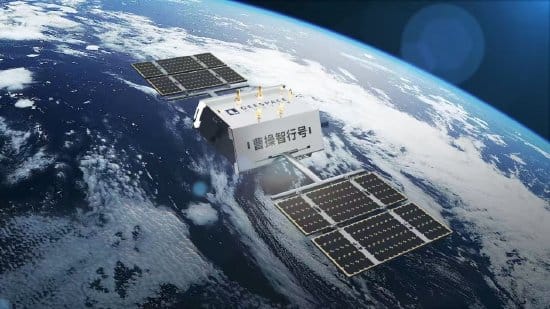
Cao Cao Mobility is turning to space to solve a critical terrestrial problem, leveraging satellite technology to ensure the safety and reliability of its autonomous vehicles in a bid to gain an edge in China’s fiercely competitive robotaxi market.
The Geely-backed ride-hailing company announced that the "Cao Cao Zhixing" satellite was successfully launched into orbit on September 24. This dedicated satellite will provide technical support for Cao Cao Zhixing, the company's autonomous driving platform, by creating an integrated space-to-ground network for its robotaxi fleet.
The initiative aims to directly address one of the most significant challenges hindering the mass adoption of autonomous driving: the risk of vehicles losing communication and positioning signals in urban canyons, underpasses, or during severe weather. By ensuring constant connectivity, the company plans to mitigate a core safety concern and pave the way for large-scale commercial operations.
This differentiation strategy has already caught the attention of investors. In July, following the announcement of a strategic partnership with the satellite's operator, Geely-affiliated Spacecom, Cao Cao Mobility's stock price rose 4.56% the next day, reflecting market confidence in its approach.
Addressing a Critical Safety Pain Point
Despite rapid advancements in autonomous vehicle technology, inconsistent GPS signals and intermittent network connections remain major operational hurdles. These "signal blind spots" pose a significant risk, potentially disrupting a vehicle's ability to navigate safely and communicate with a central command center, a crucial function for remote oversight and intervention.
Under its strategic plan, Cao Cao Mobility's future robotaxi fleet will come standard-equipped with satellite service applications. This is designed to eliminate the "out of contact" risk, providing a robust solution to a persistent industry-wide safety challenge and building a foundation for scalable, reliable service.
Enhancing Reliability and Precision
The integration of satellite technology is expected to deliver two key advantages. First, by equipping vehicles with satellite communication capabilities, the fleet can maintain a stable link to the control center even when ground-based 5G networks are weak or unavailable. This provides a critical layer of redundancy for remote monitoring, dispatch, and emergency response.
Second, the system fuses satellite signals with data from ground-based reference stations and onboard high-precision sensors to achieve centimeter-level positioning accuracy. According to the company, this capability remains stable and reliable even in adverse conditions such as heavy rain or snow, ensuring vehicles can make precise decisions in complex environments.
Accelerating Commercialization
The ultimate goal of this high-tech integration is to fast-track commercial deployment. Cao Cao Mobility officially launched its Cao Cao Zhixing autonomous driving platform in February, with pilot robotaxi operations already underway in the cities of Suzhou and Hangzhou.
To further accelerate its rollout, the company plans to introduce a purpose-built L4 robotaxi model by the end of 2026. This custom vehicle will feature pre-installed autonomous driving hardware and software and will be optimized for continuous operation and a lower total cost of ownership (TCO).
Analysts suggest that Cao Cao Mobility's three-pronged strategy—combining custom-designed vehicles, operational automation, and a satellite-backed safety system—could establish a significant cost and safety advantage as the robotaxi industry moves toward mass-market adoption.