
Xiaomi Confirms 2027 European EV Entry With Showroom-First Strategy
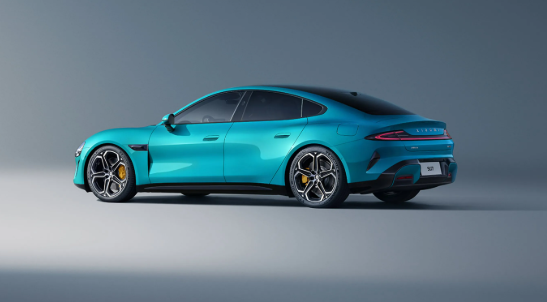
Xiaomi Corp. is moving ahead with plans to enter Europe’s competitive electric vehicle market by 2027, confirming it will initially focus on building a network of showrooms to showcase its cars and smart device ecosystem before considering local production as part of its long-term strategy.
A top executive has now offered the most detailed timeline for the Chinese technology giant's automotive expansion into the region. Xiaomi Vice President Xu Fei confirmed that the company began on-the-ground research in Europe in June 2025 to prepare its sales network and identify partners, following an August 2025 announcement by President Lu Weibing that set the 2027 launch target.
The company’s initial market entry strategy will prioritize brand and product experience, with plans to open showrooms where consumers can test drive its vehicles and interact with its broader ecosystem. While a European factory is not an immediate priority, Xu stated it is an inevitable step if Xiaomi is to achieve its goal of becoming one of the world's top-five automakers.
Xiaomi's planned entry will intensify competition in a crowded market. The company will face not only established European brands but also Chinese peers such as BYD Co. and Xpeng Inc., which have already established a foothold in the region.
Showrooms to Lead, Production a Long-Term Goal
Xiaomi intends to replicate its successful Chinese retail model in Europe, focusing on an immersive user experience. According to Xu, these showrooms will allow potential customers to do more than just test drive the vehicles; they will provide a deep dive into the company’s integrated ecosystem, which spans from smartphones to smart home appliances.
"Users need to experience the car, not just test drive it... They also need to understand the whole ecosystem," Xu said in an interview with CNBC.
Addressing investor questions about its production footprint, Xu clarified that establishing a manufacturing facility in Europe would not be the "first step" of its automotive business in the region. However, she affirmed it is integral to the company's long-term global ambitions.
"The logic is simple. We aim to become a top-five player in 15 to 20 years. If you want to be that, you definitely must have your own factory here (in Europe), right?" she explained.
Proven Models, Cautious Rollout
For its European product lineup, Xiaomi plans to leverage its existing vehicle portfolio rather than developing entirely new models for the market. The company, which entered the EV sector in 2024 with the launch of its SU7 sedan followed by the YU7 SUV, has since delivered over 300,000 vehicles. Xu did not specify which models would be introduced in Europe.
In response to observations that Xiaomi’s pace is slower than that of its Chinese rivals already in Europe, Xu defended the company’s deliberate approach. She emphasized that Xiaomi requires adequate preparation time to ensure its products are "reliable enough" and meet a "very high standard" for European consumers.
"When we enter the market, we are very focused. It's not just some random Chinese product coming to the European market," Xu added. "It's a product to offer the best user experience for the European user."