
Advanced Driving Systems Become Kingmaker in China’s Crowded EV Market
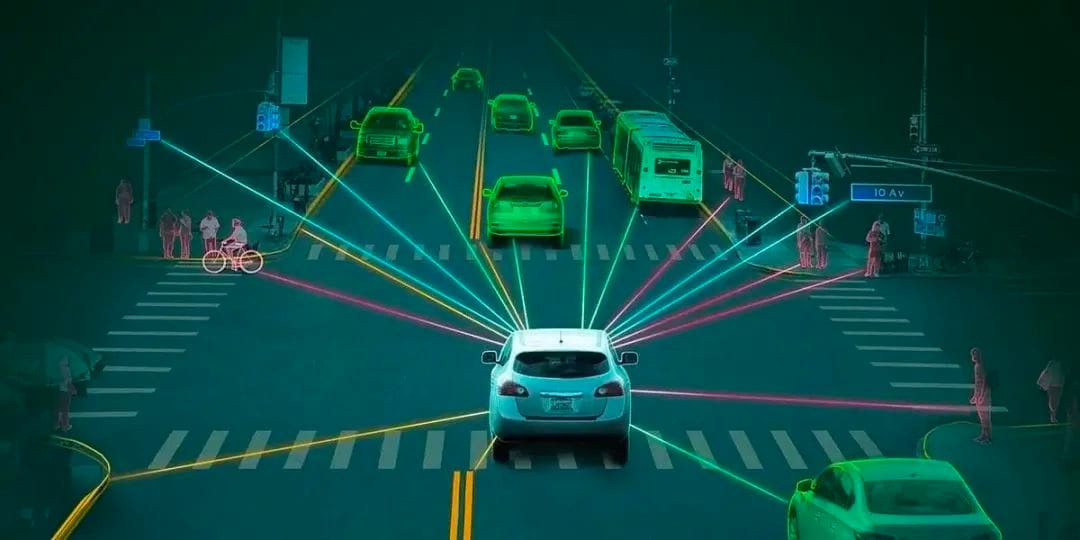
A fundamental shift is underway in China’s electric vehicle market, with advanced driver-assistance systems (ADAS) supplanting range and price as the new primary engine for sales. This pivot towards “intelligence” is rapidly reshaping consumer preferences and creating a new hierarchy of winners and losers in the world’s largest auto market.
The trend has been starkly visible in recent sales figures. In September, new models heavily marketed for their autonomous driving capabilities saw explosive demand. The new-generation IM LS6 secured 10,000 firm orders just 27 minutes after its launch, while Audi’s E5 Sportback achieved the same milestone within 30 minutes. Meanwhile, brands under the Huawei-led Hozon Auto alliance, such as Avatr and AITO, saw new models rack up tens of thousands of orders within an hour of release.
This dynamic extends beyond new launches to sustained market performance. The AITO M9 has dominated China’s premium segment, priced above 500,000 yuan (about $69,000), for 18 consecutive months, with cumulative deliveries exceeding 240,000 units. In August, models from established players like Chery Automobile, Dongfeng Nissan Passenger Vehicle Company, and GAC Toyota Motor each approached or surpassed 10,000 monthly deliveries after integrating sophisticated ADAS features.
This reordering of the competitive landscape is driven by maturing battery technology that has neutralized range anxiety, coupled with intense price wars that have eroded margins. As the initial appeal of electrification wanes, automakers are discovering that a vehicle's intelligence—specifically its ability to navigate complex urban environments autonomously—is becoming the new battleground for market share.
From Range to Intelligence: A Consumer Shift
For the past five years, the conversation around EVs in China was dominated by three questions: price, range, and charging availability. Today, as battery advancements make ranges of over 600 kilometers commonplace and charging infrastructure expands, consumer focus has shifted from “Will the battery last?” to “How smart is the car?”
Data confirms this evolution in buyer priorities. A report from J.D. Power shows the weighting of “intelligent driving features” in Chinese consumers’ purchasing decisions surged from 12% in 2020 to 35% in 2023. By 2024, that figure had climbed to nearly 40%, according to research from Yiche. The sentiment is increasingly echoed by car owners, many of whom report that after experiencing a capable city-level Navigate on Autopilot (NOA) function, they find it difficult to return to traditional driving.
The tangible benefits of ADAS in navigating congested city traffic, complex interchanges, and tight parking spaces are creating a powerful new sales pitch. Automakers are responding by making urban driving demonstrations a centerpiece of new vehicle launches and test drives, recognizing that a seamless autonomous experience is a potent tool for closing sales.
Huawei, Momenta Powering a Wave of Winners
Behind many of this year’s breakout models are powerful ADAS suppliers that provide the core technology. Two firms have emerged as key enablers of this trend: Huawei Technologies and Momenta.
Huawei’s Qiankun ADAS solution is the force behind the Hozon Auto alliance, which includes successful brands like AITO, Luxeed, Stelato, and Avatr. The system, now installed in over one million vehicles across 28 models, has logged over 5 billion kilometers of assisted driving. Its latest ADS 4.0 platform, built on a "World model + World behavior model" architecture, enhances the system's ability to handle unexpected and complex road scenarios, strengthening its appeal to consumers.
Momenta has become the go-to partner for a broad coalition of traditional domestic, joint-venture, and global automakers. Its client list includes SAIC Motor’s IM Motors brand, BYD Company Limited’s premium lines, along with GAC, Chery, GAC Toyota, Dongfeng Nissan, Volkswagen, Audi, and General Motors. The sales surge of models like the IM LS6, Chery Fengyun A9L, and Dongfeng Nissan N7 is directly linked to their adoption of these advanced systems.
The Widening Gap for Laggards
Conversely, automakers that are slow to integrate cutting-edge ADAS are beginning to show signs of strain. While the refreshed Tesla Model 3 maintains stable sales, it is reportedly losing some of its appeal among younger, tech-focused buyers in China’s top-tier cities. These consumers are increasingly opting for domestic competitors that offer more comprehensive, all-scenario autonomous driving features at a similar price point.
The trend is also impacting the budget segment. Several A-segment EV models that gained traction in the first half of 2024 based on a simple "long range and low price" formula saw their sales momentum cool in August. As consumer priorities shift from basic electrification to intelligent features, the absence of high-level ADAS is becoming a significant sales impediment.
The 'Democratization' of Smart Driving
The industry is now entering a new phase of "ADAS democratization," with 2025 widely seen as a pivotal year. Leading Chinese automakers like BYD, Geely Automobile, and Changan Automobile are aggressively pushing ADAS capabilities into their mass-market lineups, with some features appearing in cars priced as low as 70,000 yuan.
Market penetration is accelerating rapidly. In the first half of 2025, the adoption rate of NOA-type advanced functions reached nearly 19%, and is on track to exceed 20% by year-end, according to industry data. Among new EVs priced above 200,000 yuan, ADAS penetration already exceeds 35%. This trend is underpinned by what Momenta CEO Cao Xudong calls a "Moore's Law for ADAS," predicting that hardware costs for city NOA could fall below 5,000 yuan by early 2026.
For automakers, the rules of competition have been rewritten. The first half of the EV race was about electrification—a contest of battery efficiency and charging networks. The second half is about intelligence, where the user experience delivered by a car's autonomous brain will be the ultimate differentiator and the new competitive moat.