
Chery Caps 21-Year IPO Quest With $1.2 Billion Debut, High-End EV Push Awaits
Chery Automobile Co., Ltd., a stalwart of China’s traditional auto industry, has finally completed a two-decade journey to the public market, raising HK9.14billion(US1.17 billion) in a Hong Kong debut that highlights investor appetite for its stable legacy business but leaves questions about its future in the high-end electric vehicle race.
The state-owned automaker’s shares began trading on September 25 after pricing at the top of their marketed range of HK$30.75. The offering marks the largest initial public offering by a car manufacturer in Hong Kong this year, a significant milestone for a company that first attempted to list in 2004.
At market close, Chery shares rose 3.8% to HK$31.92, valuing the company at HK$184.1 billion. The automaker’s market capitalization now slightly exceeds that of XPeng (HK$164.8 billion), while remaining just below Geely (HK$186.6 billion) and Li Auto (HK$205.9 billion).
For investors, the long-awaited listing presents a bet on a “hybrid” strategy: a legacy giant leveraging its profitable gasoline car business to fund a belated but aggressive push into the electric era. While its established operations offer a cushion against market volatility, the company’s success will ultimately be judged by its ability to compete in China’s cutthroat premium EV segment.
A 21-Year Marathon to Market
Chery's path to an IPO was a protracted 21-year marathon marked by at least six failed attempts. The company, founded in 1997, was long seen as an "overdue" candidate for a public listing compared to domestic peers like BYD Co., Geely, and Great Wall Motor Co., which went public years earlier.
The numerous setbacks stemmed from a range of historical issues. An early plan was shelved in 2004 due to disputes over equity allocation with SAIC Motor Corp., from which Chery had obtained its initial production license. Subsequent attempts were derailed by the 2008 global financial crisis, unresolved related-party transactions in 2011, and a collapsed reverse-merger plan in 2016. More recently, complex ownership structures and funding challenges related to its mixed-ownership reform in 2019 and 2022 further delayed its ambitions.
The breakthrough came in January 2025, when Chery completed a restructuring that streamlined its convoluted shareholding arrangement. This corporate overhaul, combined with a period of rapid financial growth, finally paved the way for its successful debut.
A Hybrid Growth Engine
Chery’s appeal to investors is underpinned by its robust financial performance and its dual-track strategy of balancing a profitable internal combustion engine (ICE) business with a growing presence in new energy vehicles (NEVs). The company’s adjusted net profit surged from RMB 5.8 billion yuan (US$805 million) in 2022 to RMB 10.44 billion in 2023, and further to RMB 16.35 billion in 2024. This momentum continued into 2025, with first-quarter adjusted net profit reaching RMB 4.657 billion.
This financial strength is largely sustained by its legacy ICE models, which remain the company’s bedrock. In the first quarter of 2025, its gasoline car business generated RMB 42.97 billion in revenue. During the same period, revenue from NEVs reached RMB 18.665 billion, demonstrating a steady increase in their contribution.
This "hybrid" model provides Chery with a more stable foundation and "safety margin" than pure-play EV startups like Xpeng and Leapmotor International Ltd., allowing it to fund its EV transition while weathering market fluctuations. The consistent cash flow from its ICE division provides a crucial buffer in the capital-intensive auto industry.
The High-End EV Challenge
Despite its overall strength, Chery faces a significant hurdle in the premium NEV market, a segment crucial for higher margins and brand valuation. The company’s NEV penetration rate stood at just 22.41% in 2024, lagging behind competitors like Geely, which saw NEVs account for over 50% of its sales in the first eight months of 2025.
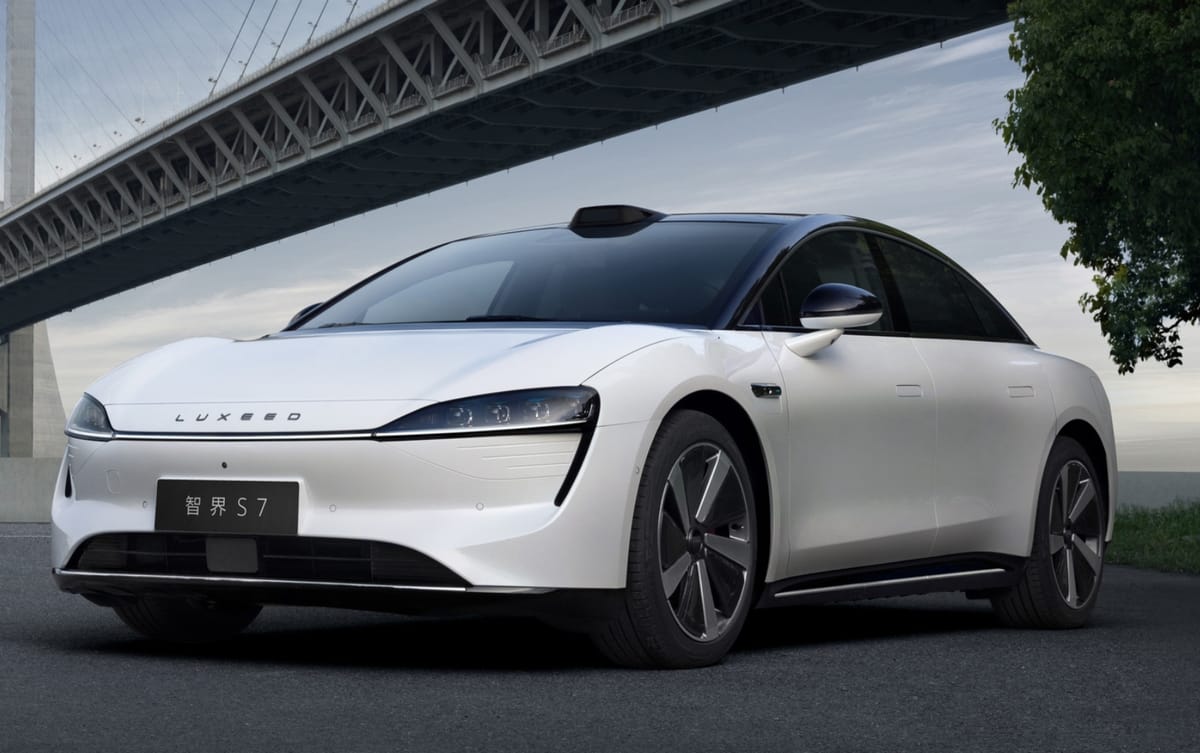
Chery’s struggle is most apparent in the high-end segment. Combined sales for its two premium Luxeed models, the S7 sedan and R7 SUV developed with Huawei, totaled less than 2,000 units in August. The brand’s slow start, hampered by initial production bottlenecks and a conservative strategy, caused it to lose first-mover advantage in a rapidly evolving market.
This underperformance in the premium space remains Chery’s primary vulnerability. While its broad portfolio includes brands like Star.Exeed and iCAR, only one NEV model, the Fengyun A9L, surpassed 10,000 sales in August, indicating a gap in its ability to produce high-volume, high-margin electric bestsellers.
Charting an Electric Future
With its IPO proceeds, Chery plans to aggressively address its weaknesses. The company has earmarked funds to expand its product matrix, enhance technological capabilities, and strengthen its global presence. Chairman Yin Tongyue has publicly stated a goal for Chery to become a "top three, striving for top two" player in China’s NEV market.
Upcoming product launches are central to this ambition. The Jietu Zongheng G700, a new SUV model, has already garnered 20,000 pre-orders within seven hours of its debut. Furthermore, a new Luxeed MPV is under development, aimed squarely at shoring up Chery’s position in the premium electric segment.
For Chery, the successful IPO is not a finish line but a new starting point. The ultimate test will be whether its forthcoming models can deliver breakthrough competitiveness, allowing the company to shed its "stable but slow" image and carve out a winning position in the next phase of the automotive industry’s electric transformation.