
China Advances Invasive Brain-Computer Interface With 3D Control Capability
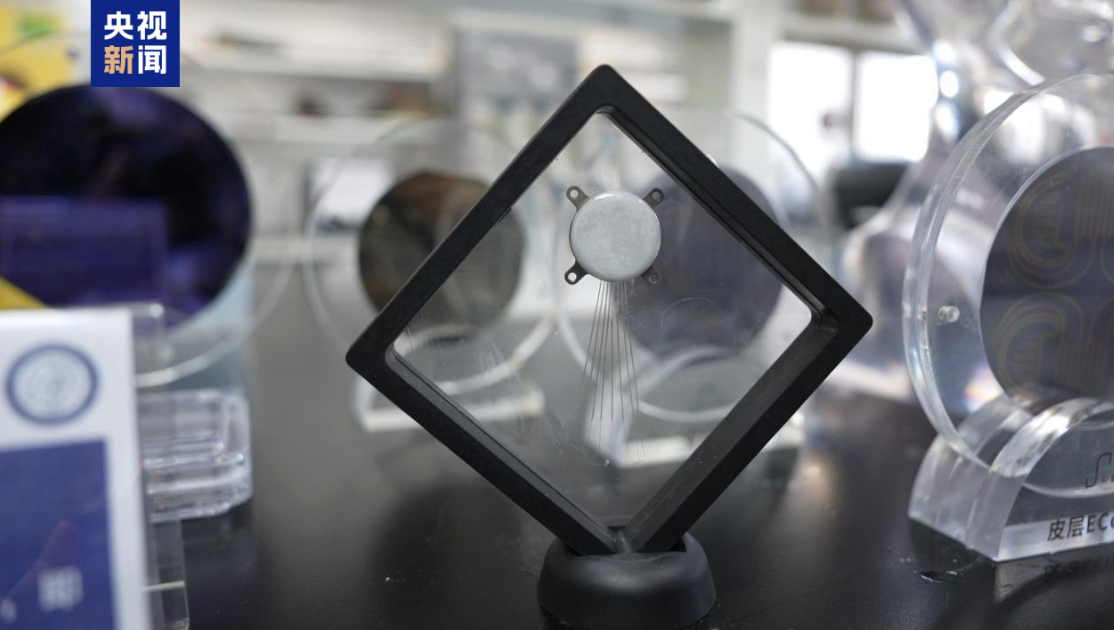
Chinese researchers have achieved a breakthrough in invasive brain-computer interface technology, enabling a paralyzed patient to control devices in three-dimensional physical space through thought alone, marking a significant advance from previous two-dimensional screen-based controls.
The Center for Excellence in Brain Science and Intelligence Technology of the Chinese Academy of Sciences announced the progress in its second clinical trial of invasive brain-computer interfaces on Tuesday. The development represents a major technical leap in neural interface applications, expanding capabilities from cursor control to physical world interaction.
The trial participant, a middle-aged male patient who became quadriplegic following a spinal cord injury from a fall in 2022, received the brain-computer interface implant in June 2025. After more than a year of rehabilitation showed no improvement, with only head and neck mobility remaining, he underwent the experimental procedure.
Within two to three weeks of training, the patient achieved control of computer cursors and tablet devices through thought alone, matching the performance level of the team's first clinical trial participant. The research team subsequently introduced additional technologies to extend control capabilities from two-dimensional screens to three-dimensional physical environments.
The system now enables users to operate smartphones and computers at speeds approaching normal human interaction and provides preliminary control of embodied intelligent robots, according to the research center.
The invasive interface comprises two components: a front-end sensor and a back-end processor. The sensor, with a thickness approximately one-hundredth of a human hair, embeds 5 to 8 millimeters into the brain. The processor is implanted in the skull after thinning the bone by 3 to 5 millimeters, making the overall procedure minimally invasive.
The front-end sensor functions as a neural connection to the external world, uploading and downloading information, while the back-end processor converts weak neural activity into digital signals that machines can interpret, enabling thought-based device control.
The system's key features include continuous, stable, and low-latency precision control. The research team developed high-compression, high-fidelity neural data compression technology, combining spike frequency band power adjacent pulse intervals with spike pulse counting methods. This hybrid decoding model extracts useful information efficiently even in noisy neural signal environments, improving brain control performance by 15% to 20%.
The team overcame critical technical challenges including cross-day stable neural population alignment and online recalibration, allowing the system to adjust decoding parameters in real-time during daily use. End-to-end latency from signal acquisition to command execution has been compressed to under 100 milliseconds, below human physiological delay, creating near-synchronous thought-to-action control.
Pu Muming, academician of the Chinese Academy of Sciences and academic director of the center, said confirming electrode safety, long-term stability in the brain, and stable signal recording and decoding represents a necessary step toward practical medical applications of invasive brain-computer interfaces. Future applications may include decoding language information from the brain, he noted.
The advancement positions China's brain-computer interface research alongside global efforts in the emerging field, with potential applications for patients with paralysis, limb loss, and other mobility impairments. The technology's progression from laboratory settings to clinical trials signals growing momentum in neural interface development for medical rehabilitation purposes.