
China’s First Approved Level 3 EVs Restricted From Changing Lanes in Pilot Rollout
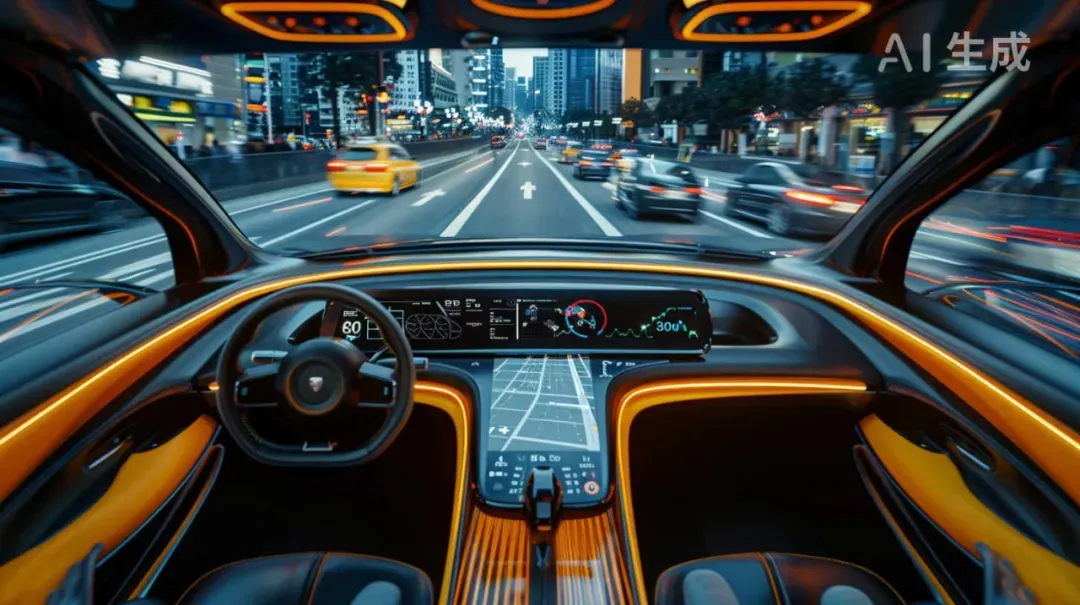
The first two vehicle models granted admission for Level 3 (L3) conditional autonomous driving in China will launch with significant operational restrictions, including a prohibition on automated lane changing, even as they enter the road passage pilot phase.
According to a directive from the Ministry of Industry and Information Technology (MIIT) released yesterday, the approved models are the Deepal SL03, manufactured by a unit of Chongqing Changan Automobile, and the Arcfox Alpha S, produced by a subsidiary of BAIC Group. Both vehicles are currently restricted to single-lane driving on designated highways and urban expressways.
Specific operational conditions vary between the two models. The Deepal SL03 is authorized for use primarily in traffic congestion scenarios within designated road sections, with a maximum speed cap of 50 km/h. The Arcfox Alpha S is permitted to operate at speeds up to 80 km/h on designated roads, without the specific limitation regarding traffic congestion.
The restrictions reflect a cautious regulatory approach rather than a technical deficit. A source close to Changan Automobile indicated that while the manufacturer possesses the technical capability for automated lane changing, this function was excluded from the initial admission application to prioritize safety. The feature is expected to be included in subsequent approval scopes.
This development follows the intelligent connected vehicle pilot framework established by MIIT in June last year. The program operates in five stages: pilot declaration, product admission, road passage, suspension/exit, and evaluation. While nine automakers were originally selected for the pilot consortium, only the Changan and BAIC models have currently advanced to the road passage stage, which requires strict adherence to defined usage scenarios and speed limits.
Seven other manufacturers in the initial consortium have yet to obtain the L3 admission permit. These include BYD, Guangzhou Automobile Group, SAIC Motor, China FAW Group, NIO, SAIC Hongyan, and Yutong Bus.
Meanwhile, other prominent players in the electric vehicle sector, such as XPeng and Li Auto, remain in the queue to pass the selection process to join the intelligent connected vehicle pilot consortium. Regulators noted that as policy requirements evolve, automakers must continuously adapt to updated standards regarding admission validity and implementation areas.