
China Smartphone Price War Diverges as Memory Costs Reshape Industry Dynamics
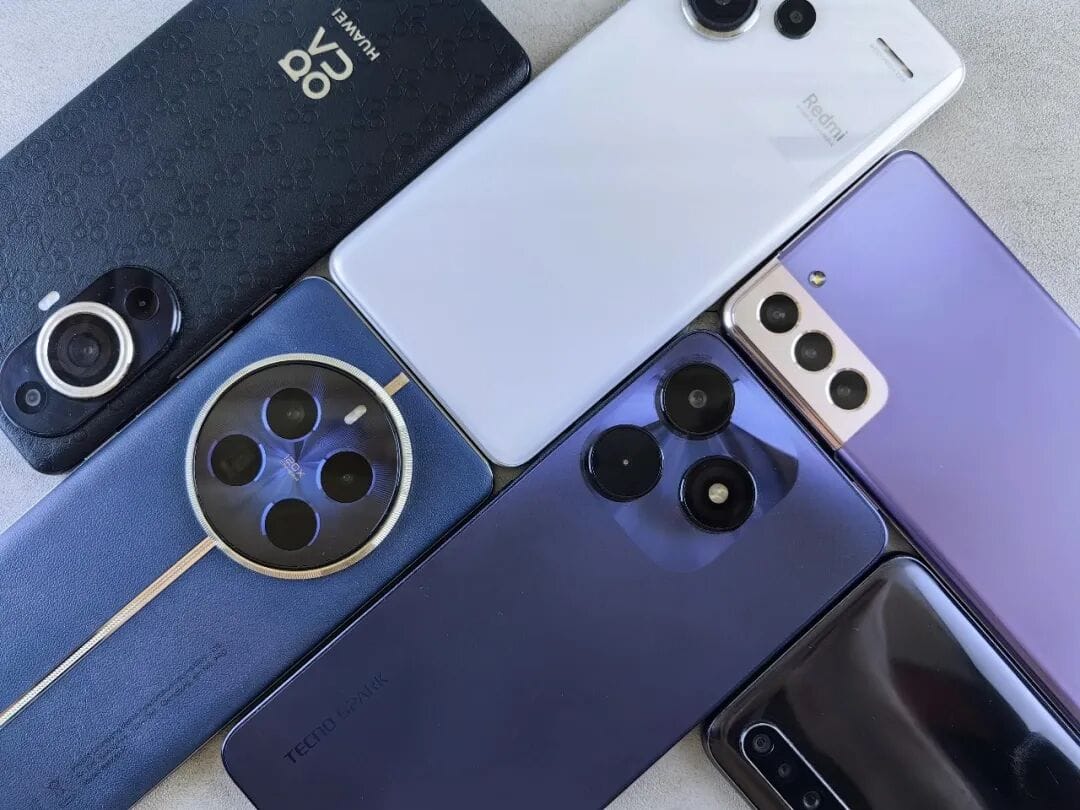
China's smartphone market is experiencing an unusual split this Chinese New Year, with major manufacturers adopting starkly different pricing strategies as memory cost pressures force a fundamental industry realignment. While some brands slashed prices by as much as 4,000 yuan, others maintained pricing discipline, signaling a deeper strategic divergence that could accelerate market consolidation in 2026.
The contrasting approaches reflect mounting cost pressures from surging memory chip prices and a shrinking market. In January 2026, China's smartphone sales plunged 23% year-on-year, creating an environment where manufacturers must choose between protecting margins or defending market share. The decisions made this holiday season may determine which brands survive the industry's ongoing shakeout.
Premium brands including Huawei, Apple, and Samsung Electronics Co. led aggressive promotional campaigns, leveraging higher margins on flagship devices to drive volume. Meanwhile, mid-tier players including Xiaomi, vivo, OPPO, and Honor largely refrained from major discounting beyond government subsidies, constrained by tighter profit margins on their volume-driving mid-range products.
The divergence stems from a structural supply shortage in consumer-grade memory chips, as manufacturers prioritize higher-margin HBM (high-bandwidth memory) production for AI servers over smartphone components. This cost shock is hitting different price segments with vastly different severity, fundamentally altering competitive dynamics in the world's largest smartphone market.
Premium Brands Deploy Targeted Discounting
Huawei mounted the most aggressive campaign, with Executive Director Yu Chengdong announcing promotions across all product categories from January 29 through February 28. At Beijing retail locations, the Mate 70 Pro+ saw combined discounts reaching 2,700 yuan from its 8,499 yuan list price, while foldable Mate X6 models offered savings up to 4,000 yuan when stacking official price cuts with local subsidies and store coupons.
However, the deepest discounts applied primarily to prior-generation inventory. The Pura 80 Pro (12GB+512GB), launched mid-2025 at 6,499 yuan, dropped 2,000 yuan including government subsidies to 4,499 yuan. Current-generation models received only standard government rebates without additional manufacturer incentives, according to store staff interviewed in first-tier cities.
Industry observers note Huawei's holiday discounting has become routine, capitalizing on the brand's unique position in China's gift-giving culture. The timing allows Huawei to clear older inventory while preserving pricing integrity on newest releases, a channel source familiar with the company's strategy explained.
Apple deployed selective discounting focused on the underperforming iPhone Air, launched in October 2025. The device received 2,000 yuan manufacturer discounts plus government subsidies, bringing the entry price down to 5,499 yuan from 7,999 yuan through Tmall flagship stores, JD.com, and authorized retailers—but not Apple's own website or directly-operated stores. The iPhone Air, which sacrificed battery life and camera capabilities for extreme thinness, captured just 1% of new iPhone activations after launch, prompting Apple to halve production plans within weeks of release.
The discounting proved effective at clearing inventory, with authorized retailers reporting stock shortages by mid-February. This approach mirrors Apple's second-quarter 2025 strategy of offering approximately 31% channel discounts on iPhone 16 Pro models to meet government subsidy thresholds and stimulate demand.
Samsung offered discounts exceeding 2,000 yuan on the S25 Edge and 900-1,500 yuan across the S25 series, combining clearance objectives with market testing ahead of the S26 launch. With limited China market share, Samsung faces less brand equity risk from aggressive pricing, allowing the company to gauge price elasticity for premium products like foldables in a controlled experiment, according to retail channel analysis.
Mid-Tier Brands Constrained by Memory Cost Surge
Xiaomi, vivo, OPPO, and Honor largely limited promotions to government subsidies, with select models offering modest 100-300 yuan additional discounts in late January that disappeared by late February. The restraint reflects fundamental cost structure differences from premium competitors.
Memory chip prices have surged as Samsung Electronics and SK Hynix shifted production capacity toward high-margin HBM for AI servers, tightening supply of consumer-grade DRAM and NAND Flash. Counterpoint Research forecasts 40-50% quarter-on-quarter price increases in Q1 2026, followed by approximately 20% gains in Q2. Kepler Research projects DRAM prices could more than double from late 2025 through mid-2026, with structural supply constraints persisting through 2027.
The impact varies dramatically by price segment. Kepler estimates memory costs represent 15-20% of bill-of-materials for mid-range devices and 10-15% for premium models. A 6,000 yuan flagship absorbs cost increases of around 100 yuan within existing brand premiums. However, UBS projects memory will comprise 40-45% of BOM costs for entry-level devices in 2026, up from 20-30% in 2025. For 1,500 yuan volume models, cost increases exceeding 100 yuan effectively eliminate profit margins.
This cost pressure has triggered production cuts across the industry. Multiple manufacturers including Xiaomi, OPPO, vivo, and Transsion Holdings reduced 2026 unit orders by 10-20% in mid-January, primarily affecting mid-range and overseas models, according to supply chain reports. Some brands quietly downgraded specifications, reusing prior-generation processors or camera modules to control costs.
The upstream impact is visible in chipset forecasts. Counterpoint projects MediaTek Inc. shipments will decline approximately 10% year-on-year in 2026, Qualcomm Inc. down 8.8%, and UNISOC—serving primarily entry-level markets—falling 14.2%. These suppliers' customer bases overlap heavily with volume-focused smartphone brands now under margin pressure.
Industry Consolidation Accelerates Toward Premium Segment
The divergent holiday strategies reflect a market reaching an inflection point. China's average smartphone replacement cycle has extended to nearly four years as incremental hardware improvements become imperceptible to consumers. Flagship camera systems have reached practical resolution limits, while processor performance gains exceed typical usage requirements.
Manufacturers are shifting from transactional hardware sales to user lifecycle management. Zodiac-themed limited editions have virtually disappeared, replaced by broadly appealing seasonal colors like vivo X300's "Lucky Red" and Redmi Note 15 Pro's "Cherry Red." OPPO introduced a "Year of the Snake Fortune" accessory bundle with red case and magnetic power bank at entry-level pricing, while vivo created limited-edition smartwatch faces with red bands positioned as elder-generation gifts.
The strategy reflects recognition that consumers unwilling to spend thousands on device upgrades will engage through low-cost peripherals that maintain brand touchpoints and ecosystem lock-in.
Artificial intelligence has emerged as the industry's next battleground, though its impact remains uncertain. Alibaba's Qwen, Tencent's Yuanbao, Baidu's Ernie, and ByteDance's Doubao collectively invested over 4.5 billion yuan during the holiday period to establish AI application dominance. Handset makers have integrated AI capabilities as both consumer upgrade justifications and attempts to control next-generation interaction interfaces.
Canalys forecasts AI-capable devices will reach 34% market penetration in 2025, with on-device models and enhanced chipset capabilities extending AI features to mid-tier products. However, industry practitioners remain skeptical of near-term impact, noting most AI functions provide marginal utility insufficient to drive replacement decisions absent killer applications.
The most consequential trend is accelerating premiumization as the only viable survival path. IDC projects devices priced above 600 US dollars will capture 35.9% of China's market in 2026, up 5.4 percentage points year-on-year, while sub-200 dollar products contract 4.3 points to 20% share.
Premium players Apple, Huawei, and Samsung possess structural advantages through supply chain control depth. When memory and processor costs surge, these manufacturers can offset impacts through premium mix shifts, long-term supply agreements, and in-house silicon. Counterpoint forecasts Huawei HiSilicon shipments will grow approximately 4% year-on-year in 2026, while Samsung increases Exynos adoption in the S26 series.
Conversely, volume-focused brands face simultaneous cost and competitive pressures, forcing order reductions and specification downgrades. For these manufacturers, premium repositioning through brand building, technology accumulation, and ecosystem development represents the only escape route—but success is far from assured.
The 2026 Chinese New Year promotional period has drawn a clear demarcation line. On one side stand entrenched leaders with resources to weather extended pressure; on the other, challengers racing to complete transformations within narrowing windows. The holiday sales figures matter less than the strategic paths now locked in, with genuine market elimination still ahead.