
ChinaApproves First L3 Autonomous Driving Permits as Changan and Huawei-Backed Models Get Green Light
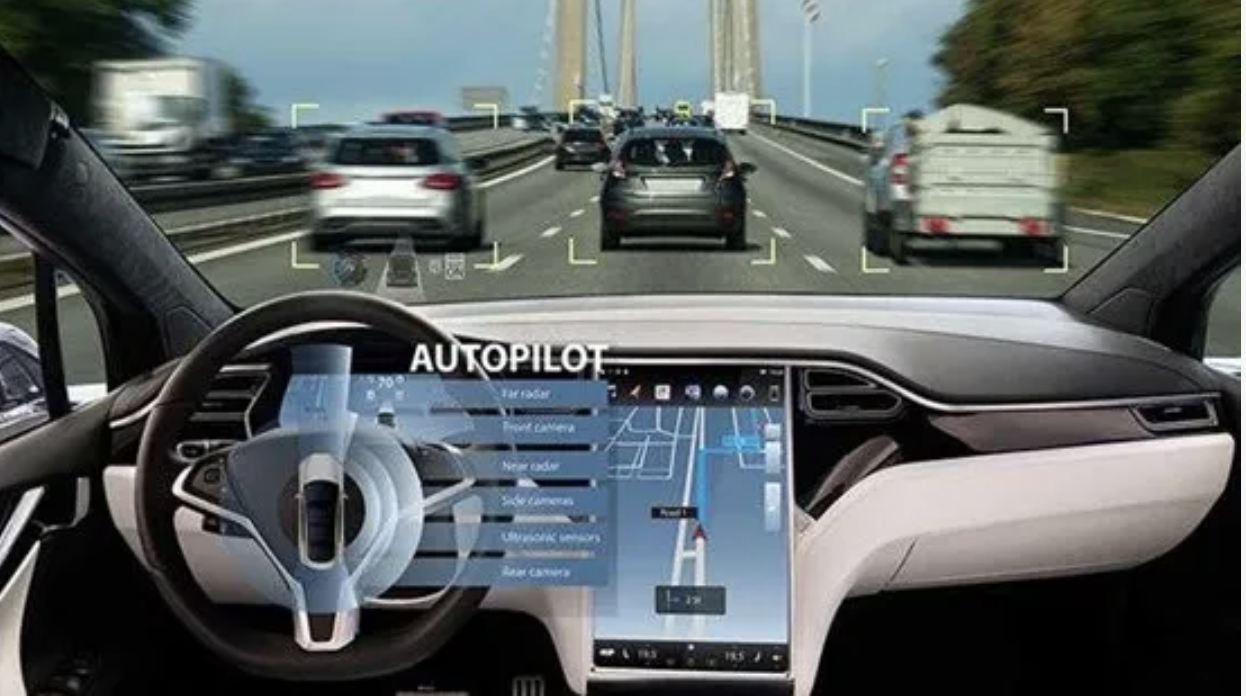
China’s autonomous driving industry crossed a historic threshold on Monday as regulators granted the first commercial production permits for Level 3 (L3) vehicles, signaling the formal transition from experimental testing to a regulated, commercial era. The Ministry of Industry and Information Technology (MIIT) issued the licenses to state-owned Changan Automobile and BAIC BluePark, marking the first time high-level autonomous systems satisfy compliance requirements for mass delivery and operation.
The approved fleet includes Changan’s Deepal SL03, utilizing the automaker's proprietary "Tianshu" system, and BAIC’s Arcfox Alpha S, which operates on Huawei Technologies Co.’s ADS intelligent driving solution. These vehicles are now authorized to operate on designated roadways in Chongqing and Beijing, respectively. Unlike previous testing licenses, these permits allow for commercial deployment, validating the technology for public use involves strict product liability standards rather than just technical demonstration.
This regulatory breakthrough establishes a definitive liability framework, fundamentally shifting responsibility from the driver to the automaker and system supplier when the autonomous mode is active. This legal clarity is expected to accelerate capital inflows into the supply chain, benefiting manufacturers of automotive-grade LiDAR, high-performance computing chips, and intelligent chassis systems as the market narrative moves from adoption rates to verified system reliability.
Under the specific terms of the permits, operations will initially be geofenced. Changan’s models are capped at 50 km/h on specific congested routes in Chongqing, while the Huawei-equipped Arcfox units are cleared for speeds up to 80 km/h on Beijing highways. Commercial pilot operations, such as airport shuttle services, are scheduled to commence as early as the first quarter of 2026.
A New Liability Framework
The issuance of these permits ends a long-standing regulatory impasse regarding accident liability. Under the current Level 2 (L2) standard—comparable to Tesla’s Full Self-Driving (FSD) system widely used in China—drivers must maintain full attention and retain legal responsibility. The new L3 "conditional autonomous driving" classification allows drivers to take their eyes off the road under specific conditions.
Crucially, the new regulations dictate that if an accident occurs while the L3 system is engaged and operating within its design parameters, the liability shifts to the vehicle manufacturer or software supplier. This strict "accountability loop" compels the supply chain to elevate standards from "usability" to extreme reliability, creating a legal foundation for mass adoption. This move signifies that China has successfully built a regulatory closed loop comprising safety certification, operational constraints, and liability attribution.
Specific Implementation and Restrictions
The commercial rollout remains cautious and highly controlled. Changan’s permit covers operations on the Inner Ring Expressway and Yudu Avenue in Chongqing, specifically targeting traffic congestion scenarios. BAIC’s license focuses on high-speed transit, covering the Jingtai Expressway and routes connecting to Beijing Daxing International Airport.
BAIC BluePark indicated that its pilot program—run by Beijing Chuxing Car Service Co.—will validate real-world scenarios through airport transfers starting early next year. Changan emphasized a progressive approach, noting that while current operations are limited to government-approved sections, future expansions will be enabled via Over-the-Air (OTA) updates as policy restrictions loosen.
Scaling Toward Robotaxis
The licensing milestone accelerates the convergence of mass-produced passenger vehicles and Robotaxi fleets. Analysts note that China is favoring a "progressive" strategy similar to Tesla’s, utilizing data from mass-market cars to refine algorithms, rather than the "radical" approach of Alphabet Inc.’s Waymo, which relies on expensive, purpose-built fleets.
Major industry players use this development to firm up commercial timelines. Huawei’s Intelligent Automotive Solution BU CEO, Jin Yuzhi, stated the company aims for large-scale commercial L3 highway operations by 2026 and a comprehensive unmanned era by 2027. Similarly, Xpeng Motors plans to launch three Robotaxi models in 2026, leveraging a camera-only vision solution that eliminates reliance on high-definition maps.
Supply chain activity is also intensifying in anticipation of volume orders. Horizon Robotics and Momenta have both announced plans to deploy mass-produced Robotaxi solutions between 2025 and 2027, signaling that the industry competition has shifted from technical piloting to a comprehensive race involving regulatory compliance, cost control, and commercial scalability.