
Horizon Robotics Targets Mass Market with ADAS for Budget Vehicles and Unveils New Commercial Model
Horizon Robotics is shifting its strategy to capture the automotive mass market, announcing plans to install advanced urban driving systems in vehicles priced as low as RMB 70,000. The Beijing-based autonomous driving computing solutions provider also introduced a new collaborative business model and next-generation architecture to solidify its position in the fiercely competitive electric vehicle sector.
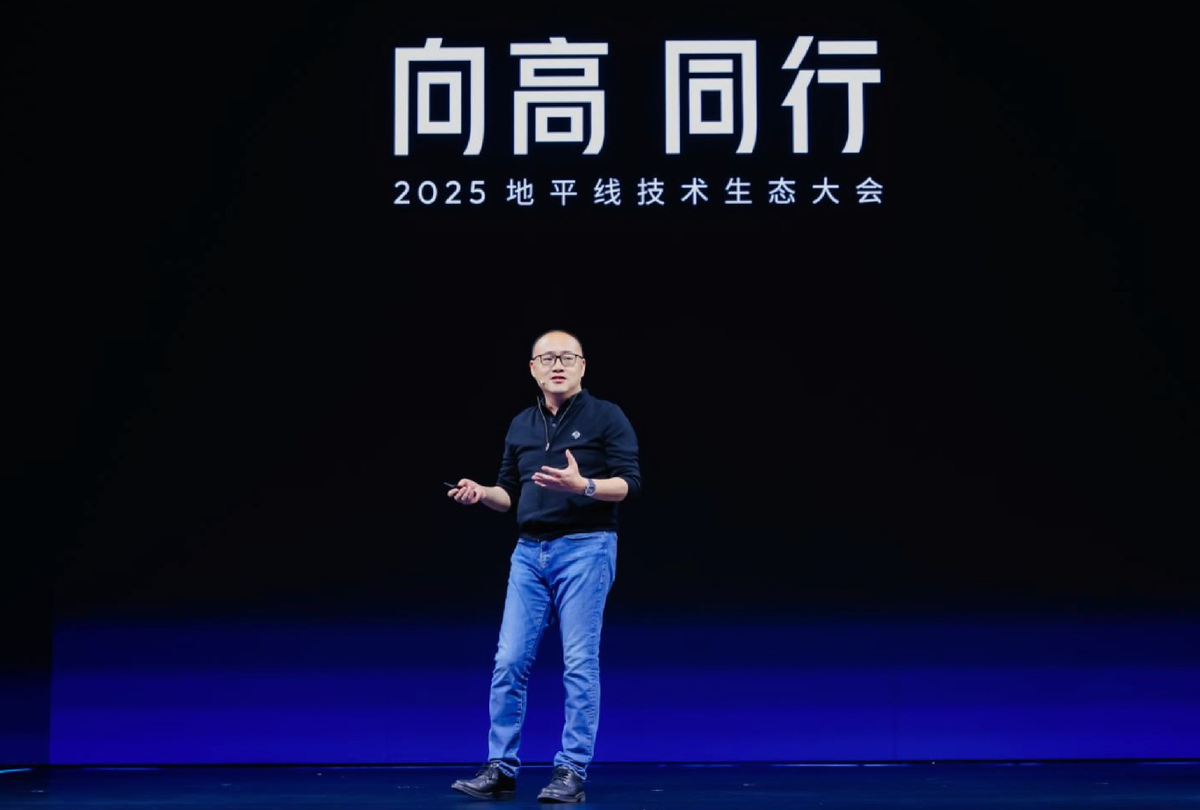
Speaking at the company’s inaugural ecosystem conference on December 12, CEO Yu Kai disclosed that the company’s proprietary driving solution, which is currently deployed in models priced around RMB 130,000, will be adapted for the entry-level segment by next year using the Journey 6M chip. This strategic expansion targets the 50% of the automotive market priced below RMB 130,000 yuan (US$17,906), a segment where vehicles largely lack sophisticated urban driver-assistance features.
To facilitate this market penetration, Horizon Robotics is pivoting from its traditional role as a hardware supplier to a new framework dubbed "HSD Together." Under this model, the company will move beyond selling chips and toolchains to marketing algorithms and capabilities, aiming to standardize smart driving functions as the industry’s "new automatic transmission." This shift suggests that future differentiation among automakers will rely more on user interface and branding rather than core autonomous performance.
The company also previewed its fourth-generation BPU architecture, known as "Riemann," designed to support large language models with significantly improved efficiency. This technology will underpin the upcoming Journey 7 chip family, which is scheduled to launch synchronously with Tesla Inc.’s next-generation AI5 chip, positioning the Chinese firm directly against global heavyweights as the industry approaches a new cycle of AI computing updates.
Democratizing Smart Driving
The push into the sub-RMB 100,000 market represents a significant effort to broaden the user base for advanced driver-assistance systems (ADAS). Yu highlighted that while vehicles priced above RMB 200,000 account for 30% of the market share, the volume-heavy segment below RMB 130,000 has remained under-served regarding urban autonomous capabilities.
Currently, Horizon Robotics' HSD solution is operational in the RMB 130,000 vehicle bracket. By optimizing its offering for the Journey 6M chip, the company intends to bring urban ADAS to cars priced as low as RMB 70,000 in 2026. This move challenges the prevailing industry trend where high-level autonomy is largely restricted to premium and mid-range distinct electric vehicles.
Evolving the Supply Chain
Horizon Robotics argues that its previous commercial model—focusing on the sale of chips, reference designs, and IP licensing for algorithms—is insufficient for achieving universal adoption of high-level urban autonomy. The transition to the "HSD Together" model allows the company to offer a more integrated algorithm service.
The company has already initiated partnerships under this new framework. Collaborations include CARIZON, a joint venture involving Volkswagen and Denso, and HCT. Restructured as a Tier 2 supplier, HCT has launched a smart driving solution based on the Journey 6M chip with an algorithmic framework similar to Horizon's own. HCT is currently engaging with ecosystem partners such as iMotion Automotive Technology, Freetech, and Lianchuang Electronic Technology to provide algorithmic support.
Simultaneously, Horizon Robotics is developing high-level ADAS solutions based on the Journey 6P chip with partners like DeepRoute.ai and Bosch. This strategy effectively places Horizon and its partners in shared territory, blurring the traditional lines between supplier and co-developer.
The Riemann Architecture
To support the increasing computational demands of new autonomous driving models, Horizon Robotics introduced the Riemann architecture, its fourth-generation BPU structure. The new architecture features a ten-fold increase in high-precision operators compared to its predecessor and offers comprehensive support for Tensor, Vector, and floating-point calculations.
Specifically optimized for large language models, the Riemann architecture reportedly delivers a five-fold increase in energy efficiency. This technology will be the foundation of the Journey 7 series, signaling Horizon’s intent to maintain technological parity with leading global silicon designers.
Ecosystem Dynamics
Horizon Robotics envisions smart driving evolving similarly to automatic transmissions, where functional performance converges across the industry. In this view, the "gear stick"—or the user interface—becomes the point of differentiation for brands, rather than the underlying mechanics of the drive.
However, the "HSD Together" model introduces complex dynamics into the supply chain. By expanding its role from a pure chip vendor to an algorithm provider, Horizon Robotics risks creating friction with existing partners who may view the company as both an ally and a competitor. Investigating how the company balances "co-construction" with competition will be critical to the long-term viability of this expanded ecosystem.