
Investors Seek ‘Next Cambricon’ as Chinese Chipmakers Rally on AI Boom
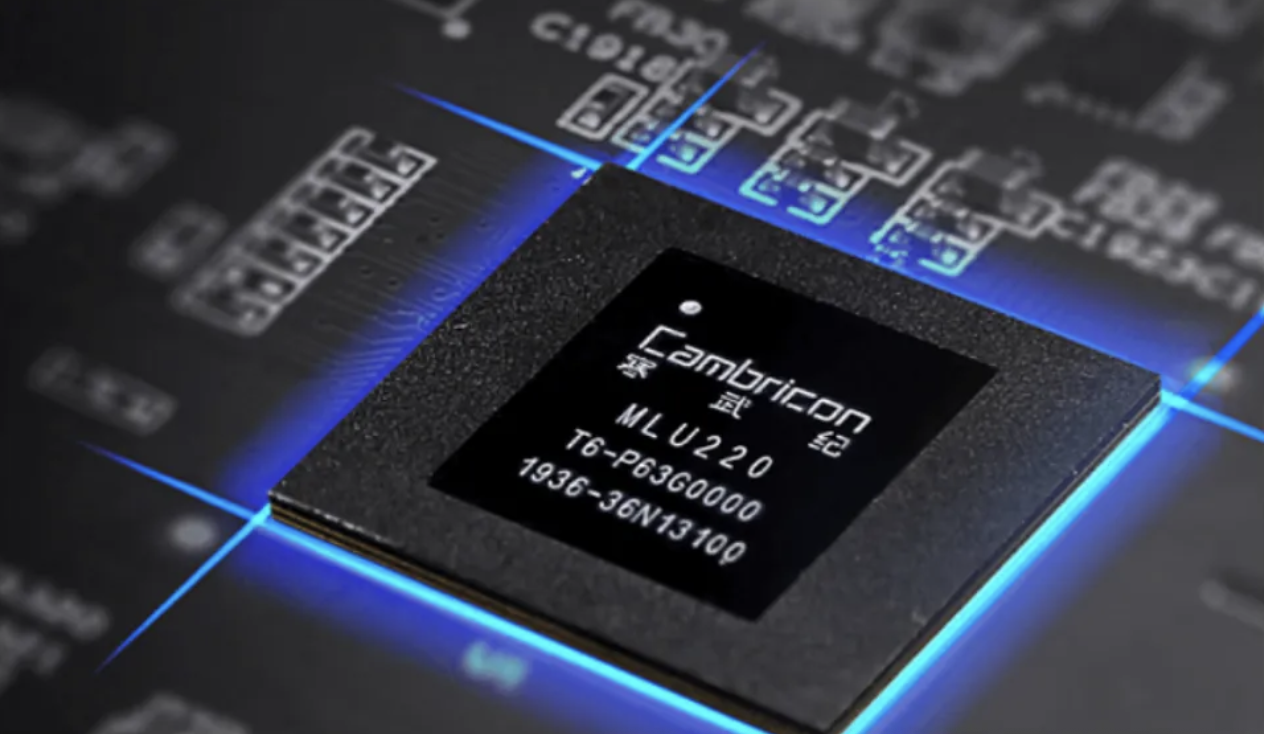
China’s semiconductor sector is undergoing a significant valuation reshaping driven by the sustained artificial intelligence boom, with investors aggressively betting on domestic alternatives to global leaders. The rally, spearheaded by Cambricon Technologies, has established a high-growth benchmark that is now defining the pricing logic for the country’s newest high-tech listings. Market analysts forecast that AI infrastructure investment will remain strong through 2026, creating a favorable, albeit volatile, environment for local chipmakers.
Moore Threads Intelligent Technology recently listed on the STAR Market, triggering a sharp share price surge that continued until a correction on the morning of the 12th. Investors are valuing the GPU maker using a "benchmarking Nvidia, chasing Cambricon" narrative. As of the latest close, Moore Threads holds a market capitalization of RMB 390 billion yuan (US$53.9 billion), despite the company not yet achieving profitability.
This valuation enthusiasm is anchored in the performance of Cambricon, which has seen its stock rise more than 100% in 2025, ranking 11th among CSI 300 constituents. The surge is underpinned by what the market views as "explosive" revenue growth; Cambricon reported a total operating income of RMB 4.61 billion yuan (US$637 million) for the first three quarters of 2025, a dramatic increase from just RMB 185 million yuan (US$25.6 million) in the same period last year.
However, the divergence in financial maturity between established players and newcomers highlights the risks within this capital-intensive landscape. While Cambricon has turned a profit with a net margin of nearly 35%, newer entrants like Moore Threads and MetaX Integrated Circuits are still in the early stages of commercialization, reporting significant losses even as their revenues begin to scale.
Diverging Market Trends
The correlation between Chinese chipmakers and their US counterpart, Nvidia Corp., has shown signs of decoupling this year. While Nvidia’s stock followed a steady upward trajectory from May to August, reaching a market cap of over US$4 trillion, Cambricon’s shares experienced a contradictory downward trend during that specific period.
The dynamic shifted in August. As concerns over an "AI bubble" caused Nvidia’s stock to oscillate, Cambricon recorded substantial gains. This rally occurred weeks ahead of its semi-annual report, suggesting that the stock movement was driven by market sentiment regarding China's domestic computing needs rather than immediate earnings data.
Underlying this demand is the continued expansion of Large Language Models (LLMs). Data from August 2025 highlights the release of massive influential models, including GPT-5 and Claude Opus 4.1, confirming that scaling laws are still in effect and reinforcing the global imperative for high-performance computing power.
CapEx Realities and Local Demand
The narrative that increased capital expenditure (CapEx) by tech giants automatically drives hardware stock gains has proven nuanced. In the US, companies like Meta Platforms Inc. saw CapEx soar 112% without a corresponding stock surge, while Google was the only top spender to see share price gains exceeding 50%. The primary beneficiaries of this spending have been companies directly tied to AI data centers, energy, and the semiconductor supply chain.
In China, a similar investment cycle is accelerating. Although broad CapEx across the CSI 300 remained flat, major tech firms are ramping up spending on AI infrastructure. Goldman Sachs recently raised its CapEx forecast for Alibaba to RMB 460 billion yuan (US$63.6 billion) for the 2026–2028 period. Similarly, Tencent reported first-half 2025 CapEx of RMB 57.4 billion yuan (US$79.4 billion), an 85% year-on-year increase.
Uncertainty remains regarding how much of this spending will flow to domestic suppliers. With the lifting of the sales ban on Nvidia’s H200 chips, reports suggest heavyweights like Alibaba and ByteDance are interested in procuring the US hardware, indicating Nvidia retains a competitive edge in the high-end training segment.
Commercialization and Tech Routes
For emerging players, the focus is shifting to commercial viability. Moore Threads and MetaX are currently in a rapid "climb" phase. In the first three quarters of 2025, Moore Threads generated RMB 785 million yuan (US$108.6 million) in revenue, while MetaX reported RMB 1.24 billion yuan (US$171 million)—both substantial increases from the previous year.
Crucially, both companies reported production-to-sales ratios exceeding 100% starting this year, signaling strong market uptake. However, high R&D costs continue to weigh on their bottom lines. Moore Threads reported a net profit margin of -92.22%, and MetaX stood at -27.95%, in stark contrast to Cambricon’s profitability.
Technologically, these companies differ from Cambricon, which utilizes ASIC architecture. Moore Threads and MetaX focus on GPU routes, similar to Nvidia and AMD. While Google’s Gemini 3 release has drawn attention to TPU architectures, the consensus remains that GPUs are the dominant standard for AI training. For investors, the key metrics for these new listings will be marginal changes in revenue, client acquisition, and the path to reducing losses in a fiercely competitive market.