
Robotaxi Accident Prompts Safety Scrutiny as Chinese Operators Accelerate Expansion
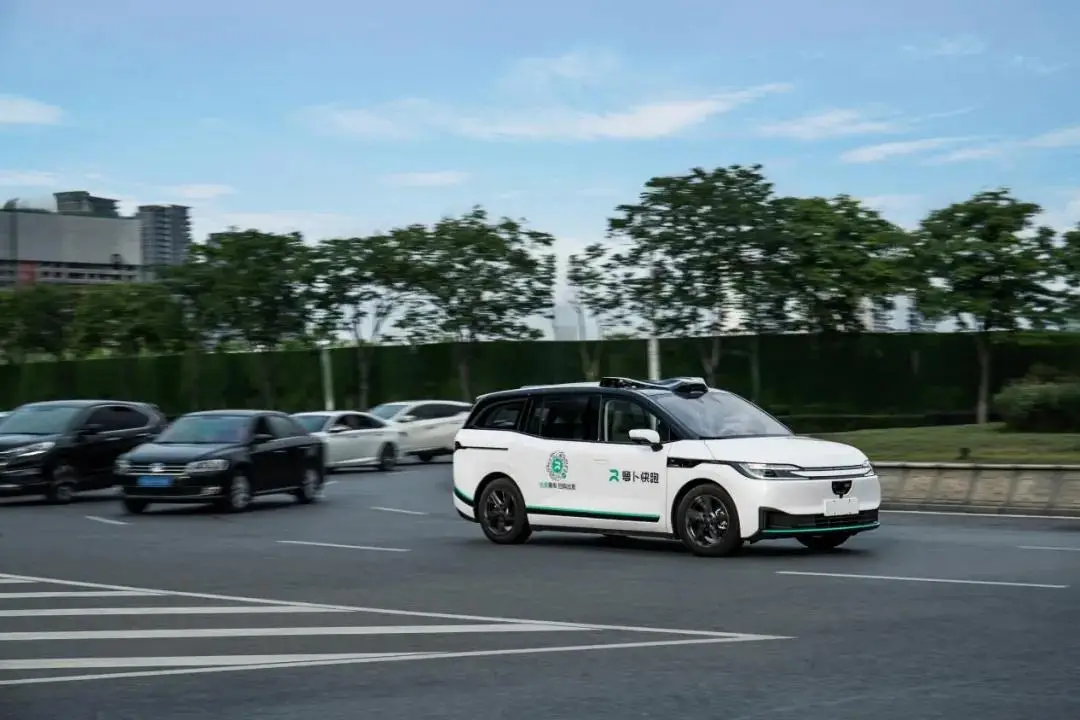
An injury accident involving an autonomous vehicle in central China has brought high-level driverless technology oversight back into focus in 2025, challenging the aggressive commercialization timelines of new market entrants. As the industry shifts outcome expectations from the democratization of driver-assist features to strict safety assurances, the incident highlights the critical gap between rapid fleet expansion and the technological maturity required for Level 4 autonomous driving scale.
The collision occurred in Zhuzhou, Hunan province, involving a robotaxi operated by Hello. The vehicle struck two individuals on a motorcycle, with reports and on-site video indicating that one individual was dragged beneath the car. While the exact cause remains under technical review pending black box data, the incident has raised concerns about the system's ability to execute timely braking and self-correction during complex traffic scenarios.
This event comes at a pivotal moment for the sector, which is currently undergoing a "radical commercial expansion cycle." Hello Inc., backed by major strategic investors including Ant and Contemporary Amperex, only formally entered the space in June. The company had rapidly deployed approximately 80 vehicles in the city and recently announced an ambitious target to deploy 50,000 robotaxis by 2027.
The accident underscores the risks inherent in "speed-first" deployment strategies employed by new players compared to the incremental approaches of established firms. Market participants are now weighing whether the pace of operational expansion has outstripped system maturity, potentially exposing investors and operators to heightened liability as fleets move from controlled testing to mass adoption in urban environments.
Operational Risks and Incident Details
The incident took place on December 8 at approximately 9:00 a.m. near the intersection of Yanjiang Road and Qiyi Road in the Lusong District. Conditions were reported as good, though the road surface was damp with some potential glare. The robotaxi was traveling south on a four-lane road with clear visibility when it collided with the motorcycle.
Preliminary analysis of the scene suggests that the autonomous system failed to brake effectively after the motorcycle riders either fell or were struck, resulting in the suspected dragging of one injured party. The vehicle eventually came to a halt in a restricted stopping zone. The primary safety concern identified is the lack of "self-correction" capabilities in current L4 systems when errors occur. Without human intervention, the system struggled to mitigate the consequences of the initial contact, a critical flaw for vehicles intended to operate without drivers.
Expansion Pace vs. System Maturity
The crash highlights a divergence in strategy between new entrants and legacy autonomous driving leaders. Established players such as Baidu Apollo Go unit—known domestically as Apollo Go—as well as WeRide and Pony, have typically accumulated tens of millions of kilometers in testing data to resolve "long-tail" scenarios before scaling.
In contrast, Hello Inc. began operations on 297 kilometers of open roads less than six months after its market entry. Industry data suggests that rapid scaling increases the probability of encountering extreme edge cases that the algorithm has not yet learned to navigate. By comparison, mature operators like Baidu report an airbag deployment incident only once every 10.14 million kilometers on average. While Pony.ai has encountered accidents, they have reportedly not caused injuries, and WeRide’s notable incidents involved collisions caused by human drivers violating traffic rules.
The risks of premature scaling are mirrored globally. Tesla Inc.’s robotaxi faced a collision within its first month of operation, and General Motors Co.’s Cruise unit was forced to suspend operations after a pedestrian dragging incident caused by recognition failure.
Liabilities and the Road to Commercialization
As Chinese regulators accelerate the development of licensing, insurance, and responsibility frameworks for robotaxis in 2025, determining liability remains a complex hurdle. The industry faces unresolved questions regarding how to apportion blame between the autonomous driving algorithm, backend data decision-making, and insurance coverage.
The push for L4 autonomy is described as a long-term trade-off between data density, system robustness, and the coverage of extreme scenarios. The Zhuzhou incident serves as a warning that faster rollout speeds reduce safety redundancy. Widespread commercial acceptance hinges not only on technical metrics but on public trust, requiring operators to prove that AI systems can handle the "low probability, high uncertainty" events that characterize real-world urban traffic.