
China’s Chip Exports Surge 73% as ‘Legacy’ Strategy Pays High-Value Dividends
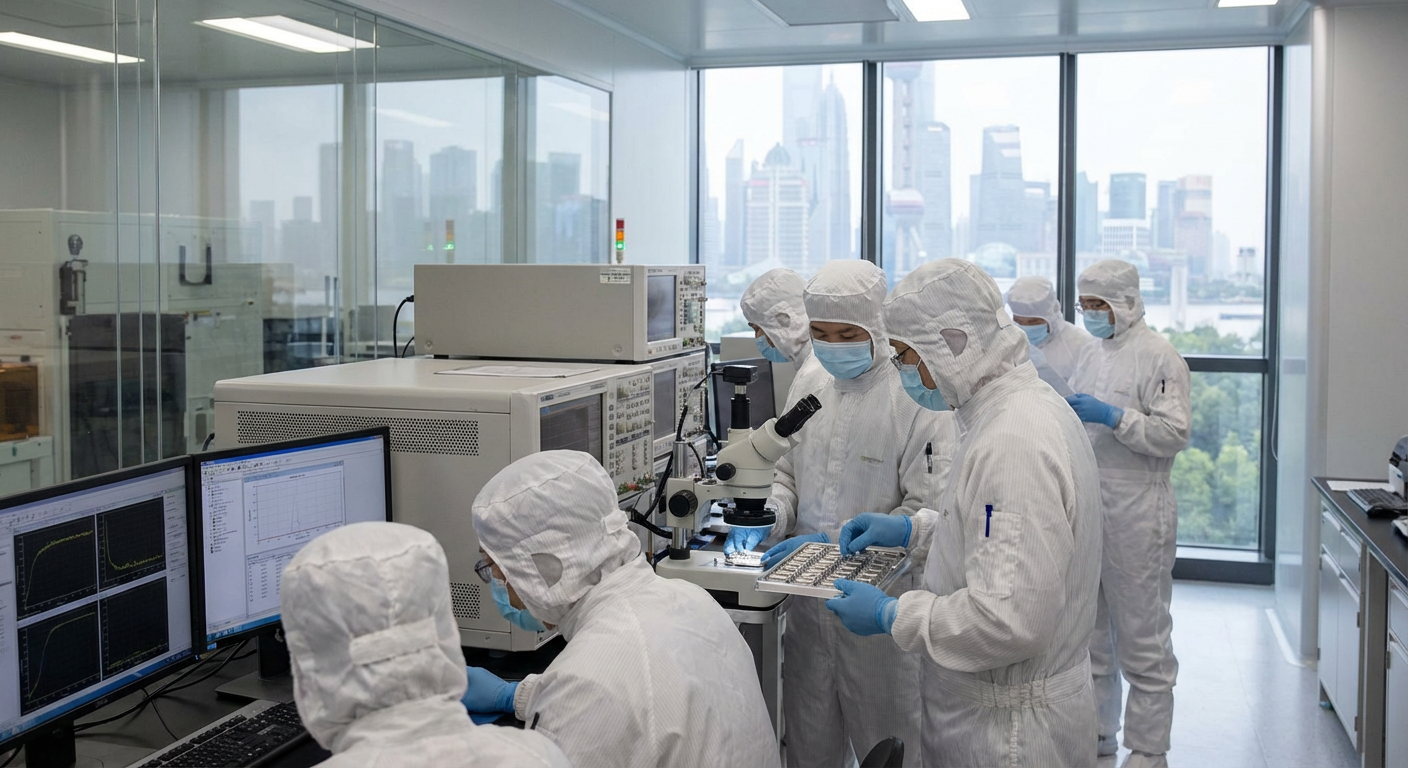
China’s semiconductor industry has delivered a stinging rebuttal to the effectiveness of U.S. export controls, posting a record 72.6% surge in export value to US$43.3 billion in the first two months of 2026. The data reveals a structural shift in global supply chains: while Washington locked down the technological ceiling, Beijing has successfully cornered the market on the industry’s critical foundation.
Data released by the General Administration of Customs in March 2026 shows export growth significantly outpacing volume, which rose only 13.7%. This disparity implies a dramatic 52% jump in the Average Selling Price (ASP) of Chinese chips. The narrative of China as a dumper of cheap, low-end silicon is obsolete; the country is now shipping high-value components essential for the global AI boom and industrial automation.
This export explosion is not merely a cyclical rebound. It represents the fruition of a "saturated investment" strategy in mature nodes and AI-peripheral technologies, effectively forcing global tech giants to pay a toll to Chinese manufacturers even as they purchase processors from Nvidia or AMD.
Cornering the AI 'Support' Market
While the geopolitical spotlight remains fixed on 3nm logic chips produced by TSMC and powered by ASML’s lithography machines, a quieter revolution has occurred in the server racks of North American data centers. An AI server is useless without a constellation of supporting silicon—power management ICs (PMIC) and high-speed interface chips—sectors where Chinese firms have seized market share.
Domestic leaders like Montage Technology have broken the oligopoly held by U.S. and Japanese firms in PCIe 5.0/6.0 retimers and memory interface chips. These components, critical for the massive data throughput required by Large Language Models (LLMs), are not subject to advanced-node sanctions. Similarly, analog chipmakers such as Joulwatt (Jiehuate) and SG Micro have moved from serving local tech giants like Tencent and ByteDance to supplying the ODMs (Original Design Manufacturers) building white-label servers for global hyperscalers.
The logic is brutal but effective: Western bans stopped China from making the brain (GPU), so China cornered the market on the nervous system and vascular system of AI infrastructure.
Memory Giants Pivot, Creating a Vacuum
The surge in export value is also driven by a distortion in the global memory market. Major players like Samsung, SK Hynix, and Micron have aggressively shifted capacity toward High Bandwidth Memory (HBM) and enterprise SSDs to serve Nvidia’s supply chain. This pivot created a supply vacuum for standard DRAM and NAND Flash used in consumer electronics and automotive applications.
Chinese national champions, including ChangXin Memory Technologies (CXMT) and Yangtze Memory Technologies (YMTC), have stepped into this breach. With production yields stabilized, these firms are capitalizing on a global price rally—DRAM prices spiked 40-50% in Q1 2026 alone. Unlike the low-margin controllers of the past, memory chips are standardized commodities with high unit values, directly inflating China's export figures.
The 28nm Fortress: Weaponizing 'Legacy' Chips
Beyond the AI narrative, the bulk of China’s export power stems from its dominance in "legacy" or mature nodes (28nm to 90nm). These chips are the lifeblood of the global industrial economy, powering everything from EV inverters to industrial robots and IoT sensors.
Following U.S. restrictions on EUV technology in 2022, China redirected state capital—including funds from the "Big Fund Phase III"—toward monopolizing mature processes. SMIC (Semiconductor Manufacturing International Corp) and Hua Hong Semiconductor have expanded 12-inch wafer capacity at a pace unmatched globally. In 2025, SMIC’s wafer shipments jumped 21%, while Hua Hong’s rose 18.5%.
This has created a supply chain dependency trap for Western automakers. European Tier-1 suppliers, under pressure to cut costs amidst an EV price war, are increasingly turning to Chinese microcontroller units (MCUs) from firms like GigaDevice and power modules from StarPower Semiconductor. The irony for Western policymakers is palpable: in securing the high ground of AI, they may have ceded control of the industrial bedrock.
Risks of Overcapacity and Trade Retaliation
Despite the bullish data, the sector faces significant headwinds. The reliance on DUV (Deep Ultraviolet) lithography to produce 7nm chips via multi-patterning remains commercially inefficient compared to TSMC’s EUV processes, creating a persistent profitability ceiling for China's logic chip aspirations.
Furthermore, the aggressive capacity expansion raises the specter of a price war in late 2026 or 2027 if global demand softens. This scenario mirrors the historical trajectories of the solar panel and LCD industries, where Chinese overcapacity decimated global margins.
More immediately, the "legacy chip" dominance has alerted regulators in Brussels and Washington. With investigations into supply chain vulnerabilities already underway, the risk of "Trade War 2.0"—targeting mature node chips with new tariffs or sourcing bans—remains the single largest threat to sustaining this export momentum.
Related Coverage:
Shanghai Chip Giant Montage Technology Surges 57% in Hong Kong Debut, Backed by Alibaba
China’s AI Chip Sector Hits Scale Milestone as Export Curbs Fuel Domestic Demand