
China’s EV Sector Pivots to ‘Intelligence War’ as Xiaomi, XPeng Roll Out Proprietary AI Models
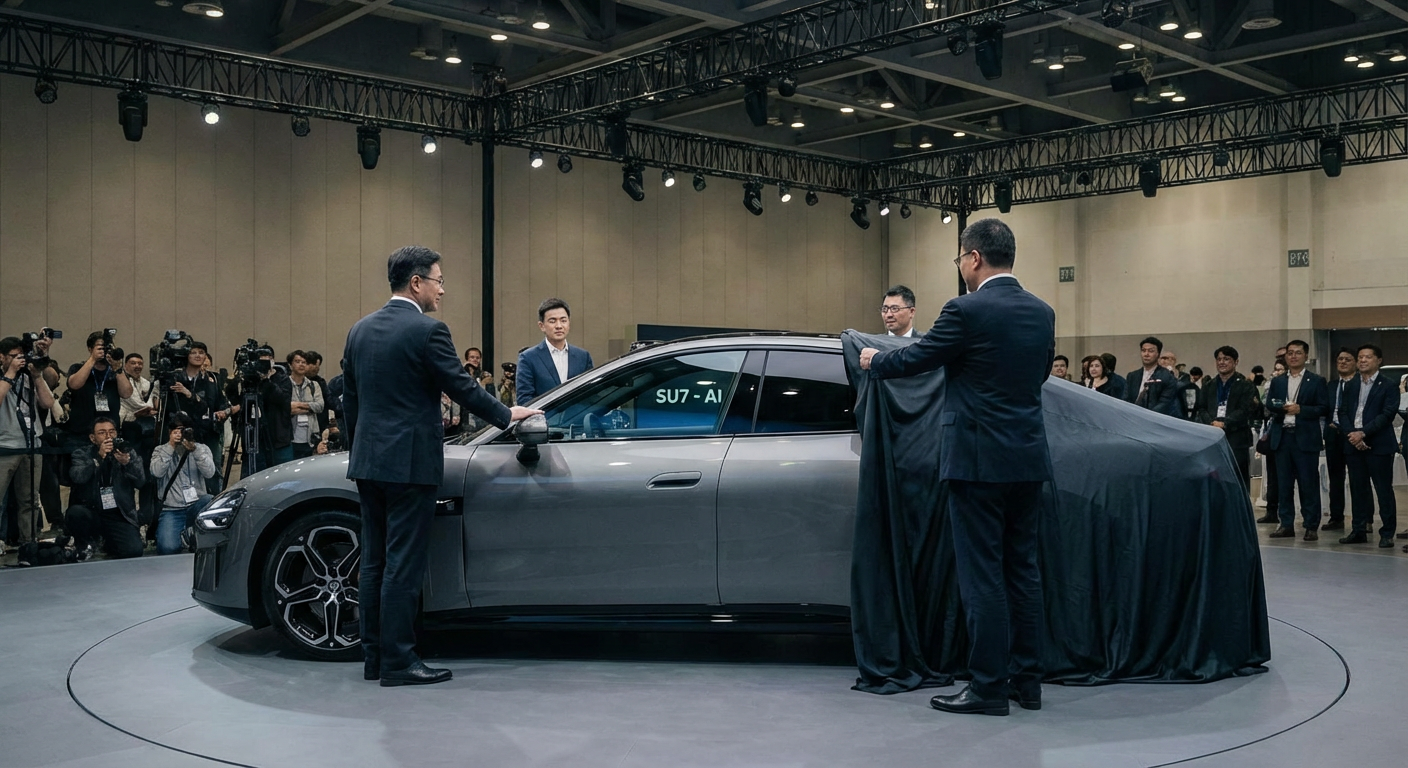
The battleground for China's electric vehicle market has definitively shifted from battery range to cognitive intelligence in 2026. Major players Xiaomi and XPeng launched flagship updates within 24 hours of each other, both centering their value proposition on proprietary "Large Model" integration rather than mechanical specs. This strategic pivot coincides with a surge in demand for computing power that has forced Alibaba Cloud and Baidu to hike prices, signaling that the automotive industry is now a primary driver of China’s AI infrastructure costs.
While legacy giants like BYD prepare their own intelligent driving responses, the immediate focus is on the rapid deployment of "End-to-End" AI architectures. These systems, capable of reasoning like human drivers, are reshaping the cost structure of EVs, with prices for intelligent sedans now aggressively undercutting the RMB 230,000 (US$33,300) threshold.
Xiaomi and XPeng Escalate the AI Arms Race
Xiaomi officially launched its next-generation SU7 sedan on Tuesday evening, priced between RMB 229,900 (US$33,318) and RMB 309,900 (US$44,913). The headline feature is not the upgraded V6sPlus motor or the 902km range, but the debut of the XLA (Xiaomi Large Model) cognitive engine. By integrating the "MiMo-Embodied" foundation model, Xiaomi is effectively repositioning the vehicle as an "embodied robot," capable of complex reasoning in urban driving scenarios.
Simultaneously, Xiaomi released three new foundation models—MiMo-V2-Pro, Omni, and TTS—targeting the agent ecosystem. The Pro variant, boasting 1 trillion parameters, claims to rival global benchmarks like Claude Sonnet 4.6 in workflow orchestration, signaling Xiaomi's intent to own the entire AI stack from the cloud to the cockpit.
Countering this move, XPeng launched its 2026 P7 model, aggressively lowering the entry barrier to RMB 203,800 (US$29,536)—a RMB 16,000 (US$2,318) reduction from the previous year. The refresh features the mass rollout of its VLA 2.0 (Vision-Language-Action) system. CEO He Xiaopeng emphasized that VLA 2.0 eliminates traditional "language translation" layers in autonomous driving, allowing the neural network to perceive and act directly. The system targets L4-level capabilities, including navigating unmapped rural roads and complex accident bypasses, with deployment scheduled for Ultra models starting immediately.
Alibaba and SAIC Push 'Agent' Capabilities
State-backed SAIC Motor’s premium arm, IM Motors, unveiled its "IM Ultra Agent 1.0" on March 18. This system represents the first mass-production integration of Alibaba’s Qwen (Tongyi Qianwen) large model into a vehicle’s logic center.
Unlike simple voice assistants, the Qwen-powered agent integrates with Alibaba’s service ecosystem. For example, the system can interpret a vague command like "find a quiet place to view the lake and get me a coffee," autonomously planning a route and placing a remote order via Alibaba's local services platform. The technology will debut on the LS8 SUV, creating a closed-loop service ecosystem that competitors lacking Alibaba's retail infrastructure will find difficult to replicate.
Infrastructure Strain: Cloud Costs Spike
The aggressive rollout of automotive AI is straining China’s computing infrastructure. Both Alibaba Cloud and Baidu Smart Cloud have announced price hikes of up to 34% for AI computing and storage services, effective mid-April.
Sources indicate the price surge is driven by an explosion in token consumption, with Alibaba’s MaaS (Model-as-a-Service) business recording historical growth rates in Q1 2026. This inflationary pressure on compute costs is reflected in Tencent Holdings' financials. The tech giant reported a massive RMB 22.4 billion (US$3.24 billion) in capital expenditure for Q4 2025 alone, primarily to fortify its AI infrastructure. Tencent executives confirmed they plan to double AI product investment in 2026 to at least RMB 36 billion (US$5.2 billion).
Traditional Auto Giants Respond
While tech-native entrants grab headlines, traditional heavyweights are maneuvering to protect market share:
- Geely Automobile: Reported robust 2025 revenue of RMB 345.2 billion (US$50 billion), up 25%. The company projects its autonomous driving capabilities will match Tesla’s FSD within the year, backed by a significant export push targeting 640,000 overseas units in 2026.
- BYD: Following the launch of its second-generation Blade Battery, the market leader is expected to hold a strategic briefing in April. Analysts anticipate BYD will unveil proprietary ADAS chips and a "World Model" algorithm, signaling its official pivot from an electrification-first to an intelligence-first strategy.
Global Chip Supply Chain Thaws
In a significant development for the training of these large models, Nvidia CEO Jensen Huang confirmed that the company has received authorization to resume shipping H200 chips to Chinese customers. The supply chain is reportedly reactivating after a 10-month freeze. Additionally, Nvidia plans to launch a compliant version of its Groq AI inference chip in May to compete with Baidu’s Kunlun series in the inference market.
Meanwhile, Samsung Electronics has secured a critical contract to manufacture Tesla’s next-generation AI5 chips using 2nm process technology. This diversification away from TSMC suggests a tightening of global capacity for high-end automotive silicon as the AI-defined vehicle era accelerates.
Related Coverage:
China EV Price War Deepensas Average Discount Hits US$6,600
China's EV Giants Pivot to Humanoid Robots as Auto Price Wars Erode Margins to Breaking Point