
China’s CHJ Industry Pursues HK Listing as ‘Lightweight Gold’ Strategy Boosts Revenue but Squeezes Margins
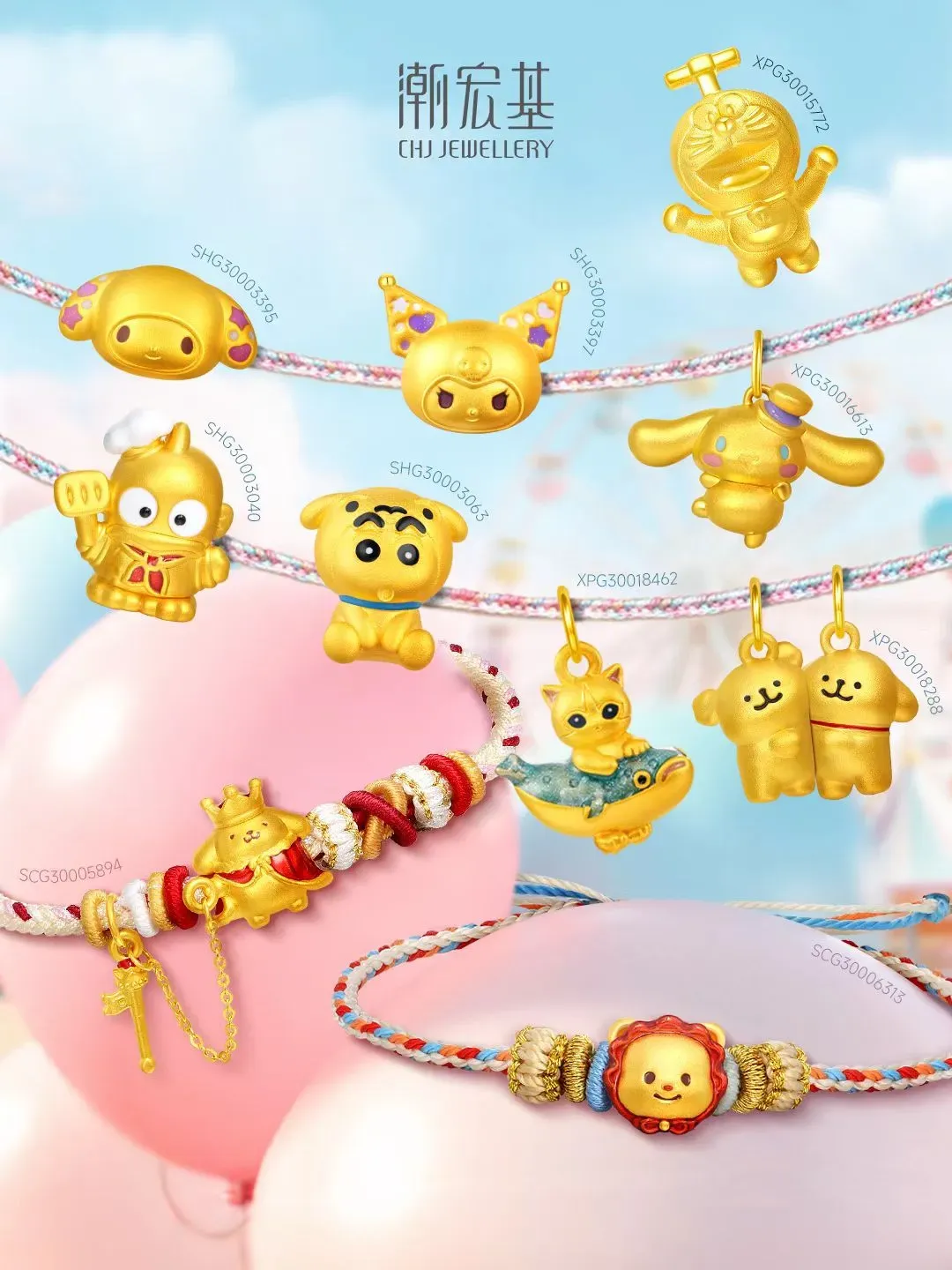
Guangdong CHJ Industry, a Shenzhen-listed jewelry retailer, has leveraged a strategy of "lightweight gold" and intellectual property (IP) collaborations to capture Gen Z consumers, driving record revenues in 2025. By shifting focus from traditional investment-grade bullion to accessible, emotional-value driven accessories, the company has positioned itself as the "Pop Mart" of the jewelry sector. However, this aggressive expansion has exposed the company to declining profit margins and operational risks as it seeks a secondary listing in Hong Kong.
According to financial data released in late October, CHJ Industry reported revenue exceeding RMB 6.2 billion (US$856 million) for the first three quarters of 2025, representing a year-on-year increase of nearly 30%. The surge is attributed to the popularity of gold products weighing as little as 0.1 grams, which appeal to younger demographics priced out of traditional gold markets. Despite the topline growth, the company’s stock and financial health are under scrutiny due to a phenomenon of "increasing revenue without increasing profit."
The company formally submitted its listing application to the Hong Kong Stock Exchange (HKEX) in September 2025, aiming for an "A+H" dual-listing status. While the move is intended to raise capital and expand its international footprint, investor sentiment is tempered by CHJ’s gross margin deterioration, which has fallen to a ten-year low of approximately 24% in 2024, down from nearly 36% in 2020. Market analysts warn that the capital markets in Hong Kong, known for prioritizing profitability and genuine earnings quality, may view the company’s high-volume, low-margin model with caution.
The divergence between soaring sales and stagnant profits highlights the structural challenges within China’s evolving gold consumption landscape. As gold prices remain high, CHJ Industry’s reliance on franchise expansion and standardized, lower-margin products counters the luxury-premium model seen in competitors like Laopu Gold. The upcoming HKEX listing will be a critical test of whether the "IP + Gold" business model can deliver sustainable returns for investors beyond the initial hype.
Lightweight Gold and IP Collaborations
CHJ Industry has successfully disrupted the traditional gold jewelry market by targeting the "Z Generation" with affordable, low-weight products. Departing from the traditional sales metrics of weight and purity, the retailer promotes items ranging from 0.1 grams to 0.96 grams, with price points predominantly between RMB 200 and RMB 1,000. These products, often styled as "gold coins" or beads, are marketed less as financial assets and more as "emotional gold"—accessories that offer immediate gratification and social media shareability.
Central to this strategy is an extensive portfolio of IP licensing, which industry observers liken to the model used by toy retailer Pop Mart. CHJ has moved beyond early partnerships with Doraemon to collaborate with trending IPs such as "Line Friends" (specifically the Maltese dog character) and "Butterbear." By employing sales tactics like "blind box" gifts and creating scarcity through limited editions, the company has tapped into the collectability culture of young consumers. This approach has transformed gold purchasing from a heavy financial decision into a high-frequency, lower-cost consumption habit.
Margin Compression and Franchise Expansion
The rapid revenue growth has come at the cost of profitability. Standardized gold products inherently command lower premiums compared to complex jewelry, limiting pricing power. Furthermore, CHJ Industry has pursued scale through an aggressive franchise model. Financial reports indicate that gross margins from franchise channels are roughly half that of self-operated stores. As franchise revenue now contributes over 50% of the total, the company’s overall profit margins have been significantly diluted.
Profitability is further complicated by asset impairments. In the third quarter of 2025, net profit growth was dragged down by a goodwill impairment of RMB 171 million related to the earlier acquisition of the handbag brand "Fion." This write-down serves as a warning regarding the risks of past expansion strategies. Analysts note that while the "exchange profit for market share" strategy is common during growth phases, its sustainability in a high-gold-price environment remains questionable.
Manufacturing Roots and Pricing Strategy
Founded in 1996 in Shantou, Guangdong, CHJ Industry retains strong roots in the Chaoshan region's jewelry manufacturing tradition. Originally known as the "King of K-Gold," the company has attempted to maintain a competitive edge through craftsmanship, such as "hard gold" technology and intangible cultural heritage filigree designs. In stores, this differentiation helps justify a dual pricing strategy: selling some items by weight and others by piece. The "by piece" items, often utilizing hard-gold processes to create larger-looking but lighter hollow designs, allow for higher markups relative to raw gold content.
Despite these efforts to build a "cultural moat" similar to luxury competitors, experts argue that CHJ remains fundamentally sales-driven rather than brand-driven. While companies like Laopu Gold command high premiums through a luxury positioning, CHJ’s mass-market approach requires constant volume growth to sustain valuation, making it vulnerable to shifts in consumer trends.
Operational Risks and Legal Disputes
The speed of expansion has introduced quality control and legal challenges. Consumer complaints regarding product defects, such as fading color and breakage, have accumulated on platforms like Black Cat, threatening the brand trust built through IP marketing. Furthermore, the company faces intellectual property risks internationally. In July 2025, the Suzhou Intermediate People's Court ruled against CHJ in a design infringement lawsuit involving luxury brands Bulgari and Richemont, ordering compensation of RMB 1 million. Such legal disputes could complicate the company's aspirations for overseas expansion following the potential Hong Kong listing.