
Unitree Robotics Launches App Store for Humanoid Robots in Push for Ecosystem Monetization
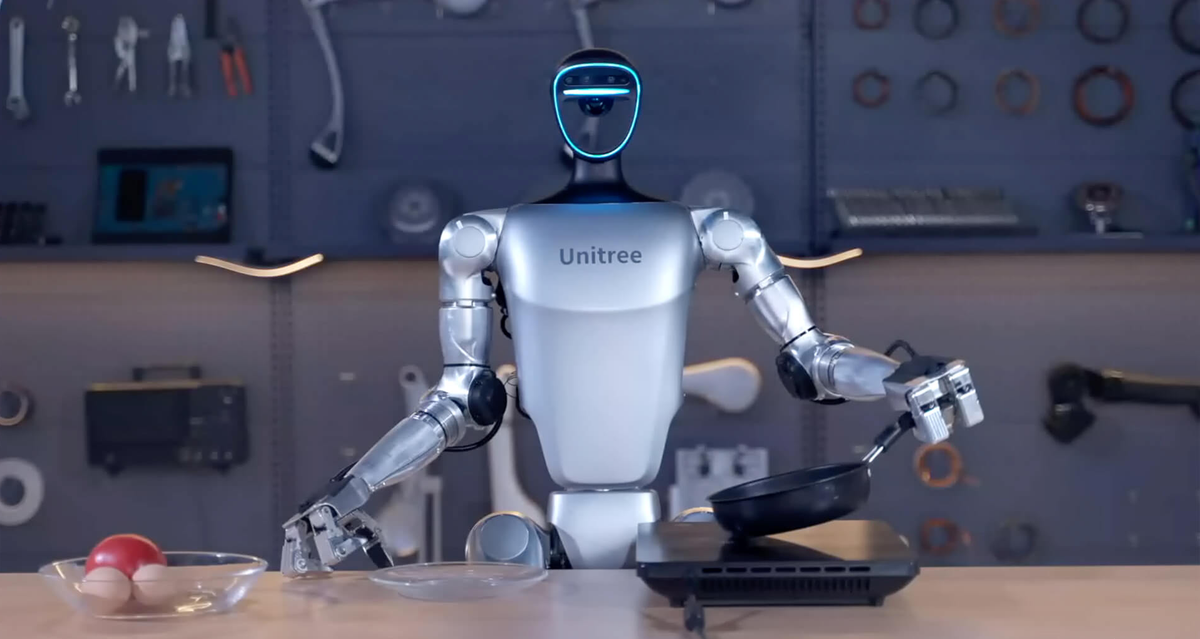
Chinese robotics manufacturer Unitree Robotics has officially launched the public beta of its application store for humanoid robots, a strategic move aimed at mirroring the software ecosystem success of the mobile internet era. The platform, referred to as the Unitree App Store, allows third-party developers to upload, distribute, and monetize applications, signaling a pivotal shift from hardware-centric research and development to software-driven commercialization in the robotics sector.
The platform went live on December 13, offering a web-based interface that includes a User Square, Action Library, Personal Center, and Developer Center. While the initial catalog focuses primarily on entertainment and movement-based algorithms, the infrastructure provides the necessary framework for developers to create broadly applicable software for Unitree’s proprietary operating system.
Industry participants have characterized this development as a potential "iPhone moment" for the humanoid robotics sector. By establishing a viable revenue model for external developers, Unitree aims to solve a critical adoption bottleneck: the scarcity of practical applications that drive consumer demand. The initiative is designed to incentivize the creation of diverse software, moving the industry beyond niche research hurdles toward mass-market scalability.
As hardware costs decline and supply chains mature, the introduction of a centralized marketplace seeks to position humanoid robots as the next ubiquitous terminal device, surpassing smartphones. The launch underscores a broader industry effort to create "marginal effects" for developers, where software can be deployed across millions of units rather than the current fragmented landscape of thousands.
Initial Offerings and Technical Framework
The current iteration of the App Store hosts a limited selection of applications, primarily focused on dance and entertainment functions. Available content includes motion libraries allowing robots to perform complex sequences, such as mimicking Bruce Lee or performing specific dances. These applications utilize spatial intelligence models and computer vision technologies, such as YOLO, to generate motion data from spatial videos without requiring physical motion capture filming.
Users can view application details including pricing, version history, and specific requirements regarding the robot's degrees of freedom. However, the launch has faced initial technical stability issues, with reports indicating that several feature links on the official website are currently returning errors or failing to redirect properly.
Operating System Standards and Compatibility
While the current store operates on Unitree’s proprietary system, the company is positioning itself within a broader, more standardized ecosystem. The platform supports OM1, an open-source operating system released by Openmind, which industry analysts compare to the "Android" of the robotics world due to its unrestricted terminal compatibility.
This dual-track approach reflects a growing consensus that a unified operating system is essential for a thriving App Store model. The integration with OM1 suggests Unitree is hedging against fragmentation, ensuring its hardware can support a standardized software environment akin to the mobile market.
Evolution of Product Design
The emergence of a robotics app store is forcing a paradigm shift in product management. Unlike mobile app development, which focuses on user interface (UI) and screen interactions, humanoid robot applications require a focus on spatial computing and environmental empathy.
Development in this sector is increasingly aligning with Mixed Reality (MR) design principles. Future product logic is expected to move away from screen-based prototypes toward multi-modal interactions involving voice, vision, and spatial manipulation, requiring developers to prioritize human spatial behavior over traditional graphical interfaces.