
Chinese Robot Vacuum Makers Sweep Global Market as Tech Giants Join the Fray
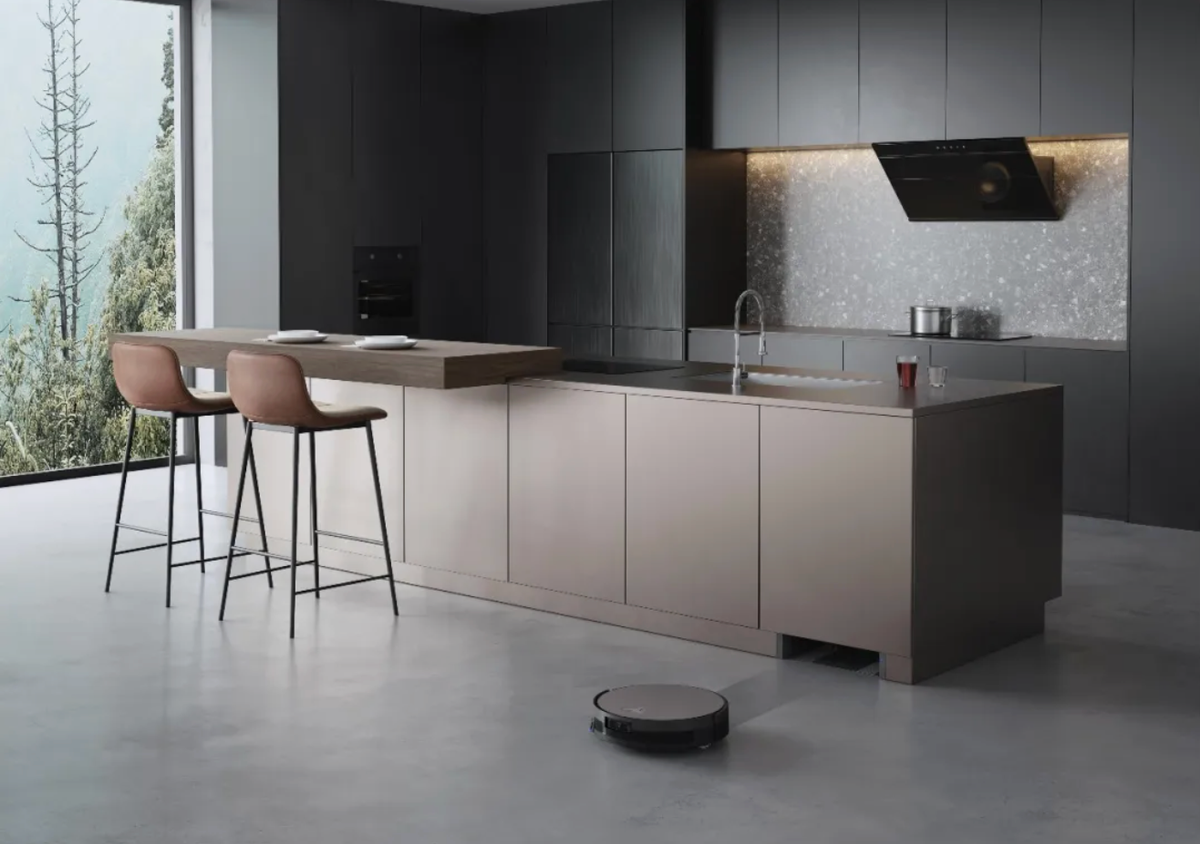
Chinese manufacturers have cemented their dominance in the global robotic vacuum market in 2025, capturing the top five market share positions worldwide through aggressive technological iteration and supply chain superiority. While the sector continues to outperform the broader consumer electronics industry, domestic growth is increasingly driven by government subsidies, prompting leading players to accelerate expansion into the U.S. and European markets to sustain momentum.
The industry’s robust growth trajectory has attracted high-profile cross-sector competition, most notably from the world’s largest commercial drone maker, DJI. DJI’s entry into the cleaning appliance sector highlights the divergence between the stagnation of the smartphone market and the upward potential of household robotics. However, despite the influx of new competitors, market saturation is intensifying, with established players pivoting from price wars to feature-based competition centered on artificial intelligence and advanced cleaning mechanics.
Data shows a complex domestic landscape where policy stimulus has front-loaded demand. In the first ten months of 2025, China's robotic vacuum market saw sales value approximately RMB 16.6 billion yuan (US$2.3 billion), a 17% year-on-year increase. Yet, the critical "Double 11" shopping festival revealed signs of fatigue, with retail value dropping 17% compared to the prior year, suggesting that while the long-term adoption curve remains positive, immediate domestic organic growth faces headwinds from waning subsidy effects.
As domestic competition tightens, major Chinese brands including Ecovacs Robotics and Beijing Roborock Technology are doubling down on global localization strategies. With Chinese companies now accounting for the vast majority of global shipments, the industry focus has shifted toward high-end, AI-driven solutions designed to meet specific regional needs in Western Europe and North America.
New Entrants in a Crowded Field
The allure of the growing cleaning robotics sector has drawn significant crossover interest. DJI entered the fray with its first robotic vacuum, leveraging its brand equity to crack the top six in sales volume within its first month, exceeding 10,000 units. However, industry analysts remain cautious about the timing of DJI's entry.
Despite its engineering reputation, DJI’s debut product utilizes disc mops—a technology some competitors view as inferior to the roller or track-based systems now standard in the high-end segment. Market observers note that the industry has become heavy on marketing expenditure with high concentration among incumbents, making it a challenging environment for new players regardless of technical pedigree. Concurrently, existing players are diversifying; Dreame Technology has expanded into automobiles and televisions, while Roborock has launched laundry machines, signaling a broader "cross-over" trend as companies seek to build comprehensive smart home ecosystems.
Volatility Behind Growth Numbers
While the sector achieved double-digit growth in the first ten months of 2025, driven by trade-in policies and replacement demand, recent volatility exposes reliance on external stimulus. Data from All View Cloud indicates that during the Double 11 promotion period, the sector’s retail volume fell 1% and value plunged 17% to RMB 9.5 billion yuan (US$1.3 billion). This decline is attributed to the withdrawal of some subsidies and the "front-loading" of consumer purchases earlier in the year.
Analysts project full-year growth for 2025 to hover around 20%, supported by the lower base in 2024. However, the contrast between the strong cumulative yearly performance and the weak holiday sales suggests that manufacturers must navigate a normalization of demand in the domestic market moving into 2026.
Pivot to Premium and AI Integration
To combat commoditization, manufacturers are pushing average selling prices higher through technological upgrades. In the third quarter of 2025, the average price of a robotic vacuum on mainstream Chinese e-commerce platforms rose 9.4% to RMB 3,344 yuan (US$460). The RMB 3,500-plus segment is expanding rapidly, now accounting for the largest share of sales volume.
Innovation is centering on "cleanliness" and automation. The market is shifting decisively toward active water roller mop technology, which allows for real-time self-cleaning of the mop during operation, addressing the "spreading dirt" issue of older disc models. This technology now commands a 76% market share in the washing robot segment. Furthermore, companies are integrating embodied AI, with brands like Roborock and Dreame showcasing units equipped with bionic robotic arms at CES capable of obstacle manipulation, moving the industry closer to fully autonomous household maintenance.
Accelerating Global Expansion
With domestic growth requiring heavier marketing investment, Chinese vendors are aggressively capturing overseas market share. In the first three quarters of 2025, global robotic vacuum shipments rose 18.7% to 17.42 million units, with Chinese firms sweeping the top five spots.
Regional data underscores this dominance: Roborock holds the top market share in the U.S., Germany, and South Korea, while Dreame leads in Western Europe with a 26.8% share. Narwal Intelligence Technology is targeting a 50-50 split between domestic and overseas revenue, expanding into over 50 markets.
Success abroad is increasingly defined by localization capabilities rather than just pricing. Manufacturers are adapting hardware for specific regional environments—increasing suction power and anti-tangle features for carpet-heavy European homes, or distinct cleaning mechanics for Southeast Asian markets where barefoot living requires higher floor hygiene standards. Executives at Ecovacs note that leveraging China's supply chain advantages combined with AI implementation positions these companies to sustain their lead in the next generation of product development.