
China's EV Charging Sector Hits 20 Million Milestone as Private Installations Surge, Market Competition Intensifies
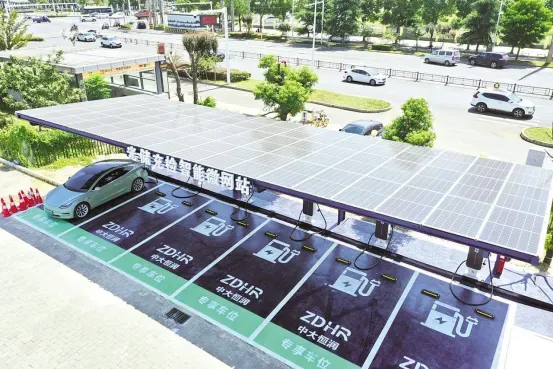
China's electric vehicle charging infrastructure reached a pivotal milestone in 2025, with total charging facilities surpassing 20 million units for the first time, according to data released by the Electric Vehicle Charging Infrastructure Promotion Alliance on January 21. The sector demonstrated accelerated growth with 7.27 million new installations, representing a 56.8% year-on-year increase and marking a significant leap from the previous year's 24.7% growth rate.
Private charging facilities emerged as the dominant force, with installations soaring 82% to reach 15.38 million units by year-end. This explosive growth in residential charging points outpaced new energy vehicle sales growth of 28.2%, pushing the incremental pile-to-vehicle ratio down to 1:1.9 from 1:2.7, effectively reducing charging accessibility concerns for EV owners.
Public charging infrastructure underwent a technical transformation, with average charging power reaching 46.53 kilowatts, representing a 33% efficiency improvement year-on-year. High-power charging facilities exceeding 250 kilowatts became increasingly prevalent, addressing the industry's longstanding "slow charging" pain point.
Market concentration declined noticeably as competition intensified. The top five operators' combined market share dropped 4.3 percentage points to 61.1%, while smaller regional players and automaker-owned networks gained ground, reshaping the competitive landscape.
Private Charging Boom Reshapes Infrastructure Balance
The private charging sector's 82% growth rate significantly outstripped overall market expansion, with 6.14 million new installations added in 2025 compared to the previous year's base of 9.24 million units. This segment now accounts for 76.5% of total charging facilities, up from 72.1% in 2024, cementing its position as the backbone of China's charging ecosystem.
The surge reflects improved installation conditions as more residential communities accommodate EV charging requirements. The dramatic improvement in the incremental pile-to-vehicle ratio—from 1:2.7 to 1:1.9—indicates that charging infrastructure deployment is now outpacing vehicle sales growth, fundamentally altering the supply-demand dynamics that previously constrained EV adoption.
The Alliance projects private charging facilities will add another 7.42 million units in 2026, bringing total holdings to 22.79 million units, suggesting sustained momentum in residential charging deployment.
High-Power Charging Drives Public Infrastructure Upgrade
Public charging facilities recorded 1.14 million new installations in 2025, reaching a total of 4.72 million units and reversing the 8.1% decline in additions seen in 2024. The sector's defining characteristic was the rapid adoption of high-power charging technology.
The top five operators deployed 202,752 ultra-fast charging guns exceeding 250 kilowatts, with Huawei Digital Power, TELD, and Wanbang Digital Energy leading deployments at 67,478, 66,839, and 29,867 units respectively. Total rated power capacity for public charging reached 220 million kilowatts, with the average per-gun power rising to 46.53 kilowatts—a 33% efficiency gain that enables "10 minutes charging for 400 kilometers range" scenarios.
This technical evolution addresses a critical user pain point. As EV battery capacities and vehicle ranges increase, the market has shifted from solving availability issues to resolving speed constraints, with high-power charging emerging as the industry's core breakthrough.
The Alliance forecasts 1.45 million new public charging installations in 2026, with direct current facilities accounting for 759,000 units and alternating current facilities comprising 689,000 units, bringing total public charging facilities to 6.21 million units.
Market Concentration Eases as Competition Broadens
The charging operations market experienced notable deconcentration throughout 2025. The top five operators—TELD, Star Charge, and Kuaidian—saw their combined market share decline to 61.1% from 65.4%, with individual shares of 18%, 15%, and 14% respectively. The top ten operators' share fell 5.3 percentage points to 75.2%, while the top fifteen dropped 4.9 percentage points to 82.2%.
This fragmentation stems from multiple factors: regional and scenario-focused smaller operators gaining traction, automakers accelerating proprietary charging network construction, and increased competition in previously underserved markets. The shifting landscape suggests a maturing market where specialized players can carve out sustainable niches alongside established giants.
State-owned operators maintained stable absolute positions but saw relative market presence diluted. State Grid's 196,000 charging facilities remained unchanged, causing its market share to contract from 5.49% to 4.13% and its ranking to slip beyond sixth place. China Southern Power Grid similarly held steady at 90,000 units while dropping to tenth position.
State-Backed Networks Maintain Strategic Role Despite Share Decline
While state-owned operators' market shares contracted, their strategic importance in China's charging ecosystem remained pronounced. State Grid and China Southern Power Grid maintained their respective deployments at 196,000 and 90,000 units, focusing resources on high-speed service areas, remote counties, and other locations with strong public service characteristics that private operators typically avoid.
This positioning reflects a deliberate strategic choice rather than competitive weakness. State-backed networks function as infrastructure stabilizers, ensuring charging availability in commercially challenging but socially necessary locations, effectively complementing private operators' urban and high-traffic focus.
Battery swapping stations grew modestly, adding 712 stations to reach 5,155 total facilities, representing 16% growth—significantly slower than charging infrastructure expansion and suggesting this alternative energy replenishment model remains niche.
Rapid Timeline Compression Signals Sector Maturation
China's charging infrastructure development timeline has compressed dramatically. The sector required 13 years to reach its first one million facilities, five years to progress from one million to ten million, and just 18 months to jump from ten million to twenty million—a geometric acceleration that underscores intensifying investment and deployment efficiency gains.
This pace reflects converging factors: aggressive government policy support, sustained EV sales growth, improving unit economics for charging operators, and technological advances reducing installation costs and timeframes. The 2025 acceleration—from 4.22 million additions in 2024 to 7.27 million in 2025—represents a 72% increase in annual deployment capacity.
The sector's evolution from 12.82 million total facilities at end-2024 to 20.09 million by end-2025 demonstrates China's infrastructure deployment capabilities and the charging industry's transition from nascent development to scaled expansion phase, providing critical support for the country's electric vehicle ambitions.