
China's EV Triumvirate Storms the Premium SUV Segment With Back-to-Back Flagship Launches
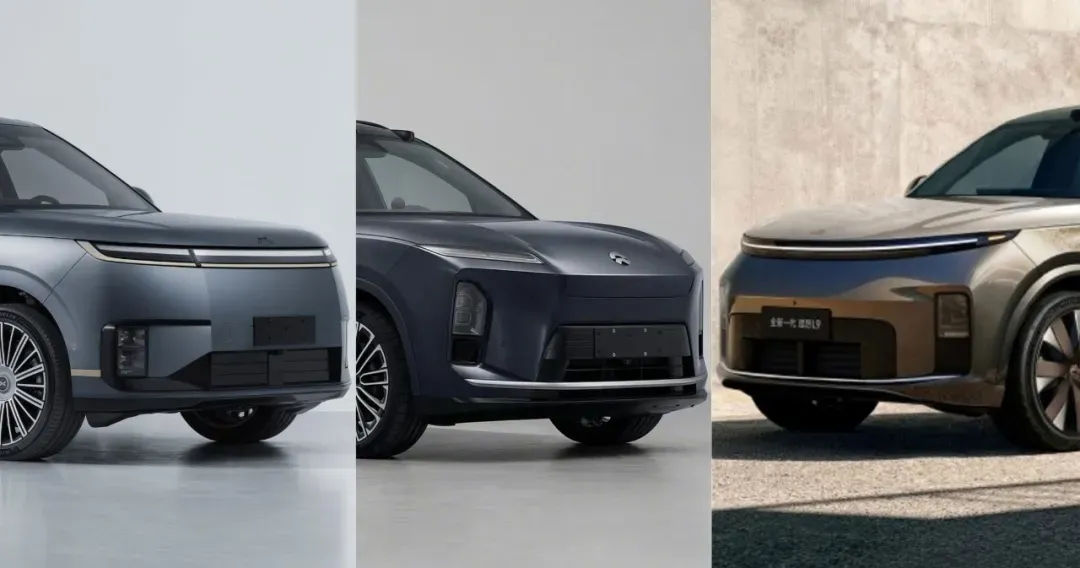
Three vehicles. Twelve days. A direct challenge to global luxury incumbents.
In an unprecedented show of force, NIO, Xpeng, and Li Auto — China's three most closely watched pure-play EV makers — are launching their respective flagship six-seat SUVs in rapid succession across the final two weeks of May 2026, a coordinated market assault that signals the group's collective graduation from scrappy challengers to genuine premium-segment disruptors. The launches arrive as China's new-energy vehicle penetration rate has surged from roughly 4% a decade ago to 61% today, compressing the window for legacy automakers to mount a credible response.
The timing is unlikely to be accidental. By stacking three high-profile debuts within a single news cycle — Li Auto's L9 Livis on May 15, Xpeng's GX on May 20, and NIO's ES9 on May 27 — the three companies collectively dominate premium-segment conversation and crowd out rivals' marketing oxygen at a critical selling season. Early social-media engagement metrics and live-stream viewership figures suggest the blitz is generating outsized consumer attention relative to any single launch.
Diverging Positioning Targets Three Distinct Buyer Profiles
Despite occupying the same broadly defined "large six-seat premium electric SUV" category, the three vehicles are engineered around fundamentally different buyer psychographics, limiting direct cannibalization while maximizing collective category expansion.
NIO ES9 anchors the group at the high end. At a pre-sale price of RMB 528,000–658,000 (US$73,300–US$91,400), with a battery-as-a-service (BaaS) swap option starting at RMB 420,000 (US$58,300), the ES9 is calibrated for corporate buyers and rear-seat executives. Its 5,365mm body length, 3,250mm wheelbase — the largest of the three — and an executive-grade 2+2+2 cabin featuring 20-point massage seating, electrochromic privacy glass, and a "Sky Island" cockpit configuration position it squarely against the Mercedes-Benz GLS and BMW X7 on experiential terms, while undercutting both on technology specification.
Li Auto L9 Livis targets affluent multi-generational Chinese families at RMB 559,800 (US$77,750). The vehicle represents a deliberate brand-elevation step from the original L9, with the company introducing what it calls "embodied intelligence" — a framework built on onboard sensors, large language models, and proprietary chips intended to make the vehicle proactively anticipate occupant needs. The interior has been redesigned around what Li Auto describes as "luxurious ease," replacing the outgoing dual-screen layout with an integrated panoramic display and adding a sliding overhead rear screen. The addition of a handcrafted gold trim strip on a dual-tone body option signals a clear push into conspicuous-luxury territory previously occupied by European marques.
Xpeng GX plays the technology-value card most aggressively, launching at RMB 399,800 (US$55,500) — the lowest price point of the three — while packing what the company claims is the industry's densest AI compute stack in a production vehicle: four proprietary Turing AI chips delivering 3,000 TOPS of processing power. Chairman He Xiaopeng has positioned the GX as the first series-production vehicle globally with Level 4 autonomous-driving hardware pre-installed, a claim that, if substantiated through regulatory validation, would represent a significant competitive moat.
Self-Developed Silicon Closes the Last Technology Gap
The most strategically significant commonality across all three vehicles is full vertical integration of autonomous-driving silicon — a capability that, until recently, remained the exclusive province of Tesla among volume EV manufacturers.
NIO's ES9 carries the company's first 5-nanometer chip, the Shenqi NX9031, paired with three LiDAR units and 31 additional sensing elements running on the SkyOS Tianqu full-domain operating system. The architecture incorporates NIO's proprietary world model (NWM), enabling cross-domain sensor fusion across highway, urban, and parking scenarios.
Li Auto's L9 Livis deploys dual 5nm Mach 100 chips delivering a combined 2,560 TOPS, running the MindVLA-o1 algorithm stack — internally designated VLA 2.1 — built on a 3D Vision Transformer foundation model integrated with Li Auto's MindGPT and a latent world model. The company frames this as the first step toward a vehicle that "thinks and cares for its occupants."
Xpeng's 3,000-TOPS Turing chip cluster powers a pure-vision large model combined with a physical world model and the company's second-generation VLA intelligent driving system, XNGP 5.0. Xpeng is marketing the GX as a "Robotaxi prototype in series production" — a positioning that blurs the line between personal vehicle and autonomous mobility platform.
Analysts tracking China's semiconductor supply chain note that all three companies sourcing 5nm-class chips for high-volume consumer vehicles represents a meaningful demand signal for domestic foundry capacity, at a time when geopolitical constraints on advanced chip imports remain unresolved.
Full-By-Wire Chassis Breaches the Last Stronghold of Traditional Luxury
If autonomous-driving silicon was the first barrier, chassis dynamics have historically been the second — and arguably more durable — competitive moat held by European luxury manufacturers. All three vehicles breach it simultaneously.
NIO ES9's Tianxing intelligent chassis incorporates steer-by-wire, 8.4-degree rear-wheel steering, and a fully active suspension, yielding a turning radius of 5.45 meters. Li Auto claims the L9 Livis carries the world's first "complete" full-by-wire chassis, combining 800V fully active suspension — which the company says is unique among vehicles priced below RMB 600,000 (US$83,300) — with four-wheel steering and electro-mechanical braking (EMB). Single-wheel lift force exceeds 10,000 Newtons. Xpeng's GX uses a natively by-wire chassis with six-layer aerospace-grade redundancy and achieves a 100km/h emergency braking distance of 34.4 meters.
The simultaneous arrival of full-by-wire architecture across three competing platforms in the same month is not coincidental — it reflects a shared supplier ecosystem maturation and a collective decision by all three companies to deploy technology that, until 2025, appeared only in vehicles from Porsche and Land Rover at two to three times the price point.
Founders Weaponize Personal Brand in a Marketing Battle Legacy OEMs Cannot Replicate
Product parity at the flagship level shifts competitive differentiation toward brand narrative — and here, the three founders have deployed themselves as the primary marketing asset in ways that no traditional automaker CEO can easily replicate.
NIO founder and CEO Li Bin conducted a 24-hour continuous live stream on May 10, personally driving the ES9 along the company's "Silk Road" battery-swap corridor through the Hexi Corridor in Gansu Province, fielding real-time user calls and demonstrating the network's operational reliability across more than 2,000 swap stations. The stunt doubled as a product demonstration and an infrastructure confidence signal.
Li Auto founder Li Xiang released an AI-generated retro hip-hop music video featuring his digital avatar dancing alongside the L9 Livis before the vehicle's auto-show debut, then appeared on entrepreneur Luo Yonghao's interview program on May 13, where Luo provided an unsolicited endorsement: "I test-drove the new L9. It's genuinely dreamlike."
Xpeng's He Xiaopeng mobilized his personal business network, inviting approximately a dozen prominent entrepreneurs — including 360 Group chairman Zhou Hongyi, 58.com founder Yao Jinbo, and investor Zhang Ying — for a group test drive on May 11. Multiple attendees placed orders on the spot. Zhou's public comment — "the four power-operated doors rival a Maybach" — generated significant secondary media coverage.
The pattern reflects a structural asymmetry: for NIO, Xpeng, and Li Auto, the founder is the brand's highest-credibility spokesperson and its most cost-efficient marketing channel. For Volkswagen, BMW, or even Toyota, no equivalent mechanism exists.
Impact Assessment: Pressure Mounts on Joint-Venture and Import Segments
The coordinated launch compresses the competitive timeline for foreign automakers operating in China's premium SUV segment. Vehicles such as the BMW X7, Mercedes-Benz GLS, and Audi Q7 — which collectively anchored the large luxury SUV market as recently as 2022 — have already been displaced from mainstream consideration by Chinese NEV alternatives, according to industry observers tracking segment share data.
The three new flagships extend that displacement upmarket. At price points ranging from RMB 399,800 to RMB 658,000 (US$55,500–US$91,400), they now cover the full price band previously occupied by imported German luxury SUVs, while offering autonomous-driving hardware, energy replenishment infrastructure (including NIO's 2,000-plus swap stations), and cabin technology that imported vehicles cannot match on equivalent specifications.
For investors, the launches carry a dual read. On the positive side, all three companies are demonstrating an ability to command premium pricing — a critical condition for sustainable margin improvement after years of price-war attrition. On the risk side, the concentration of high-specification launches in a single month raises questions about near-term supply chain execution, particularly for 5nm chip procurement and active suspension component availability.
The next meaningful data point will be first-month delivery figures, expected in late June 2026. If any of the three vehicles achieves monthly deliveries above 3,000 units in the RMB 400,000-plus (US$55,500-plus) price band, it would constitute a structural market-share shift in a segment that legacy automakers have treated as their last defensible position in China.
Related Coverage:
Nio’s ES9 Teaser Puts Steer-by-Wire Chassis at the Center of Its 2026 Large-SUV Fight