
China's GPU Makers Face a Two-Front War—and Software Is the Costlier Battle
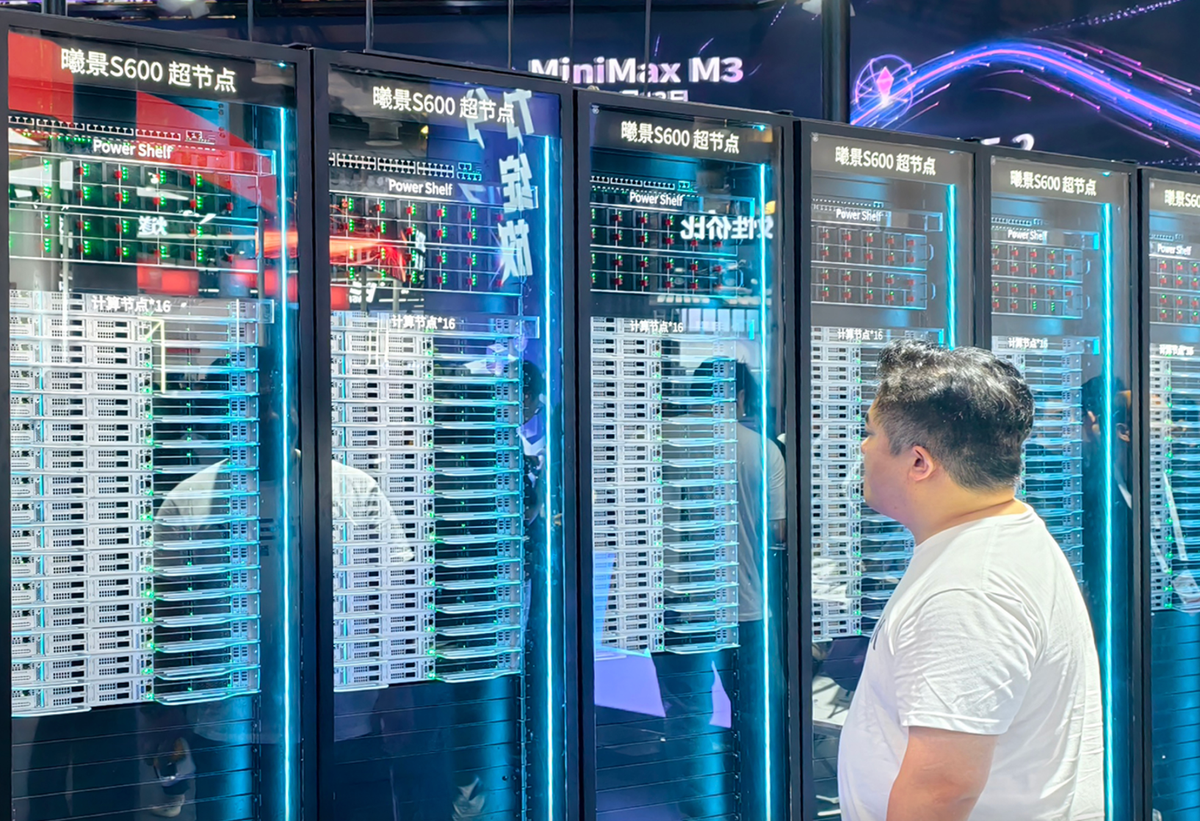
The race to dislodge Nvidia from China's AI infrastructure is not primarily about silicon—it is about whether domestic chipmakers can transform bespoke engineering labor into reusable software assets before their balance sheets run dry.
China's homegrown GPU vendors—Metax Technology, Moore Threads, Cambricon Technologies, and Enflame Technology—have made measurable hardware progress, but a deeper structural challenge is now defining the competitive hierarchy among them: the ability to convert one-off software engineering work into standardized, scalable platform capabilities. The stakes are high. A vendor that fails to industrialize its software stack risks funding a perpetual services business disguised as a semiconductor company.
Market participants are already parsing the signals. Enflame's IPO prospectus, Metax's H1 2026 filing, and Biren Technology's fundraising disclosures collectively reveal that software development is no longer a peripheral R&D line item—it is the principal determinant of long-term unit economics.
Hardware Specs Set the Ceiling; Software Defines the Floor
The gap between a chip's theoretical throughput and its deployable performance is wider than most procurement discussions acknowledge.
Nvidia's own data, disclosed in June 2024, illustrated the dynamic with unusual clarity: using an identical cluster of 512 H100 GPUs, a GPT-3 175B training benchmark improved 27% over 12 months without any hardware change. The gains came from compute-communication parallelism improvements and internal power-distribution tuning—pure software.
Domestic vendors have logged comparable, if smaller-scale, results. In December 2025, Metax and the Shanghai AI Laboratory's DeepLink team reported that switching from Eager to Graph execution mode on the C500 GPU lifted performance on the MinerU document-parsing workload by approximately 60%—again, with no hardware modification.
The implication for investors is direct: GPU valuation models that anchor solely to compute density per dollar miss a significant value driver. A chip's commercial lifespan—and the revenue it can generate post-shipment—is substantially determined by the cadence of post-production software updates.
CUDA's Moat Runs Deeper Than Most Rivals Acknowledge
Understanding why domestic vendors are trapped in a costly adoption cycle requires a precise diagnosis of Nvidia's competitive advantage, which extends well beyond raw transistor counts.
Nvidia's Parallel Thread Execution (PTX) virtual instruction set provides a stable intermediate compilation layer, allowing programs written for one GPU generation to remain partially compatible with successors via runtime recompilation. The Blackwell compatibility guide confirms this forward-reach, though it attaches conditions around driver versions and instruction feature sets. Crucially, compatibility does not automatically unlock peak performance on new hardware—that still requires targeted optimization.
The mathematical libraries compound the lock-in. cuBLAS and related tools allow developers to call optimized matrix-multiplication routines without reimplementing them. CUDA 12.8 added low-precision computation support specifically for the Blackwell architecture, meaning customers who upgrade hardware can partially reuse existing code while simultaneously accessing new computational primitives.
Even within Nvidia's own ecosystem, optimization remains non-trivial. DeepSeek's V3 technical report noted that up to 20 of H800's 132 streaming multiprocessors were diverted to communication operations during training—a hardware-software co-design constraint that required manual PTX-level intervention by the team. The report explicitly recommended dedicated communication silicon in future architectures to reduce software complexity. If Nvidia's own sophisticated customers still encounter these frictions, the bar for domestic alternatives is correspondingly higher.
The switching cost, therefore, is not the purchase price of a rival chip. It is the aggregate engineering cost of re-validating model accuracy, rewriting operator kernels, re-certifying system stability, and retraining staff—costs that can easily exceed the hardware price differential a domestic vendor offers.
Two Diverging Software Strategies, Both With Unresolved Trade-offs
Domestic vendors have coalesced around two distinct responses to the CUDA lock-in problem, each carrying different commercial implications.
The compatibility route, pursued most visibly by Metax and Moore Threads (摩尔线程), attempts to minimize customer migration friction by mapping CUDA API calls to native interfaces. Moore Threads' MUSA Mapping tool, for instance, translates supported CUDA calls into MUSA equivalents before routing them through the company's own toolchain. If existing code and engineering experience can be partially preserved, the customer's total switching cost falls—and the domestic vendor's sales cycle shortens.
The strategic cost is ongoing maintenance liability. Every time Nvidia releases a new CUDA version or a major model shifts its compute pattern, the compatibility vendor must decide which features to support and how to implement them on its own silicon. This is not a one-time porting exercise; it is an indefinite tracking obligation. Metax's April 2026 open-sourcing of TileLang-MetaX, with a commitment to weekly upstream synchronization, is a partial hedge—offloading some tracking work to the community—but chip-specific adaptation and validation costs remain on the vendor's books.
The independent-stack route, more closely associated with Enflame, prioritizes building a software architecture oriented around target model computation requirements rather than CUDA interface parity. Enflame Chairman Zhao Lidong, in a September 2026 interview, described CUDA as an unauditable black box and questioned the strategic wisdom of indefinitely chasing Nvidia's release cadence.
The concern has technical grounding. Compatibility with a specific CUDA version does not guarantee support for subsequently added features. And as CUDA 13.0's removal of offline compilation support for Maxwell, Pascal, and Volta architectures demonstrated, even Nvidia treats backward compatibility as a bounded commitment rather than an unconditional promise. A domestic vendor that has organized its software development around CUDA version N faces a recurring question each time version N+1 arrives.
In practice, the two routes are not mutually exclusive. Enflame's PyTorch integration layer does provide partial CUDA-device call migration capability. Cambricon's BANG toolchain and framework adaptation layer similarly serve migration use cases despite being an independent stack. The real distinction lies in where the primary engineering investment is directed and which party—vendor or customer—absorbs the larger share of transition cost.
Enflame-Tencent Reveals the Commercial Geometry of Customer Dependency
Enflame's IPO prospectus provides the most granular available data point on how customer concentration intersects with software economics.
In 2025, direct sales to Tencent, combined with sales through Tencent-designated server partners under the AVAP procurement model, totaled approximately RMB 830 million (US$115 million), representing roughly 84% of Enflame's annual revenue. The company also disclosed that AI accelerator cards sold to Tencent were priced below comparable products sold to unaffiliated third parties, a differential Enflame characterized as a negotiated pricing arrangement under a long-term strategic partnership.
The Tencent relationship delivers two legitimate strategic benefits: real-world model and infrastructure exposure that accelerates product maturation, and order volume that helps amortize front-loaded R&D. But the asymmetry of bargaining power is structurally embedded. A customer that represents 84% of revenue and possesses the engineering capability to evaluate—and publicize—performance gaps holds substantial pricing leverage. Domestic GPU vendors competing for large anchor customers are, in effect, offering a subsidized beta program at scale.
Enflame's own adaptation efficiency narrative is instructive about what software maturity eventually unlocks. Early in the Tencent engagement, a model update required one to two months of operator development before deployment. By a later stage, the same class of update was resolved in two to three days, with some scenarios completed in hours. The comparison is directional rather than strictly controlled—model complexity and operator scope evolved over the same period—but it is consistent with a pattern where accumulated tooling reduces marginal adaptation cost.
The commercial translation: if each incremental customer requires a customized engineering mobilization, revenue growth is structurally coupled to headcount growth, and operating leverage remains elusive. Adaptation time compression is the leading indicator that the decoupling has begun.
Quantifying the Software Investment: What Disclosures Reveal
Precise software R&D expenditure is difficult to isolate from public filings because Chinese semiconductor companies report by cost category—personnel, technical services, depreciation—rather than by hardware versus software function. Hardware design itself is software-intensive; software development consumes GPU clusters and testing infrastructure. The two activities are deeply entangled in both cost and organizational terms.
Several data points nonetheless provide useful triangulation.
Metax's "high-performance general-purpose GPU optimization and upgrade" project consumed approximately RMB 460 million (US$63.9 million) in 2025, equivalent to roughly 45% of full-year R&D spending. The project covered ongoing optimization and customer adaptation of the first-generation training product—not development of a new chip. That the C500, which taped out in late 2022, still warranted the single largest R&D program three years later underscores a point that chip release schedules obscure: tapeout is a milestone, not a finish line.
Biren's fundraising prospectus planned to allocate approximately 40% of net IPO proceeds to software platform development and upgrades, encompassing model support expansion, driver and compiler optimization, and testing infrastructure. At Cambricon's original 2025 fundraising plan, the software platform project was budgeted at RMB 1.6 billion (US$222 million) over three years, versus RMB 2.9 billion (US$403 million) for the chip platform. The projected three-year personnel cost for the software project was approximately RMB 1.38 billion, representing 86% of total software project investment—a ratio that reflects the labor-intensive, human-capital-dependent character of software R&D in this industry.
Projected headcount trajectories add further texture. Both chip and software platform projects at Cambricon targeted 630 average R&D personnel by year three, but the software project's growth rate was higher, suggesting the company anticipated that software engineering demand would outpace hardware engineering demand as products matured.
Biren's H1 2026 financial statements disclosed a discrete software product revenue line of approximately RMB 65.17 million (US$9.05 million), representing roughly 5% of total revenue. This is a meaningful structural signal: it establishes that software can generate independent billings rather than existing solely as an embedded cost of hardware sales. Whether the revenue line can scale—and at what margin—depends on pricing architecture and renewal rates that have not yet been disclosed.
Moore Threads' R&D Ratio Decline: Scale Effect or Revenue Mix?
Moore Threads reported revenue of approximately RMB 1.51 billion (US$209.7 million) in 2025, up from RMB 440 million (US$61.1 million) in 2024. Over the same period, R&D expense declined modestly from RMB 1.36 billion to RMB 1.31 billion, compressing the R&D-to-revenue ratio from approximately 310% to 87%.
The ratio compression is directionally encouraging but analytically ambiguous. R&D testing costs fell from RMB 294 million to RMB 125 million—a RMB 169 million reduction that exceeds the absolute decline in total R&D spending, suggesting the testing line was the primary driver. Chip development cycle timing, model mix, and headcount decisions could all be contributing factors independent of software reuse dynamics.
The critical question the disclosure does not answer is whether the incremental revenue required proportional incremental engineering support. If new customer deployments were enabled primarily by existing software tools, the revenue growth represents genuine operating leverage. If each new deployment required a dedicated engineering team, the R&D ratio improvement reflects accounting categorization more than structural efficiency.
This distinction matters acutely for long-term earnings power. A vendor whose software platform can serve a new customer with minimal marginal cost is building a durable business. One whose revenue growth is perpetually shadowed by equivalent engineering headcount additions is not.
Delivery Mode Adds Another Layer to the Profitability Equation
Software capability determines whether a domestic GPU can be deployed; delivery model determines who pays for the deployment.
Enflame's two primary delivery formats illustrate the choice architecture. Under AVAP, the company supplies accelerator cards or modules to a customer-designated server integrator at a negotiated end-customer price; the system integration responsibility rests primarily with the integrator. Under intelligent-computing cluster delivery, Enflame bundles server hardware, system software, deployment testing, and an acceptance certification period—taking on multi-card coordination, resource scheduling, operational monitoring, and fault handling.
The company's own product mix shift is telling. In 2024, intelligent-computing systems and clusters represented approximately 56% of Enflame's primary business revenue. By 2025, AI accelerator cards and modules had risen to approximately 87% of primary business revenue. The rebalancing toward component sales reduced Enflame's system integration exposure, concentrating risk in the customer's integration layer while simplifying Enflame's own delivery scope.
Metax's profile is structurally different. In Q1 2025, integrated training-and-inference GPU boards accounted for approximately 98% of primary business revenue, with system-level delivery responsibility distributed across customer and partner arrangements depending on specific contract terms.
Neither model is unambiguously superior. Board-only sales concentrate vendor resources on chip and base-layer software while relying on customers or partners to possess integration capability—a dependency that can create deployment failures that damage the vendor's reputation regardless of contractual allocation. Cluster delivery expands addressable deal size and reduces customer friction but introduces system-level warranty, acceptance, and operational support obligations that consume engineering resources and complicate revenue recognition.
The underlying tension is consistent across both models: lowering the customer's adoption barrier requires the vendor to absorb more engineering responsibility, but absorbing more responsibility increases the cost of each incremental deployment. Standardization of the software toolchain and deployment automation is the mechanism through which this tension is resolved—but standardization is itself a function of accumulated customer deployments, creating a bootstrapping problem.
The Open-Source Lever and Its Limits
Recognizing that no single domestic vendor can independently replicate CUDA's decades of ecosystem development, the industry is increasingly turning to open-source community participation as a cost-sharing mechanism.
Metax's April 2026 release of TileLang-MetaX allows developers to write GPU kernels using the TileLang programming model and compile them for Metax hardware, with a stated commitment to weekly synchronization with the upstream community. The strategic logic is defensible: community-generated optimizations that apply to Metax silicon reduce the vendor's own development burden, and developer familiarity with TileLang lowers onboarding friction.
The limits are equally clear. Community contributions must still be ported, validated, and tuned for specific hardware. Upstream updates introduce new features that Metax must evaluate and potentially support. The open-source strategy reduces but does not eliminate the tracking obligation that characterizes the compatibility route.
DeepSeek's experience illustrates how the boundaries of manual and automated optimization shift over time. The V3 technical report documented PTX-level communication and computation optimizations performed manually by the research team. A subsequent update to the DeepGEMM open-source library noted that NVCC in CUDA 12.9 had automated an instruction scheduling optimization that previously required manual post-compilation intervention, rendering the manual workaround obsolete. As compiler toolchains mature, optimizations that once required expert engineering effort migrate into general-purpose tools available to all developers. Domestic GPU vendors that participate in and contribute to relevant open-source projects position themselves to benefit from analogous transitions in their own ecosystems.
Impact Assessment: What Determines the Long-Term Winners
The competitive differentiation among domestic GPU vendors is converging on a single operational question: at what rate does accumulated software investment reduce the marginal cost of each additional customer deployment?
Vendors for whom the marginal deployment cost remains high—because each customer requires bespoke operator development, model-specific tuning, and dedicated engineering support—face a structural ceiling on operating margins regardless of revenue scale. Research and development expense for such vendors functions as a quasi-variable cost, scaling with revenue rather than amortizing across it.
Vendors that achieve genuine software platform standardization—where a new customer's deployment draws primarily on existing compiler optimizations, pre-validated operator libraries, and documented deployment tooling—transition from a service-revenue model to a product-revenue model. That transition is what makes operating leverage structurally achievable.
Three observable metrics will signal which trajectory a vendor is on: the ratio of new customer deployments completed without dedicated engineering team mobilization; the time-to-deployment for standardized workloads across successive customer engagements; and the trend in R&D expense per unit of incremental revenue as the customer base expands.
None of these metrics are currently disclosed with the precision necessary for external validation. But the directional evidence from Enflame's adaptation time compression, Moore Threads' R&D ratio trajectory, and Cambricon's software project headcount projections collectively suggest the industry is past the stage of proving technical feasibility and entering the stage where commercial scalability is the defining test.
The domestic GPU market in 2026 is not short of order flow—policy tailwinds, procurement localization pressure, and geopolitical constraints on Nvidia supply have ensured demand. The question is which vendors will emerge from this demand cycle with software assets that compound in value versus those that will have spent the same period accumulating engineering debt dressed up as revenue.
Related Coverage:
Cambricon Clears the Air on Shipment Rumors as Inventory Surge Draws Scrutiny
"GPU Four Dragons" Race Heats Up: MuXi's Blockbuster Debut Signals China's GPU Surge