
J.P. Morgan Slashes Pop Mart Price Target as Q3 Revenue Crashes Up to 50%, Calls Q4 the "Next Pressure Test
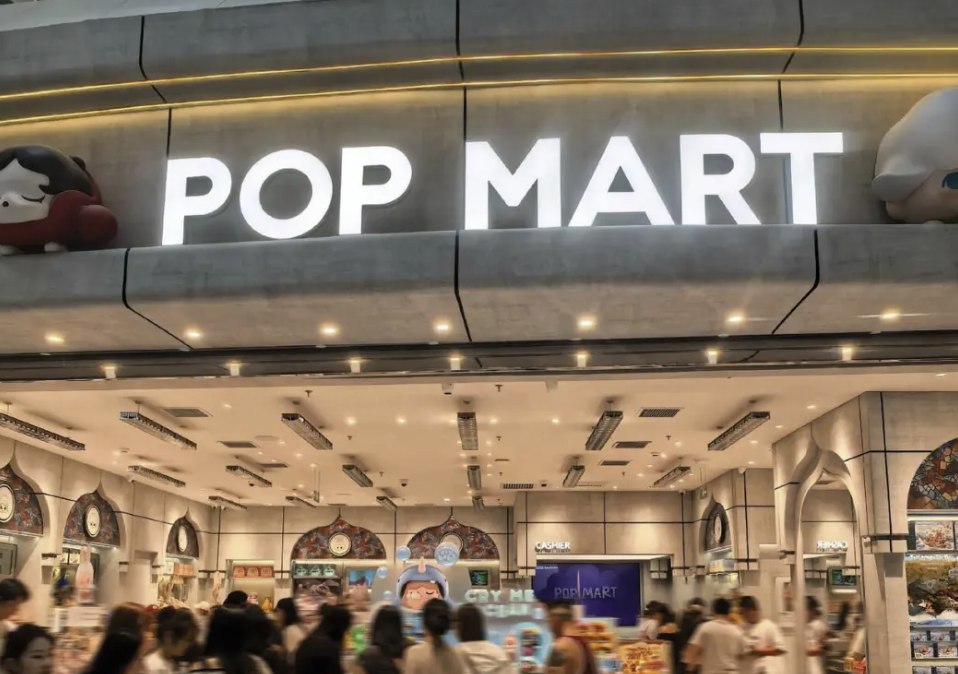
J.P. Morgan's Asia Pacific equity research team fired another warning shot at Pop Mart International Group Limited on October 28, 2026, cutting its price target on the Hong Kong-listed toymaker to HK$100 from HK$110 while maintaining an Underweight rating. The downgrade follows a third-quarter revenue collapse that landed well below even the most pessimistic buy-side forecasts — and raises an uncomfortable question the bull camp has yet to answer: can Pop Mart sustain global momentum without another Labubu-sized blockbuster IP?
A Quarter That Resets the Entire FY26 Narrative
The numbers are hard to spin. Total revenue fell 45–50% year-over-year in Q3 2026, meaningfully worse than J.P. Morgan's own pre-quarter estimate of -37% and near the bottom of buy-side expectations, which had penciled in a 40–50% decline range. China was softer than anticipated, with domestic revenue falling 25–30% YoY, dragged primarily by the online channel.
The result forces a significant rebasing of the full-year outlook. J.P. Morgan now forecasts FY2026 revenue at RMB 30 billion (approximately US$3.8 billion), a roughly 20% decline year-over-year, slashed from a prior estimate of RMB 33.4 billion. Adjusted net income is cut to RMB 7.9 billion (US$1.0 billion) from RMB 9.3 billion — a 39% drop versus FY2025's record earnings. Net margin is expected to compress to approximately 21% in the second half, down a stark 14 percentage points year-over-year, as overseas operating leverage deteriorates and operating expenses remain stubbornly fixed due to new flagship store buildouts.
Q4: Stabilization or Another Downside Surprise?
Management offered cautiously constructive guidance on the Q3 earnings call. Executives expect Q4 China revenue to show slight sequential growth, with full-year domestic revenue still tracking positive. Overseas revenue is projected to grow sequentially into the peak season, though management flagged "some uncertainty in Europe." On margins, the company guided gross margin down no more than 2 percentage points in the second half versus the first half, with higher opex and lower net margin as a result — though the operating margin compression was not quantified.
J.P. Morgan is not buying the optimism wholesale. The bank's Q4 forecast stands at -41% YoY, essentially a +1% sequential uptick — a stabilization scenario that still implies deeply negative annual comparisons. As the report pointedly frames it: "With 3Q the toughest comp, 4Q becomes the next pressure test — can revenue stabilize in both China and overseas without another blockbuster IP on the scale of Labubu?"
Flagship Expansion: Big Bet or Big Burden?
Pop Mart is doubling down on large-format retail as its strategic anchor. The Paris flagship — Europe's first and largest — opened in September; London has entered trial operations; and U.S. store count crossed 100 by end-September. The domestic flagship pipeline is similarly active, with new openings generating first-month sales above RMB 10 million and foot traffic more than double the top-50 store average.
The pipeline ahead is ambitious: London hoarding removal within roughly one month, Milan in Q1 2027, New York by year-end 2026, a second U.S. flagship in the first half of 2027, and a second Paris location — all under an explicit "quality over quantity" stance.
Yet J.P. Morgan surfaces the central risk embedded in this strategy: "The key unanswered question remains: could big stores become a burden if the next IP cycle takes longer to arrive?" With overseas operating margin already down 14 percentage points YoY to 30% in the first half of 2026, the flagship model is consuming capital faster than it is generating certainty.
Inventory Improving; IP Pipeline Broadening But Not Yet Decisive
On the supply chain front, there are early positive signals. Total inventory peaked around May, began declining in August, and showed a clear downtrend by end-September. Pop Mart has also restructured its global procurement model, moving from a four-region system to a centralized HQ-coordinated approach designed to reduce duplicate stocking and regional shortages.
The IP matrix is widening: Labubu's 10th-anniversary tour, a Dimoo x Pixar collaboration gaining traction in Europe and the U.S., Molly's 20th-anniversary exhibition in Bangkok, and Crybaby's first theme store set to open in Bangkok. The top six IPs contributed more than 60% of sales in APAC in Q3. However, the Labubu animated film remains at script stage, and no major content budget increase is planned near-term — suggesting that IP optionality remains more of a long-term narrative than a near-term catalyst.
Valuation: From 30x to Re-Rating Purgatory
J.P. Morgan's revised HK$100 price target is anchored to 12x 2027 estimated earnings — in line with China consumer discretionary sector multiples. The stock, which traded at 30x P/E at its August 2025 peak, has de-rated sharply but the bank sees no compelling reason to step in ahead of margin and execution clarity. "Investors will need stronger conviction on 'normalized' store productivity and margins before leaning back in," the report states.
Longer term, the analysts acknowledge a path back to modest growth in 2027, underpinned by competitive positioning and an overseas white space opportunity of 250-plus stores. But the message for now is unambiguous: the market needs to rebase expectations first.
Related Coverage:
Pop Mart Revenue Rises 24% as Overseas Growth Reverses and Inventory Piles Up
POP MART Reports 204% Revenue Surge Driven by LABUBU Mania and Global Expansion