
China's NEV Market to Surge 24% as Price War Cools and Tech Battle Heats Up
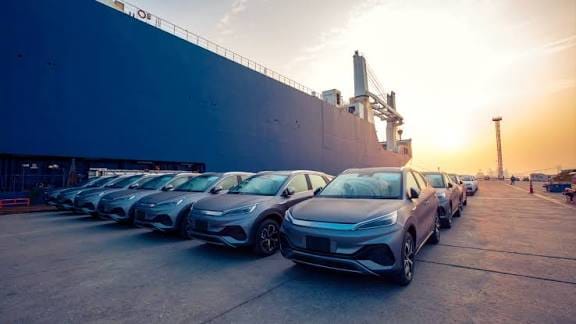
China's new energy vehicle market is on track for robust 24% growth in 2025, but this rapid expansion masks an intensifying battleground. Local champions, legacy automakers, and formidable tech giants are now vying for dominance not just on price, but through aggressive global expansion and a high-stakes race for leadership in autonomous driving technology.
Sales of new energy vehicles (NEVs) in the world's largest auto market are projected to hit 15.2 million units this year, according to an October 14 report from Morgan Stanley. This momentum follows a strong first nine months of 2025, where wholesale volumes surged 32% year-on-year. The performance stands in stark contrast to the flat growth for traditional internal combustion engine vehicles, signaling a decisive consumer shift toward electrification.
The brutal price war that has characterized the sector appears to be tapering off, with retail discounts stabilizing in the third quarter after an "anti-involution campaign," the report noted. Still, the competitive landscape is being actively reshaped. While BYD Company remains the dominant player, it is facing mounting pressure on its market share from aggressive rivals like Geely Automobile and disruptive newcomers such as smartphone maker Xiaomi Corp.
For investors, the evolving market dynamics necessitate a focus beyond pure sales volume. The ability to innovate in smart driving, secure a foothold in overseas markets, and forge strategic collaborations are emerging as critical differentiators. Success now hinges on navigating a crowded field where technological prowess and global strategy are becoming as crucial as manufacturing scale.
Sales Boom Amid Shifting Preferences
Morgan Stanley forecasts that total passenger vehicle (PV) sales in China will reach 29.9 million units in 2025, a 9% annual increase. NEVs are the clear engine of this growth, projected to account for 51% of all wholesale vehicle sales this year.
Data from the first nine months of 2025 underscores this trend. While NEV wholesale volumes climbed 32%, sales of internal combustion engine (ICE) vehicles remained stagnant with 0% growth. Within the NEV segment, battery electric vehicles (BEVs) are outpacing plug-in hybrids (PHEVs), with wholesale volumes growing 40% and 20% respectively. BEVs have shown particular strength in major, license-plate-restricted cities, whereas PHEVs and extended-range electric vehicles (EREVs) see greater adoption in lower-tier regions.
A Shifting Competitive Landscape
While BYD commands an impressive 31% of the NEV market, its share is projected to decrease by three percentage points from 2024 levels, according to the report's analysis of full-year volume share changes. The intense competition is creating new winners and losers.
Geely is forecast to be a major gainer, increasing its market share by four percentage points. Tech players are also making significant inroads, with Xiaomi and XPeng, Inc. both expected to grow their share by one point. Conversely, established EV makers like Li Auto Inc., Tesla Inc., and the Huawei-backed Aito are projected to see their market shares decline in 2025.
The Rise of Tech Giants and Local Brands
The entry of tech heavyweights is redrawing the industry's battle lines. Xiaomi has made a strong debut, delivering over 100,000 units of its SU7 model in 2024 and quickly following up with the YU7. Meanwhile, Huawei continues to expand its influence through partnerships with automakers on models branded Aito, Luxeed, and Stelato, leveraging its expertise in smart cockpit and autonomous driving systems.
This tech-fueled innovation is helping domestic Chinese brands solidify their dominance. Local automakers now hold a commanding 69% of the passenger vehicle market on a trailing twelve-month basis, a significant gain at the expense of German and Japanese brands, whose shares have steadily eroded.
'Go Global' Strategy Accelerates
Chinese automakers are increasingly looking beyond their home market for growth, with exports becoming a key pillar of their strategy. The country's total vehicle exports are projected to grow 15% to 5.7 million units in 2025. In the first nine months of the year, NEV exports soared 68% year-on-year, with PHEV exports showing explosive growth of 206%.
Automakers are backing this push with substantial investments in overseas production. BYD, GWM (Great Wall Motor Co. Ltd., Geely, and Chery Automobile Co. are establishing factories in markets including Brazil, Hungary, Thailand, and Indonesia. These offshore plants, with a combined planned capacity of over 1.5 million units, aim to build global supply chains and cater to local demand in Asia, Europe, and Latin America.
The Next Frontier: Autonomous Driving
The industry is rapidly evolving from a focus on electrification to a new era defined by intelligent, software-driven vehicles. The next major battleground is for leadership in autonomous driving, particularly Urban Navigate on Autopilot (NOA) systems that can handle complex city environments.
Leading players, including XPeng, NIO Inc., Li Auto, and Xiaomi, are racing to roll out nationwide NOA coverage. This tech arms race is creating a substantial new market, with Morgan Stanley forecasting the smart driving hardware addressable market to reach $150 billion by 2030. Furthermore, the report predicts that robotaxis could account for 8% of China's total taxi and ride-sharing fleet by the end of the decade, highlighting the commercial potential of full autonomy.