
China’s Nio, Li Auto and XPeng edge past the breakeven line, recasting the EV race around AI and operating discipline
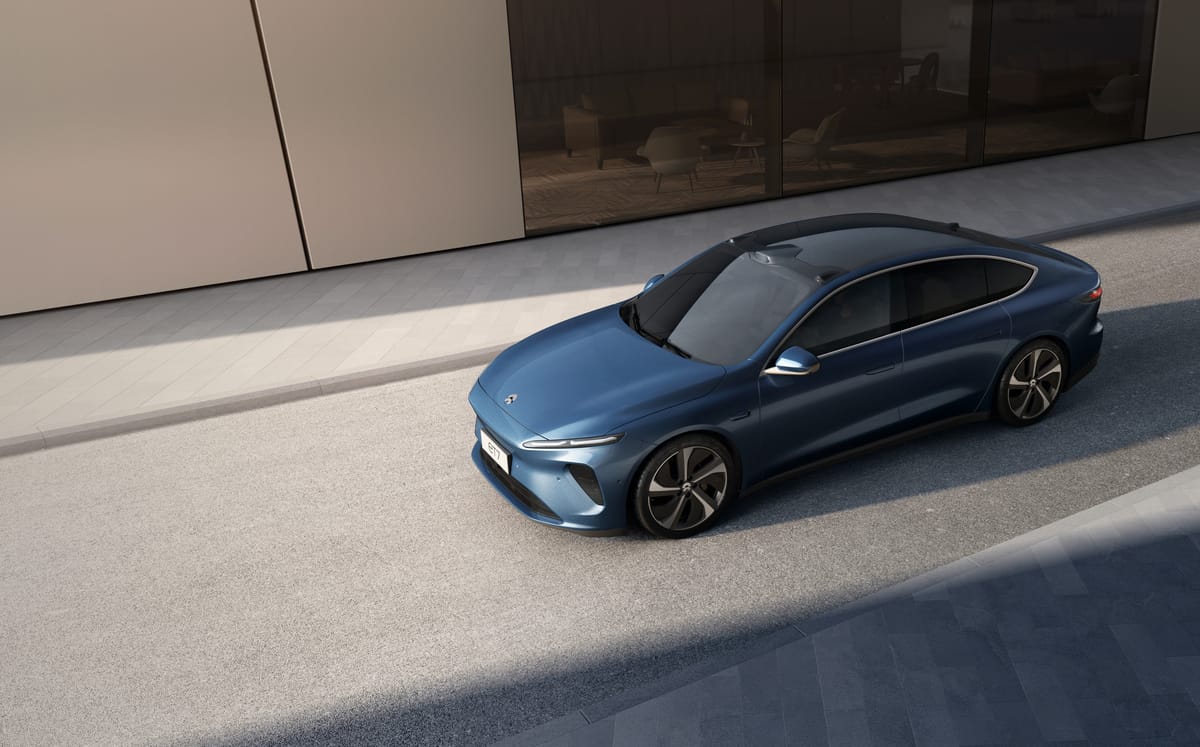
China’s leading EV startups are finally showing what investors have demanded for years: scale that converts into profit. Nio, Li Auto and XPeng each used 2025 earnings to signal that the sector’s “cash-burn for volume” era is giving way to a contest over margins, software attach rates and supply-chain control.
The inflection arrived in the fourth quarter. Nio swung to positive operating profit for the first time, XPeng posted its first quarterly profit, and Li Auto extended a multi-year run of profitability while keeping revenue above RMB 100 billion. The shift matters because 2026 guidance from all three leans on product-cycle execution and technology monetization — not simply deeper discounting.
Profitability broadens as scale starts to pay
Nio reported 2025 deliveries of more than 326,000 units, up about 47%, with momentum improving into year-end as its multi-brand strategy (Nio, Onvo and Firefly) widened coverage. A key marker for investors was Q4 vehicle gross margin of 18.1%, suggesting purchasing leverage and manufacturing utilization are beginning to compound.
Li Auto, by contrast, is increasingly being valued by the market as an operating system rather than a turnaround story. It generated 2025 revenue of RMB 112.3 billion (US$15.6 billion), making it the only major Chinese EV newcomer to deliver more than RMB 100 billion in annual revenue for three consecutive years while remaining profitable. Cash reserves stood at RMB 100 billion (US$13.9 billion), giving the company flexibility to sustain R&D and withstand pricing cycles.
XPeng delivered the sharpest rebound. 2025 deliveries reached 429,000 units, up 125.9%, while revenue rose nearly 88%. Its Q4 profit milestone was paired with a 21.3% gross margin — the strongest among the three — indicating that its recovery is not just volume-led but also supported by improved unit economics.
Strategy diverges as competition shifts from models to systems
The earnings underline three distinct playbooks that converge on one conclusion: EV competition in China is becoming a systems game.
Nio is leaning into a high-barrier infrastructure-and-platform approach. Its battery-swapping network — now numbering in the thousands of stations — functions as both customer-acquisition infrastructure and, increasingly, an energy asset that can evolve into a storage and power-management network. The trade-off is a longer payback cycle and higher upfront capex, raising the premium on keeping utilization high in 2026.
Li Auto is optimizing for repeatable profitability. Its strategy emphasizes focus on family-oriented segments and “deployable” AI capabilities, alongside in-house development spanning chips, foundation models and a steer-by-wire chassis. The advantage is that product launches can scale through a mature channel and supply chain without structurally diluting margins; the constraint is that growth expectations rely more on execution than on breakthrough optionality.
XPeng is positioning itself as the tech-upside vehicle among the three, doubling down on intelligent driving and “physical AI.” Service revenue grew more than 120% year-on-year in 2025, a sign that software and services are starting to complement hardware gross profit. Its stated ambition to move from L2+ toward L4 capability, and to push its driver-assistance stack overseas, frames 2026 as a test of whether China EV software can travel — and monetize — beyond the domestic price war.
AI chips move from cost center to margin lever in 2026
A common thread across all three is heavier investment in AI and silicon, with claims that years of spend are approaching commercialization. Nio’s 5nm intelligent-driving chip, Li Auto’s “Mach 100,” and XPeng’s VLA intelligent-driving system anchor a broader industry pivot: build proprietary stacks to reduce bill-of-materials volatility, improve feature iteration speed, and capture software-driven gross margin.
For investors, the key question in 2026 is whether these stacks translate into measurable take rates — paid software, higher trim mix, or lower warranty and compute costs — rather than remaining marketing line items. The early margin improvements in late 2025 suggest the mechanism is forming, but the durability will be tested as competition intensifies around comparable ADAS features.
Supply-chain normalization boosts operating leverage, but price pressure remains
The companies are entering 2026 with several tailwinds: stabilizing battery costs, easing supply-chain disruptions, and rising penetration of premium battery-electric vehicles — a segment Nio has highlighted as improving. Those factors can widen the industry’s gross profit pool, but only for players that hold pricing power or offset price cuts with lower costs and higher software contribution.
Each company’s 2026 targets reflect that reality. Li Auto has flagged plans for more than 20% growth, XPeng is maintaining a high-growth stance, and Nio is targeting full-year positive operating profit. The market takeaway is that profitability is no longer an outlier outcome among China’s top EV newcomers — it is becoming the benchmark that will decide who can fund the next wave of autonomous driving, global expansion and ecosystem buildout.
Related Coverage:
Chinese EV Startups Set Aggressive 2026 Sales Targets as Legacy Rivals Opt for Steady Growth