
China’s Robotaxi Tipping Point: HSBC Sees 500,000 Vehicles By 2030—And A Half-Trillion-Yuan Prize
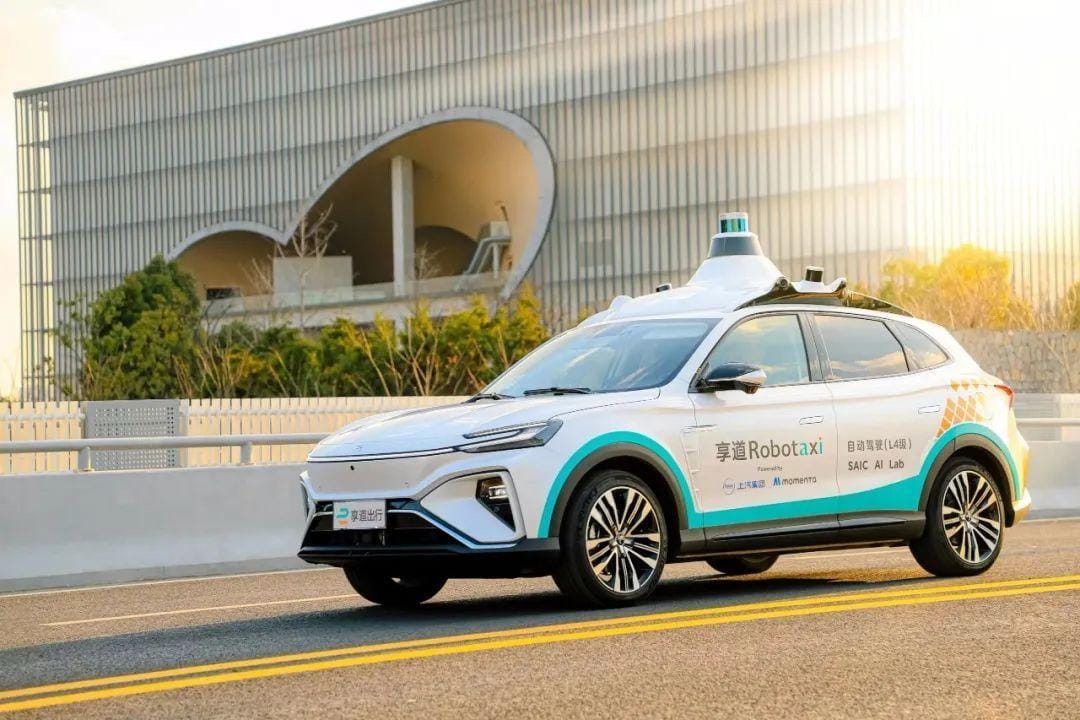
HSBC Global Research, in a 31 March 2026 report on China autonomous-driving equities, is calling what many investors have waited years to hear: China’s robotaxi industry is “approaching a tipping point.” The timing matters because public-market robotaxi names have already sold off year-to-date—HSBC notes Pony.ai and WeRide are down roughly 33% and 12%, respectively, versus the NASDAQ down 8%—even as the underlying operating data, policy posture, and cost curves are moving in the other direction.
In other words: the tape is skeptical, but the spreadsheets are starting to work.
The Big Forecast: From 4,500 Robotaxis To 500,000
HSBC puts a number on the scaling story. It estimates China had about 4,500 robotaxis operating in 2025—penetration “below 0.1%”—and forecasts a rise to 500,000 vehicles by 2030, implying 10% penetration. Longer term, HSBC projects penetration could reach 40% by 2035.
The payoff, if the fleet actually scales: HSBC expects annual robotaxi services to reach RMB458 billion (US$64 billion) by 2035, up from “below RMB1bn today.” That’s not a rounding error market—it’s a transport system being rewired.
Why 2026 Matters: Safety, Unit Economics, Regulation
HSBC frames 2026 as the inflection year because three constraints are easing simultaneously: safety confidence, unit economics, and regulatory openness.
On safety, HSBC leans on a set of datapoints that—taken together—aim to reset the debate from “cool demo” to “credible public service.” It cites Waymo data showing reductions in serious-injury crashes, and adds China-specific disclosures: Pony.ai said in December 2025 its robotaxi safety performance translated into 50% lower commercial insurance premiums than traditional taxis, while Baidu reported in November 2025 one airbag-deployment incident per 10.14 million kilometres in fully driverless vehicles.
HSBC’s blunt takeaway: robotaxis are “roughly 10x safer” than human drivers.
Then comes the part investors actually trade: whether a vehicle can make money. HSBC argues unit economics improved sharply versus 2022–23, driven “60% from costs” and “40% from revenue.” Hardware is cheaper, particularly LiDAR, and the labor model has shifted from in-vehicle safety drivers to remote monitoring. HSBC notes the operator-to-vehicle ratio moved from roughly 1:1 or 1:3 to around 1:20–1:40.
And on the hardware side: Pony.ai’s upfront autonomous driving kit hardware cost per robotaxi fell 70% to about US$40,000, according to the report. In HSBC’s model, these changes help bring unit economics to breakeven by end-2025.
Regulation is the third leg. HSBC argues policy direction “increasingly emphasized support” for commercialization, while local frameworks are becoming operational—highlighting Guangdong’s cross-city mutual recognition for testing/pilots and Guangzhou’s September 2025 milestone: “the world’s first 24-hour fully driverless commercial operation” in Huangpu District.
Still, HSBC warns the route to national scale won’t be smooth: licensing standards, liability, geofencing across jurisdictions, and supervision rules “will not happen overnight.”
Network Effects: The Real Moat Isn’t The Algorithm
HSBC’s central claim is structural: robotaxis behave like ride-hailing platforms, where network effects dominate. Larger fleets reduce waiting times, improve utilization, and lift unit economics—feeding a self-reinforcing scaling loop.
The report doesn’t romanticize it. It notes that rider dissatisfaction in the U.S. still centers on waiting time, cancellations, and lack of competition, and says China faces similar concerns. The solution is not a new slide deck; it’s more cars on the street.
This is why licensing becomes a barrier to entry: companies with proven safety records, accumulated mileage, and regulator relationships can secure fully driverless licenses and scale faster—turning “early mover” into “permanent advantage,” at least for a while.
The China Leaders: Pony.ai And WeRide
HSBC initiated coverage on Pony.ai and WeRide, rating both Buy, positioning them as first movers most likely to capture early network effects.
Pony.ai is described as more China-centric, prioritizing domestic density. HSBC says Pony.ai guided for more than 3,000 robotaxis by end-2026, up from 1,059 at end-2025, and claims it achieved unit-economics breakeven in parts of Guangzhou with Gen 7 vehicles.
WeRide is presented as more geographically diversified, leaning into overseas economics. HSBC cites management guidance for 2,600 robotaxis by end-2026, from 1,023 in January 2026, and notes an overseas plan that includes deploying 1,200 vehicles in Middle Eastern cities through Uber by end-2027. HSBC estimates WeRide is “approaching breakeven” in Abu Dhabi under normal conditions.
Valuation Gap: Waymo’s Private-Market Premium, China’s Public-Market Discount
HSBC highlights a striking valuation divergence: Waymo’s latest funding round reportedly valued it at US$126 billion, while China’s listed leaders trade far below—HSBC says Waymo is valued “30x more than Pony and 50x more than WeRide” versus their market caps as of 26 March 2026, despite similar technology maturity and comparable end-2026 fleet targets.
HSBC concedes private-market pricing mechanics differ. But it argues the gap still “appears excessive,” pointing to China’s lower bill-of-materials cost structure and the potential for pricing power to improve as fleet density reduces waiting time.
The Risks: Licenses, Safety Incidents, And The Politics Of Jobs
HSBC is explicit about the downside: tighter licensing, safety events, social concerns about unemployed taxi drivers, and pricing competition. It also warns of “placement risk”—the need for continued investment could pressure cash flow and force dilution.
Translation: robotaxis may be nearing scale, but they are not immune to the oldest rule in transport—one headline can change a regulator’s mood.
Related Coverage:
Robotaxi Accident Prompts Safety Scrutiny as Chinese Operators Accelerate Expansion
Chinese Robotaxi Startups Face Market Reality Check as Losses Mount and Stocks Tumble