
China's Smart Glasses War Reshapes as Alibaba's Qianwen and Xiaomi Crack the Top Five
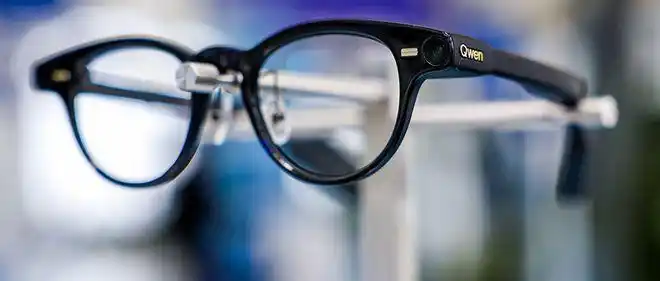
China's consumer AR glasses market is undergoing its most significant competitive realignment in three years, with tech giants displacing established startups in the top-five rankings even as RayNeo Innovation consolidates its lead at the front of the pack.
The structural shift emerged in Q1 2026 data from three independent research firms — Counterpoint Research, IDC, and CINNO Research — all of which confirmed RayNeo's dominance while revealing that Alibaba's AI-glasses brand Qianwen and Xiaomi had displaced incumbents Star-Magic Meizu and VITURE from the domestic top five. The reshuffle signals that the "hundred-glasses war" phase is giving way to a more capital-intensive, ecosystem-driven competitive environment that will test the staying power of pure-play AR hardware startups.
Market Data Confirms a Two-Tier Hierarchy Taking Shape
Three research houses triangulate a consistent picture for Q1 2026. Counterpoint Research places RayNeo Innovation at 23.7% global AR glasses shipment share, while IDC puts the figure at 24.7% globally and 31.7% within China. CINNO Research's domestic-only count aligns at approximately 24%, also ranking RayNeo first.
The methodologies diverge on product classification and channel scope, but the convergence on the market leader is statistically unusual and commercially meaningful — it suggests RayNeo's position is not an artifact of any single counting convention.
More instructive is the churn below that summit. CINNO's year-on-year comparison shows the domestic top five shifted from RayNeo, XREAL, Star-Magic Meizu, VITURE, Rokid in Q1 2025 to RayNeo, Rokid, XREAL, Qianwen, Xiaomi in Q1 2026. Rokid climbed from fifth to second; XREAL slipped from second to third; and two large-cap technology conglomerates entered the ranking entirely, displacing two hardware-focused specialists.
For investors tracking the XR supply chain, the message is clear: the addressable market has grown large enough to justify platform-level entry, compressing the window in which specialist vendors can operate without direct competition from companies with vastly deeper balance sheets.
Big Tech's Entry Disrupts Startups Without Yet Overturning the Order
Alibaba's Qianwen brand enters the AR glasses market with a structurally distinct proposition: integration with the Tongyi Qianwen large language model and the broader Alibaba Cloud ecosystem. Xiaomi, meanwhile, leverages one of China's most extensive consumer electronics retail networks and an installed base estimated in the hundreds of millions of IoT-connected devices.
Neither advantage is trivial. Yet the Q1 2026 rankings show that brand recognition and distribution access can accelerate market entry but have not, at least in this cycle, been sufficient to displace companies that began iterating hardware and software two to three years earlier. RayNeo, Rokid, and XREAL continue to hold the top three positions — a result that reflects accumulated manufacturing know-how, near-eye optics expertise, and supply chain relationships that cannot be replicated in a single product launch.
The pattern is consistent with dynamics observed in other Chinese consumer electronics categories, where incumbents with mature bill-of-materials structures and volume purchasing agreements hold a durable cost advantage even against well-funded new entrants.
RayNeo's Multi-Line Strategy Defends Share Across Price Bands
RayNeo Innovation's market position rests on a deliberately segmented product architecture rather than a single flagship bet. The company operates three active lines: the Air and GT series targeting mainstream entertainment and portable large-screen viewing; the V series addressing AI-assisted first-person capture and all-day wearability; and the X series exploring full-color etched waveguide optics and advanced AI-AR interaction for longer-cycle technology development.
The strategy allocates risk across the product portfolio: mature lines generate volume and cash flow, newer lines probe demand at adjacent price points, and frontier products accumulate optical and AI integration capabilities for future competitive cycles.
The GT Max, RayNeo's lead product during the 618 mid-year shopping festival, exemplifies this approach. The device incorporates dual-layer Micro-OLED displays, a glass-plastic hybrid prism optical module, and a proprietary Zone 360 chip enabling native three-degrees-of-freedom tracking, with a field of view expanded to 59 degrees. It topped JD.com's XR device rankings for 21 consecutive days following launch.
Pricing strategy reinforces the volume logic. The standard GT model retails at RMB 1,899 (approximately US$264), falling to roughly RMB 1,614 (US$224) after China’s consumer electronics subsidy program is applied. The price point extends the "add specifications, reduce price" approach first demonstrated in the Air 3s, lowering the barrier for consumers who have not yet purchased an AR viewing device.
According to CINNO Research, RayNeo has held the number-one position in China's AR glasses category at the 618 shopping festival for five consecutive years, a streak that spans multiple technology generations and several competitive cycles.
Single-Color Display Segment Emerges as the Next Volume Battleground
The most consequential product announcement from RayNeo in the near term may not be a refresh of an existing line but the introduction of an entirely new one. The company previewed the RayNeo iO at a product event last month and confirmed a Q3 2026 commercial launch. On June 20, it opened closed beta recruitment on international social platforms, describing iO as its "lightest and most discreet" wearable — language that positions the device as a form-factor competitor to conventional eyewear rather than to existing AR headsets.
Pre-release imagery suggests an extremely slim frame and temple design, a circular physical rotary knob with likely press-and-rotate input support, and an elongated protrusion at the hinge joint consistent with a miniaturized optical engine rather than a camera module. The configuration points toward a monochrome green-display information overlay product — a category that sits between camera-only AI glasses and full-color AR devices.
Single-color display glasses occupy a strategically important middle ground. They can render navigation prompts, translation overlays, teleprompter text, message notifications, and AI responses directly in the user's field of view while keeping total device weight, power consumption, and bill-of-materials cost within ranges acceptable for daily wear. The tradeoff — no full-color immersive content — is one a growing segment of consumers appears willing to accept.
The commercial viability of this positioning is already evidenced by the Q1 2026 rankings: both Rokid and Qianwen achieved their top-five placements primarily through single-color display products. RayNeo's iO launch will intensify competition in the segment's fastest-growing tier.
On the software side, RayNeo began accelerating its AI ecosystem buildout in 2025. Domestically, it co-developed a glasses-optimized multimodal large model with Alibaba Cloud's Tongyi Qianwen team, deployed across the V series. Internationally, the company has pursued integrations with Google's Gemini, OpenAI's ChatGPT, and Anthropic's Claude — a multi-model strategy that hedges against any single AI provider's dominance in the wearable interface layer.
Competitive Outlook: Hardware Parity Shifts the Contest to AI Integration
As near-eye display optics and wearable supply chains mature, the hardware differentiation window is narrowing. Optical waveguide yields are improving across the Chinese supply base, and component costs for single-color display modules have declined materially over the past 18 months. The implication for competitive strategy is significant: vendors that rely primarily on optical specifications or weight reduction as their primary value proposition face accelerating commoditization pressure.
The next durable moat is likely to be AI integration depth — specifically, the quality of real-time recognition and response, persistent user memory, intelligent information filtering, and the ability to run or route queries to best-in-class foundation models. This is terrain where Alibaba's Qianwen and Xiaomi, both of which have established AI infrastructure investments, hold structural advantages that will become more pronounced as hardware parity increases.
For RayNeo, the five-year market leadership position provides a supply chain cost base and brand recognition that are genuine competitive assets. Whether they prove sufficient against ecosystem-backed entrants as the total addressable market scales — industry observers estimate China's smart glasses shipments could exceed 10 million units annually within two to three years — will be the defining question for the sector in the second half of 2026 and beyond.
Related Coverage:
Chinese AI Glasses Brands Race to Dominate Offline Retail as They Target 700 Million Myopic Users