
XPENG's MONA L03 SUV Signals a Strategic Pivot: From Cost Cutter to Supply Chain Architect
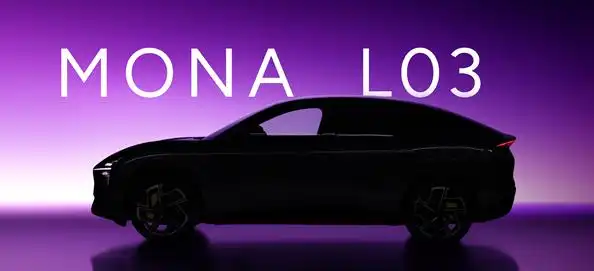
XPeng is preparing to launch the MONA L03, a compact SUV that marks a decisive shift in the automaker's supply chain strategy—from squeezing maximum value out of domestic partners to actively reshaping who sits at the table.
The official naming of the MONA L03 was confirmed by XPeng on June 22, 2026, with CEO He Xiaopeng revealing that the MONA series was internally codenamed "MONALISA" at inception—M for sedan, L for SUV—the two models together completing the full name. The vehicle had already cleared China's Ministry of Industry and Information Technology (MIIT) filing process in April 2026, signaling an imminent commercial launch before year-end. The announcement arrives as XPeng's SUV lineup—the G6 and G7—continues to post monthly sales in the low thousands, creating a structural imbalance that the L03 is explicitly designed to correct.
The market context is stark: in 2025, XPeng delivered 429,400 vehicles in total, of which the MONA M03 sedan alone accounted for 197,500 units, or approximately 46% of group volume. In May 2026, the M03 contributed 14,160 of the group's 32,158 monthly deliveries—again nearly half. A single A-segment sedan carrying half the revenue load is not a triumph; it is a concentration risk. The L03's launch is as much a risk-management exercise as it is a product offensive.
Replacing BYD with CALB: XPeng Reasserts Battery Independence
The single most consequential supply chain decision embedded in the L03 is the battery switch. The MONA M03 relied on BYD's Fudi blade battery cells as its primary supplier—a deliberate cost-compression play that helped anchor the M03's starting price at RMB 119,800 (approximately US$16,640). The L03 abandons that arrangement entirely, sourcing its lithium iron phosphate (LFP) battery packs from CALB (China Aviation Lithium Battery), XPeng's cornerstone strategic investee.
The shift carries layered significance. First, it severs the L03's cost structure from BYD's pricing leverage—a dependency that, while effective for volume at the entry tier, constrains margin at higher price points. Second, it reaffirms XPeng's long-term commitment to CALB as a platform supplier rather than a transactional vendor. The L03 will offer two battery configurations: 56 kWh and 69 kWh, delivering CLTC-rated ranges of approximately 550 km and 650 km respectively. He Xiaopeng stated plainly at the 2026 M03 refresh launch: "There is no value in making cheap, low-margin cars. We will not touch anything priced below RMB 100,000." The L03's battery strategy is the operational expression of that declaration.
Luxshare Precision Crosses Into EV Drivetrain, Backed by XPeng's Volume
The electric motor supplier choice is equally deliberate and arguably more disruptive to the broader supply chain narrative. The L03's drivetrain—a 183 kW peak-output unit—is sourced from Luxshare Intelligent Manufacturing Technology (Changshu), a subsidiary of Luxshare Precision Industry.
Luxshare Precision is best known globally as a Tier-1 contract manufacturer for Apple Inc., assembling AirPods and iPhone components at scale. Its entry into electric vehicle powertrain supply—specifically the "three electrics" core of battery, motor, and electronics—represents one of the more significant cross-sector pivots in China's industrial supply chain in recent memory. XPeng is providing Luxshare with its first major EV motor production mandate, effectively issuing a market credential that no amount of consumer electronics revenue could replicate. If the L03 achieves the volume trajectory of the M03, Luxshare's automotive division gains a reference customer capable of justifying further capacity investment in EV components.
Turing Chip Rollout Deepens as Marginal Cost Logic Takes Hold
On the intelligent driving front, the L03 will carry XPeng's proprietary Turing AI chip across all SKUs, running the VLA 2.0 vision-only autonomous driving architecture as standard equipment. Higher-specification trims will deploy dual-chip configurations for enhanced compute headroom, while base variants will run single-chip setups—mirroring the tiered approach introduced with the 2026 M03 refresh, where the Max version runs a single Turing chip at 750 TOPS and the Ultra SE version runs dual chips at 1,500 TOPS combined.
The economic logic here is straightforward and compounding: the Turing chip's per-unit cost amortizes across a larger combined production base as both the M03 and L03 scale simultaneously. Each incremental L03 unit sold reduces the blended chip cost across the platform, widening the margin gap versus configurations that would otherwise require Nvidia Orin-series silicon. XPeng's decision two years ago to develop its own chip was a capital expenditure; today it is becoming a structural cost advantage.
Bojun Technology Retains Body Supply Role as "Wall-Adjacent" Model Extends
For body-in-white components, available signals point to Bojun Technology retaining its supply role on the L03, as it does on the M03. Bojun constructed a dedicated facility adjacent to XPeng's Zhaoqing manufacturing base specifically to serve M03 production—a "wall-adjacent supply" arrangement that eliminates inter-city logistics cost and compresses delivery cycles to near zero. The L03's coupe-SUV body architecture, with a wheelbase of 2,850 mm (35 mm longer than the M03 sedan) and overall lengths of 4,650 mm and 4,672 mm across two variants, is structurally distinct but shares sufficient design-language DNA with the M03 to make retooling within the same facility commercially viable.
From Procurement to Orchestration: The Strategic Inflection Point
Taken together, the L03's supply chain reads as a deliberate escalation of XPeng's industrial ambitions. The M03 demonstrated that XPeng could optimize an existing domestic supply chain to deliver competitive specifications at aggressive price points. The L03 is testing a different thesis: that XPeng can function as a supply chain architect—selecting partners not merely for current cost efficiency but for strategic fit, cross-sector capability, and long-term co-investment potential.
The vehicle is positioned as a compact coupe-SUV, powered by both pure-electric and extended-range electric (EREV) powertrains—the latter pairing a 1.5-liter naturally aspirated engine with the electric drivetrain—and priced at a tier where gross margin exists to fund the more complex supplier relationships the L03 requires. The design language carries forward MONA family cues: fastback roofline, frameless doors, semi-hidden door handles, a full-width rear light bar, and colored brake calipers.
Whether the L03 can replicate the M03's dominance—the sedan has held the top-selling A-segment pure-electric position for 20 consecutive months as of May 2026, and in April and May 2026 outsold every gasoline sedan in its class—remains the open question. XPeng's SUV segment has not produced a breakout model; the G6 and G7 each sell in the low thousands monthly. The L03 is not just another product launch. It is the test of whether XPeng's supply chain leverage can travel upmarket.
Related Coverage: