
China’s Solar Giants Build Middle East Hub to Bypass US Tariffs
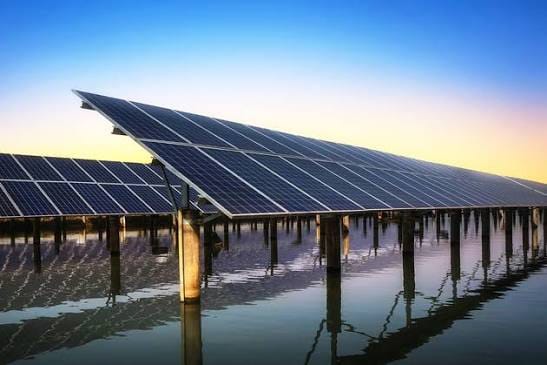
Facing escalating trade barriers in the West, Chinese solar and renewable energy companies are aggressively expanding into the Middle East and North Africa (MENA), transforming the region into a strategic hub to sustain their global operations and pivot away from commercial headwinds.
The scale and pace of this shift were underscored by recent announcements from two of China’s energy infrastructure titans. On Oct. 10, Power Construction Corporation of China (PowerChina) and China Energy Engineering Corporation (CEEC) disclosed they had signed new overseas renewable energy contracts worth a combined 31.2 billion yuan ($4.3 billion). The deals include a 11.72 billion yuan solar project in Saudi Arabia secured by a PowerChina-led consortium and a 19.55 billion yuan new energy contract won by a venture involving CEEC.
These multi-billion dollar agreements reflect a deeper integration of Chinese firms into the region’s ambitious energy transition. The pivot is fueled by a dual imperative: immense local demand driven by national strategies like Saudi Arabia’s “Vision 2030,” and the strategic need to find new pathways to global markets amid punitive U.S. tariffs of up to 50% on Chinese solar modules and anti-circumvention probes targeting Southeast Asian supply routes.
This strategic reorientation marks an evolution from simple product exports to the deployment of entire industrial ecosystems. From solar glass and silicon wafers to battery storage systems, Chinese companies are building out localized manufacturing and service capabilities across the MENA region, maneuvering to bypass tariffs and reshape the global renewable energy supply chain.
A Demand Supercycle
Urgent energy transition goals across the Middle East and North Africa are creating an unprecedented market for China’s solar industry. In 2024, Chinese photovoltaic module exports to the Middle East surged 99% to 28.79 gigawatts (GW), with Saudi Arabia alone accounting for 16.55 GW, according to industry data. Growth in North Africa was similarly robust, with Chinese module exports to the continent rising 47.5% year-on-year in the first half of 2025.
Driving this demand are ambitious national clean energy targets. Saudi Arabia’s “Vision 2030” aims for over 50 GW of solar capacity by 2030, while the United Arab Emirates’ development of AI supercomputers is creating rigid demand for combined solar and storage solutions. North African nations have also set 2030 as a critical milestone, with Tunisia targeting a 30% share for renewables, Algeria aiming for 40%, and Morocco for 52%. Chinese companies have already captured over 70% of the project share in these markets.
Full Chain Localization
In a significant departure from past strategies, Chinese firms are moving beyond equipment supply to establish comprehensive industrial ecosystems. In Egypt, following investments by Qibin Group and Xinyi Glass, China Southern Glass Holding recently announced a 1.76 billion yuan investment to build a new PV glass production line with a daily capacity of 1,400 tons. In Saudi Arabia, TCL Zhonghuan Renewable Energy Technology 20 GW silicon wafer factory is under construction. These investments are forging a complete "wafer-module-storage" industrial chain locally.
Beyond manufacturing, Chinese state-owned enterprises are deeply involved in building out the region’s operational ecosystem. A unit of PowerChina, which is constructing a 100 MW solar plant in Kairouan, Tunisia, has trained 300 local technicians and promoted Chinese corporate standards. In Morocco, CITIC Dicastal "lighthouse factory" not only runs on 100% green electricity but also helped establish local standards for zero-carbon factories.
Solar and Storage Synergy
As solar penetration grows, energy storage is becoming a critical component of China’s offerings in the MENA region. In the first eight months of 2025, Chinese firms’ overseas orders for energy storage systems reached 180 GWh, a 183% year-on-year surge, with the Middle East emerging as the second-largest growth market after Australia.
The "solar-plus-storage" model is precisely tailored to the region’s needs. In Saudi Arabia, Hithium’s “Desert Hawk” battery energy storage system is designed to operate reliably in high-temperature, dusty environments and is being deployed in the world’s first GWh-scale long-duration storage project. Similarly, Contemporary Amperex Technology and Sungrow Power Supply have supplied large-scale storage systems for major projects in the UAE and Saudi Arabia, respectively, to ensure grid stability and lower the levelized cost of energy. This ability to deliver integrated, turnkey solutions gives Chinese firms a competitive edge over European rivals.
A Hub to Bypass Tariffs
The MENA region’s unique geography and trade agreements have made it a strategic hub for Chinese companies to circumvent U.S. and European trade barriers. U.S. tariffs and the political uncertainty associated with a potential second Trump administration have accelerated the shift of manufacturing capacity to the region.
Companies are leveraging local free trade zones to navigate these challenges. For example, solar modules produced in Egypt’s Suez Canal Economic Zone can be exported to Europe under a preferential tariff system. TCL Zhonghuan’s Saudi wafer plant, once operational, can supply the European market by taking advantage of trade agreements between Saudi Arabia and the EU. Data from the first half of 2025 shows a massive increase in re-exports of Chinese solar components via the MENA region. This model is also being used for energy storage, with products re-exported through the region now accounting for 19% of China’s total overseas shipments.