
China's "Tesla of Robotics" AI² Robotics Hits RMB 20B Valuation — The Real Test Starts Now
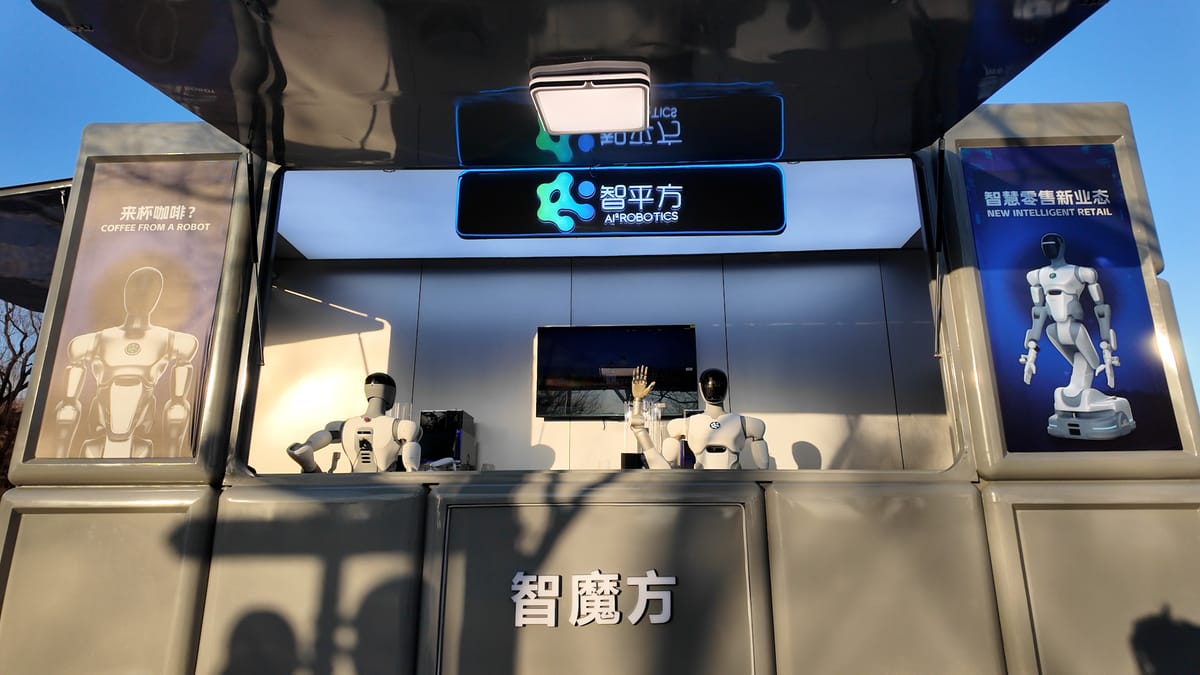
A Shenzhen humanoid robotics startup has secured a RMB 20 billion (US$2.78 billion) valuation on the back of nearly RMB 5 billion (US$694 million) in fresh capital — but its 2024 revenues measured only in the tens of millions of yuan, exposing a chasm between investor conviction and commercial reality that will define the company's next chapter.
AI² Robotics, which publicly disclosed its valuation on June 29, 2026, positions itself as China's closest analog to Tesla Inc.'s Optimus program — a claim grounded in a shared architectural bet on end-to-end Vision-Language-Action (VLA) models that fuse perception, reasoning, and motor control into a single neural network. The timing of the disclosure created an unusual collision: on the same day, cross-town rival X Square Robot — backed by Alibaba, ByteDance, Meituan, and Xiaomi — announced an identical RMB 20 billion valuation, briefly leaving both companies claiming the title of "the Greater Bay Area's first embodied-intelligence unicorn at this threshold."
The dueling announcements underscore just how rapidly capital is concentrating in China's humanoid robotics sector. According to publicly available data compiled through mid-2026, embodied intelligence startups have collectively raised more than RMB 46 billion (US$6.4 billion) in the first half of the year alone.
AI² Robotics Bets Its Architecture on Full-Body End-to-End Control
AI² Robotics' technical differentiation begins with a strategic decision made in 2023, when the company committed entirely to end-to-end VLA architecture at a time when most industrial robot vendors still relied on pre-programmed motion scripts. That early conviction mirrors Tesla's own pivot with Optimus and its Full Self-Driving stack, where the AI model — not human-coded rules — determines machine behavior.
The company has since iterated to GOVLA (Global Full-Body VLA), which extends model control beyond robotic arms to encompass locomotion, torso articulation, dual-arm coordination, and end-effector manipulation. Its latest hardware platform, AlphaBot 2, was co-designed around GOVLA's output requirements: 34-plus degrees of freedom, a vertical working range of 0 to 2.4 meters, a 700-millimeter single-arm reach, and a continuous operating duration exceeding six hours.
In June 2026, AI² Robotics released and open-sourced NeuroVLA, a three-tier hierarchical control architecture inspired by cortex-cerebellum-spinal cord biology. The system separates high-level task comprehension, real-time motion refinement, and collision-response reflexes into distinct computational layers — an engineering choice designed to reduce latency between intention and physical action.
The strategic logic is coherent: deploy robots into real industrial environments, harvest proprietary operational data, feed that data back into model training, and iteratively expand the robot's task repertoire. It is precisely the flywheel Tesla has been building with Optimus across its Gigafactories.
Deploying Into Factories Validates the Model — But Rivals Are Moving Fast
AI² Roboticsg's AlphaBot series has been deployed across automotive manufacturing, semiconductor display production, and biotech manufacturing. At Jingnenng Microelectronics, robots handle wafer loading and materials transfer. At Huaxi Biologics, they manage sterile-environment depackaging, visual inspection, and materials logistics.
The most commercially significant contract disclosed to date involves HKC Corporation, a semiconductor display manufacturer. Under a plan announced by HKC's subsidiary Huizhi IoT, AI² Robotics will deploy more than 1,000 robots across HKC's global production bases over three years, covering warehousing, component assembly, and quality inspection. Media reports value the contract at approximately RMB 500 million (US$69 million), making it one of the largest publicly disclosed embodied-intelligence orders in China to date.
Yet the competitive moat this deployment activity creates is narrowing. Figure AI's humanoid robots operated inside a BMW AG manufacturing facility for 11 consecutive months, logging more than 1,250 operating hours, handling over 90,000 components, and contributing to the production of more than 30,000 vehicles — a benchmark of sustained industrial reliability that AI² Robotics has not yet publicly matched. Physical Intelligence's π0.7 model, released in early 2026, can control multiple robot form factors with a single model and recombine learned skills to handle novel instructions absent from training data, a generalization capability that directly challenges the uniqueness of GOVLA.
In short, AI² Robotics entered the end-to-end VLA race early, but the field has caught up. The architecture is no longer a differentiator; execution velocity now is.
Revenue Gap Challenges the RMB 20B Valuation Arithmetic
The valuation mathematics deserves scrutiny. AI² Robotics's most recently disclosed revenue figure — described as "tens of millions of yuan" for fiscal year 2024 — implies a price-to-sales multiple that is, by any conventional measure, astronomical. Even if the HKC contract converts fully and on schedule, the revenue recognition will be spread across three years, providing limited near-term support for the current implied enterprise value.
The company's production infrastructure consists of a semi-automated line with annual capacity exceeding 2,000 units, with plans to activate a new line targeting tens of thousands of units in the second half of 2026. Capacity, however, is not revenue. The critical variables — actual units delivered under the HKC agreement, customer acceptance rates, repeat purchase behavior, and the engineering cost of deploying into each new factory environment — remain publicly unquantified.
Industrial robots are not transactional products. Each new deployment environment carries distinct equipment interfaces, process protocols, and safety certifications. If every new factory engagement requires substantial on-site engineering support, margin erosion accelerates in direct proportion to order volume growth.
The Tesla Comparison Reveals as Much as It Conceals
The "most like Tesla" label is analytically useful, but it cuts both ways. Tesla's Optimus program is underwritten by R&D expenditure of US$6.41 billion and capital expenditure of US$8.53 billion in 2025 alone, a proprietary AI chip roadmap, a global manufacturing and supply chain infrastructure, and the cash flows of a US$700-billion-plus automotive and energy business. Tesla is now moving to internalize semiconductor fabrication as well.
AI² Robotics has a model, a hardware platform, a customer roster, and a pilot production line. It has correctly identified the architecture. What it does not yet have is the financial mass, data density, or manufacturing scale to operate the flywheel at Tesla's velocity.
The investor syndicate — spanning China's national-level strategic funds, regional state-owned capital, insurance capital, securities firms, and industrial investors — has effectively priced in the optionality of that flywheel materializing. That is a legitimate venture thesis. It is not, yet, a validated business model.
The 1,000-unit HKC deployment, scheduled to complete by 2029, will serve as the most consequential near-term test of whether AI² Robotics can convert architectural ambition into the kind of repeatable, scalable industrial revenue that a RMB 20 billion valuation demands.
Related Coverage:
AI² Robotics Wins Near-RMB 500 Million Order for Factory Robots from HKC Unit