
Chinese Automakers Flex AI and Export Ambitions at CES 2026
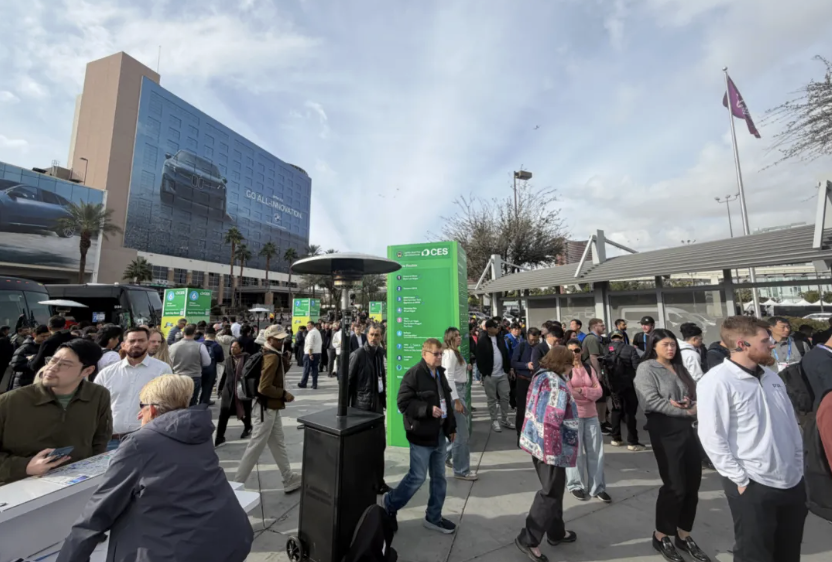
Chinese automotive companies mounted a significant presence at CES 2026 in Las Vegas, showcasing AI-powered technologies and signaling their growing global ambitions as overseas expansion becomes central to growth strategies. Great Wall Motor, Geely, Leapmotor, and newcomer Nebula Next all used the world's largest consumer technology show to demonstrate advanced driver assistance systems and intelligent cabin technologies built around large language models.
The strong showing by Chinese players underscores a strategic shift as domestic automakers increasingly target international markets. Great Wall Motor reported that overseas sales now account for over 40% of its total deliveries, while zero-to-market newcomer Nebula Next launched its first concept vehicle directly at a global audience. The exhibition footprint reflected broader momentum in China's automotive supply chain, with tier-one suppliers and chip designers also presenting solutions aimed at matching or exceeding offerings from established Western competitors.
The technology focus centered squarely on AI integration across vehicle domains. Multiple Chinese manufacturers unveiled systems merging world models with vision-language-action frameworks, positioning their vehicles to compete in what industry participants described as the highest tier of intelligent vehicle competition. The presentations emphasized computational performance metrics approaching or matching those of Nvidia's flagship automotive chips.
For investors tracking China's automotive sector, the CES presence signals accelerating investment in overseas distribution networks and localized R&D facilities, particularly in markets where labor costs favor autonomous delivery solutions and premium positioning can avoid price-based competition.
Great Wall Advances Hybrid and AI Strategy
Great Wall Motor presented what may have been the most comprehensive vehicle lineup among Chinese exhibitors, displaying the Wey Gaoshan 9 MPV, new Wey Blue Mountain intelligent edition SUV, and Tank 500 Hi4-T alongside motorcycles. CTO Wu Huixiao delivered a full English-language presentation unveiling the ASL 2.0 system, described as an "Agent of Space & Language" spatial intelligence large model.
The company positioned ASL 2.0 as analogous to Tesla's Grok integration with Full Self-Driving, functioning as an intelligent personal assistant. Great Wall also demonstrated its Coffee EEA 4.0 architecture and displayed underlying technologies including Hi4-Z hybrid architecture, semi-solid-state batteries, hydrogen fuel cells and V8 engines.
Wu stated that Great Wall plans to pursue Level 3 highway and Level 4 low-speed capabilities in 2026 where regulations permit, with Robotaxi pilot operations under consideration. The technology showcase reflected Great Wall's dual-track approach of advancing AI-powered assistance systems for primary markets while maintaining hybrid powertrain development for international competitiveness.
Geely Unifies Brands Under G-ASD System
Geely Holding Group used a pre-show event to launch G-ASD, the global branding for its "Qianli Haohan" driver assistance system that will be deployed across core brands including Galaxy, Zeekr and Lynk & Co. The company disclosed a WAM (World Action Model) framework that combines vision-language-action and world model technologies.
Geely emphasized what it termed "high model density," referring to more extensive large language model deployment and larger parameter counts. The company stated its cloud-based multimodal large model combined with world model reaches 100 billion parameters. The WAM framework will support both driver assistance and the EVA in-vehicle intelligence agent across multiple vehicle domains.
On the exhibition floor, Geely displayed the Zeekr 9X, 009 and Galaxy M9 alongside a humanoid robot that attracted significant foot traffic. The company stated that updated G-ASD software capabilities are already being deployed, with plans to advance Level 3 highway and Level 4 low-speed functions pending regulatory clearance.
Leapmotor Debuts Dual-Chip Central Controller
Leapmotor joined with Qualcomm to unveil a cross-domain fusion central controller based on dual Snapdragon 8797 chips, with the forthcoming Leapmotor D19 designated as the first vehicle to deploy the solution. The architecture consolidates intelligent cabin, driver assistance, vehicle body control and onboard gateway functions into a unified system designed to simplify overall vehicle electronics.
Disclosed specifications indicate the controller supports up to eight displays at 3K or 4K resolution and 18-channel audio output for premium entertainment experiences. For driver assistance, the platform accommodates 13 camera channels plus lidar and millimeter-wave radar configurations, enabling Level 2 assistance and point-to-point parking scenarios.
The Snapdragon 8797 utilizes 4nm process technology with NPU AI computing reaching 320 TOPS dense performance. Leapmotor's dual-chip implementation delivers 640 TOPS dense or 1,280 TOPS sparse computing power, positioning performance alongside Nvidia's automotive offerings. As China's sales leader among newer electric vehicle brands, Leapmotor is targeting increased international market share in 2026.
Nebula Next Makes Surprise First Appearance
A previously unknown Chinese startup called Nebula Next made its debut at CES 2026, displaying the Next 01 Concept wide-body sports coupe at a booth shared with appliance maker Dreame Technology. Company representatives stated Nebula Next has assembled a thousand-person team covering vehicle development, manufacturing, supply chain and smart hardware, with partnerships established among multiple tier-one global suppliers.
The concept vehicle features aggressive low-slung styling with what the company calls a "lightning waistline" design language, extensive aerodynamic elements and a large fixed rear wing. Stated specifications include a four-motor system with Dreame-developed motors reaching 200,000 rpm, combined output of 1,399 kW, and claimed zero-to-100 kph acceleration of 1.8 seconds on an 800V architecture.
Representatives indicated Nebula Next is targeting global markets from inception with a premium positioning that avoids price competition. As among the newest entrants to vehicle manufacturing, the startup faces a long development path ahead.
Black Sesame Targets Global Markets with A2000 Chip
Black Sesame Technologies, making its fifth CES appearance, featured the A2000 intelligent driving chip from its Huashan series. The chip serves advanced driver assistance systems and has been integrated by Dongfeng, Geely, Hongqi, JAC and other manufacturers into production vehicles including multiple Lynk & Co models.
The Huashan A2000 employs what Black Sesame calls large-core architecture with algorithm co-design, utilizing the company's Jiushao NPU. Company representatives stated real-world performance matches the highest-performing global driver assistance chips, a reference to Nvidia's automotive processors. Black Sesame demonstrated vision-language model and vision-language-action applications running on A2000 hardware. Just before CES 2026, the chip received U.S. regulatory clearance for global market distribution.
Black Sesame has expanded beyond pure hardware supply into AI imaging solutions, including the technology behind Li Auto's Livis AI glasses. The diversification reflects a broader trend among Chinese suppliers seeking to move downstream into solution provision rather than remaining component vendors.
Broader Chinese Ecosystem Represented
NIO did not operate a booth but positioned the ET9 flagship sedan prominently in the Dolby Live dedicated theater at Park MGM, where Dolby hosted global partners and international media. An ET5 was separately displayed by NIO supplier Ambilight.
Lidar suppliers RoboSense and RoboSense attended, while Ecarx, Thundersoft and Pateo presented intelligent cabin systems. Additional Chinese automotive supply chain participants including Desay SV, Hangsheng Electronics and Neolix appeared at the show. Neolix CEO Zhao You stated the company has achieved the world's first commercial application of a 10,000-unit autonomous delivery vehicle fleet, with expansion plans targeting high-labor-cost developed markets and the United Arab Emirates.