
Chinese EV Makers Shake Up Paris as Europe’s Test Begins
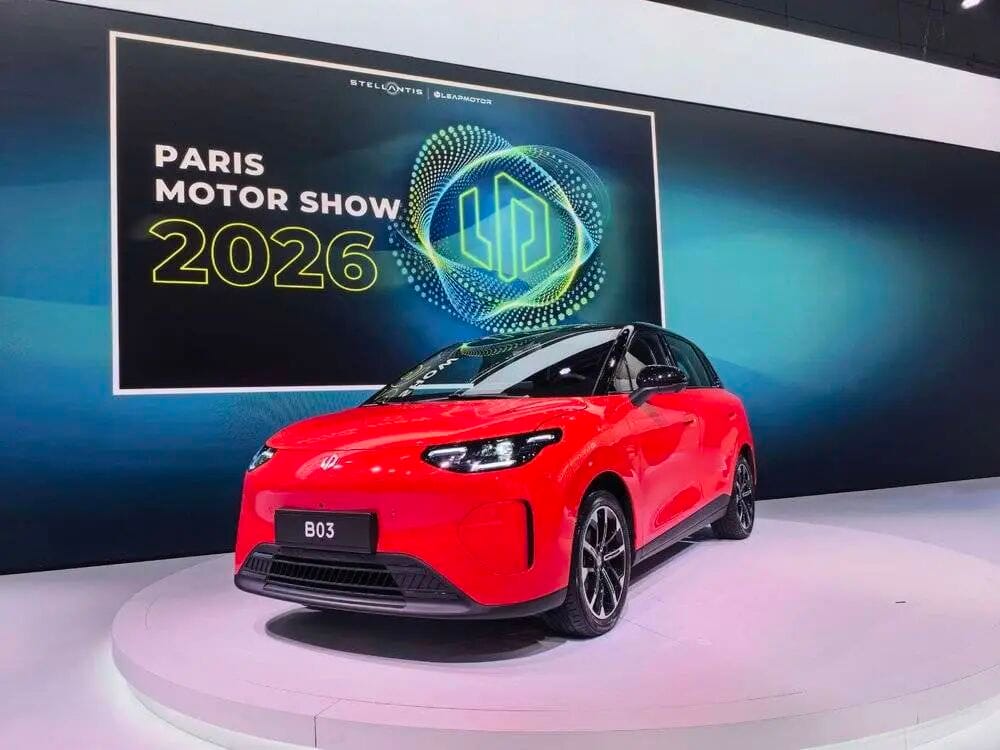
Leapmotor, Xpeng and Li Auto unveiled competing globalization playbooks at the 2026 Paris Motor Show, as China's share of the European EV market hit a record 11.7% in August — yet brand recognition gaps, residual-value discounts and escalating trade barriers signal the window of easy gains is closing fast.
The 2026 Paris Motor Show served as an unexpected inflection point for China's automotive ambitions abroad: three of the country's most closely watched new-energy vehicle makers — Leapmotor, Xpeng and Li Auto — each presented substantively different strategies for cracking Europe, converging on a single conclusion that none of them stated directly: competing in Europe is structurally harder than competing in China, and the domestic playbook of rapid iteration and cost compression has a finite shelf life on the other side of the Eurasian continent.
The timing is not accidental. With cumulative EU anti-subsidy tariffs pushing combined import duties on some Chinese battery-electric vehicles (BEVs) to 48.1%, and new EU Industrial Acceleration Act provisions tightening foreign-capital access, Chinese automakers can no longer treat Europe as a high-margin export dumping ground. The strategic pivot now underway — from pure vehicle exports toward a tripartite model of exports, technology licensing and localized manufacturing — represents the most consequential structural shift in the China-Europe automotive relationship since Volkswagen's first joint venture entered Shanghai four decades ago.
Three Strategies Collide on the Champs-Élysées
Leapmotor's approach is the most unconventional and, by volume metrics, the most immediately successful. In October 2023, Stellantis paid €1.5 billion for approximately 21% of Leapmotor's shares, becoming its single largest shareholder. By May 2024, the two groups formed Leapmotor International, a 51:49 joint venture — Stellantis majority, Leapmotor minority — granted exclusive rights to export, sell and manufacture Leapmotor vehicles in all markets outside Greater China.
The results are empirically striking. In the first nine months of 2026, Leapmotor's cumulative overseas exports exceeded 150,000 units, with September alone exceeding 27,000 units, allowing the company to hit its full-year overseas export target three months early. In Germany, year-to-date registrations through Q3 reached 16,044 units, a 261.3% year-on-year increase. In France, Germany, Italy and Spain — Europe's four largest auto markets — Leapmotor ranked in the top three for BEV registrations.
Leapmotor Chairman Zhu Jiangming described the model to Huxiu as a "reverse joint venture" — deliberately inverting the 1980s template in which foreign automakers brought technology into China in exchange for market access. "Chinese automakers are now bringing technology to Europe in exchange for distribution and manufacturing infrastructure," he said.
The structural elegance, however, sits alongside structural risk. Stellantis reported asset impairments of €22 billion in the first half of 2026, with its share price falling 25% in a single session; €14.7 billion of that impairment was tied to revised electrification product plans. New CEO Antonio Filosa has explicitly reoriented the group around "core brand priority," with Chinese partnerships occupying a supplementary capacity role rather than a strategic growth pillar. If Stellantis continues to retrench, Leapmotor's European expansion velocity becomes contingent on a partner whose own strategic direction is in flux.
Leapmotor's Xin Tianshu, former head of the company's overseas operations, acknowledged two operational differentiators that underpin the current performance: a 1,000-plus dealership network that keeps consumers within a 20-to-25-minute drive of a service point, and a 98% spare-parts delivery rate that allows most repairs to be completed within two days. Xin was promoted in July 2026 to become Stellantis' head of China and Asia-Pacific — a Chinese executive from a minority-stake partner now running the China operations of the world's fourth-largest automaker by volume, a personnel outcome that itself illustrates the power inversion at work.
Li Auto Bets a Decade; Xpeng Bets on Software
Li Auto's Wu Zuomin, who oversees the company's international business, was candid with Huxiu about one thing: Li Auto entered Europe late, and he has no intention of pretending otherwise. The company's strategic framing is a ten-year capability-building arc, with the Li i6 making its formal European debut at the 2026 Paris show ahead of a planned Q1 2027 commercial launch in the Netherlands and Norway. The company has established a European operational base in the Netherlands and a R&D center in Germany.
Wu's stated pricing anchor for the i6 is the €60,000–€100,000 bracket — positioning it against the BMW iX3 — a deliberate signal that Chinese brands are no longer seeking volume through price compression but through product-value propositions. Li Auto's near-term exposure in Europe is limited, but so is its downside: no single partnership concentration risk, no equity dilution, and no dependence on a counterparty's balance sheet.
The structural vulnerability is product-market fit. European urban density, narrower street profiles and a cultural preference for smaller vehicles create headwinds for Li Auto's extended-range electric vehicles, which are optimized for the Chinese market's preference for large family SUVs. Li Auto will need to demonstrate that premium positioning can overcome product-size friction in markets where compact cars dominate.
Xpeng's President Wang Fengying, in her first substantive media appearance in several years, was direct: Xpeng's core differentiator in Europe is advanced driver-assistance systems (ADAS). The company's half-year 2026 overseas revenue reached RMB 8.23 billion (approximately US$1.14 billion), up 62.2% year-on-year, representing more than 25% of total revenue. Wang set an export target of "close to 300,000 units" for 2027 and framed global expansion as Xpeng's "second growth curve."
More notably, Xpeng has secured a secretariat role in an EU working group on automotive intelligent driving — giving it a seat at the regulatory table as Europe writes the framework within which all autonomous driving systems will eventually be certified. Wang identified Europe as the jurisdiction where autonomous driving regulation will crystallize fastest, citing the continent's high institutional appetite for intelligent mobility and its active test-condition permissioning. Xpeng uses Magna International's Austrian facility for local assembly, threading the needle on tariff avoidance while avoiding the full equity exposure of a Stellantis-style partnership.
Tariffs Reshape Supply Logic, Not Just Cost Structures
The aggregate numbers validate the structural shift, even as they obscure its complexity. China exported 8.326 million vehicles in 2025, up 29% year-on-year; European-bound exports reached 1.511 million units, up 32%, making Europe the only regional market to breach the 1.5-million-unit threshold. Chinese brands sold 811,000 units in Europe in 2025, nearly doubling year-on-year, reaching a record 6.1% market share. By August 2026, that share had climbed to 11.7%.
The EU's anti-subsidy tariff regime — adding up to 35.3 percentage points on top of the existing 10% import duty for some BEVs — has not suppressed volume so much as redirected it. Chinese exports of plug-in hybrid electric vehicles (PHEVs) to Europe surged 155% in 2025, while BEV export growth slowed to 12%. The pivot was rational: PHEVs were initially excluded from the tariff regime.
That arbitrage window is now closing. In October 2026, China and the EU reached a preliminary understanding on hybrid and PHEV trade flows, with an adjustment period for export volumes. JPMorgan research identified Chinese automakers with high PHEV and HEV exposure to the EU as the most at risk, projecting export softening beginning next year, followed by caps or reductions between 2027 and 2030. CLSA's bear-case scenario — tariff expansion covering all NEV categories at a blended punitive rate of 21% — would materially restructure the economics of the current export model.
Citigroup's research found that Chinese brands had eroded 4.2 percentage points of combined market share from German and other European automakers in Western Europe through August 2026. That erosion will generate intensifying political and regulatory counter-pressure. The EU's Industrial Acceleration Act legislative draft introduces new foreign-investment oversight provisions and localization thresholds that could further complicate pure-export strategies.
Quality Control Failures Threaten to Undercut Market Share Gains
The scale of Chinese automotive expansion in export markets has exposed a systemic gap between production volume growth and quality assurance infrastructure — a gap that Chery Automobile illustrated with particular clarity in Malaysia.
On October 6, a 2023-model OMODA 5 in Johor Bahru, Malaysia suffered a complete rear-axle separation while in motion, with the trailing arm tearing and the rear axle, along with both rear wheels, fully detaching from the vehicle. Malaysia's Road Transport Department suspended the vehicle's type approval and new registrations pending investigation. Chery subsequently confirmed insufficient weld strength in a batch of rear-axle trailing arms and initiated a recall of 8,878 units.
The severity of the incident is compounded by its history: in April 2024, within one month of the OMODA 5's Malaysian launch, an identical structural failure had already prompted a recall of 600 vehicles, traced to improper calibration of rear-axle welding equipment. The same structural defect, in the same market, recurred within 24 months — with the affected unit count expanding 14-fold.
Chery exported 200,900 units in September 2026 alone, representing approximately 73% of its total monthly sales. The OMODA and JAECOO brands now operate across 77 markets with cumulative global sales exceeding 1.3 million units. At that velocity, any single production-line failure propagates across tens of thousands of vehicles before quality-control checkpoints can intervene.
China Enterprise Capital Alliance Vice Chairman Bai Wenxi noted that Chery's post-incident response — including a proactive public apology and cross-market parallel inspection — was more transparent than many Chinese OEM peers had demonstrated. "But the trust cost has doubled," he added, acknowledging that a second occurrence of the same failure eliminates the credibility benefit of the first response.
The Chery case is not isolated; it reveals a structural timing mismatch inherent to the current export wave: sales volumes are scaling geometrically, while after-sales infrastructure, supply-chain quality management systems and regional parts logistics are scaling arithmetically.
Brand Recognition Gaps Limit Pricing Power
Volume leadership and brand equity are not interchangeable assets, and Europe's consumer data makes the distinction starkly visible. German polling firm Civey found that, outside BYD and MG, most Chinese automotive brands in Germany have unprompted recognition rates below 10%. Changan's Deep Blue and Chery's OMODA and Jaecoo brands register near 1%. Lynk & Co, present in Germany for several years, reaches approximately 11% — still short of the roughly 20% threshold that marketing researchers associate with mature brand establishment.
Martin Fassnacht, professor of marketing at WHU – Otto Beisheim School of Management, quantified the investment required: building a brand in Germany demands hundreds of millions of euros in the first five years and up to €1 billion over a decade. "Consumers will not consider purchasing a vehicle from a brand they don't know; and simple familiarity is insufficient — manufacturers must also build positive brand associations."
For most Chinese brands currently operating in Europe, this means pricing is sustained by product specification rather than brand premium — a structurally fragile position that is vulnerable to any deterioration in perceived product quality, any service-network failure or any competitor that can match specifications at lower cost.
The residual-value problem compounds the brand-equity deficit. Independent European auto-industry data indicates that Chinese NEV models carry a 15% to 25% residual-value discount relative to comparable European and Japanese models — a gap driven entirely by ecosystem factors: service-network uncertainty, spare-parts data scarcity and brand longevity risk perception. In European markets where fleet procurement and personal contract purchase financing dominate new-car sales, residual-value discounts translate directly into elevated total cost of ownership, creating a structural disadvantage in the highest-volume purchasing channels.
The Flywheel Has Not Yet Started Turning
The strategic calculus that Li Auto's Wu, Leapmotor's Zhu and Xpeng's Wang each articulated — in different vocabulary but with convergent logic — points to the same underlying constraint: Europe requires a self-reinforcing system of brand equity, service density, local production and regulatory relationships, and that system cannot be activated by any single element in isolation.
Localized manufacturing reduces tariff exposure but requires scale to be economically viable. Scale requires brand recognition to convert traffic into sales. Brand recognition requires service-network density to sustain ownership satisfaction. Service-network density requires capital that only becomes available at scale. Every node in the flywheel is a prerequisite for every other node.
Leapmotor's Stellantis joint venture sidesteps this constraint by borrowing an existing flywheel — but at the cost of strategic dependency on a partner whose financial and strategic situation is itself unstable. Stellantis is reportedly evaluating a partial equity sale of an idle Madrid facility to Leapmotor International; if executed, it would be the first instance of a mainstream European automaker divesting plant equity to a Chinese counterpart. Julien, an automotive industry researcher at the University of Bordeaux, told Huxiu the transaction would amount to "providing a powerful accelerator to a formidable competitor, accelerating their penetration of our market."
Xpeng's technology-first approach preserves strategic autonomy but places a concentrated bet on the pace of European ADAS regulatory convergence. Li Auto's decade-long patience strategy minimizes short-term risk but cedes first-mover advantages in markets where network effects compound quickly.
What the 2026 Paris Motor Show clarified is that China's automotive industry has definitively crossed the threshold from export opportunism to strategic market entry. The question now is not whether Chinese automakers can establish a presence in Europe — they already have — but whether they can convert presence into durable competitive position before the tariff environment tightens further, before European OEMs complete their electrification transition and before the structural deficiencies in brand equity, service infrastructure and quality systems are exposed at scale.
The window of asymmetric advantage — where Chinese cost structures and product-development velocity faced European incumbents still anchored to internal-combustion-era economics — is measurably narrowing. What replaces it will be determined not in Paris showrooms, but in German repair bays, Spanish assembly lines, Brussels regulatory working groups and, ultimately, in the patience accounts of executives who understand that the European market does not compress timeframes on demand.
Related Coverage:
Chinese Automakers Outpace Tesla in Europe as EV Market Shifts
The EV Juggernaut: How China Built a Car Empire to Challenge the World