
Chinese Home Appliance Giants Race to Deploy AI in Air Conditioners, Promising Energy Savings and Comfort
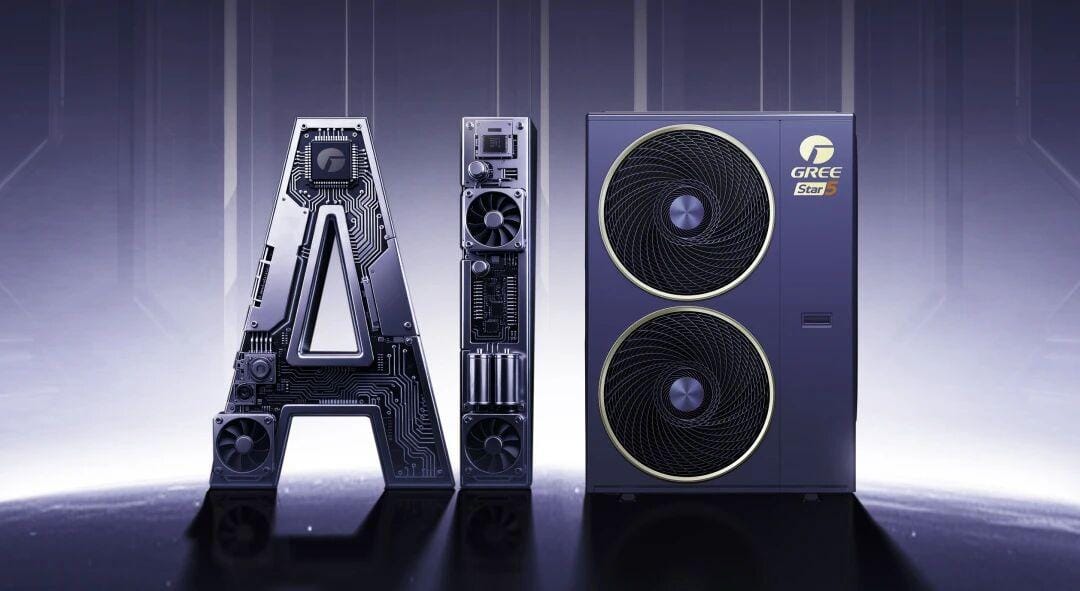
China's leading home appliance manufacturers are accelerating the integration of artificial intelligence into air conditioning systems, with Gree Electric Appliances, Midea Group, and Haier Smart Home all launching AI-powered products that prioritize energy efficiency and user comfort over traditional cooling power. The shift marks a strategic pivot in a market approaching saturation, as manufacturers seek differentiation through advanced algorithms and sensor technology rather than hardware specifications alone.
Gree recently unveiled its Star5 AI home central air conditioning system, emphasizing dynamic energy management and whole-home temperature optimization. The company claims the system achieves 23.5% energy savings through AI-driven adjustments, though this figure reflects ideal testing conditions. The product represents a broader industry trend where air conditioners evolve from simple temperature control devices into comprehensive climate management systems that adapt to occupancy patterns, humidity levels, and individual comfort preferences.
The competitive landscape has intensified rapidly since early 2025, when manufacturers first began integrating large language models like DeepSeek into air conditioning products. Industry leaders are now positioning AI capabilities as essential features rather than premium add-ons, potentially reshaping market dynamics in favor of companies with extensive user data and sustained research budgets. The transition threatens smaller manufacturers lacking resources for long-term algorithm development and sensor integration.
The technological shift comes as China's residential air conditioner market nears installation saturation, forcing manufacturers to compete on replacement demand rather than first-time purchases. Whether consumers prioritize cost savings or intelligent features when upgrading will likely determine the success of these AI-focused strategies.
From Cooling Power to Climate Intelligence
Gree's Star5 AI system exemplifies the industry's departure from traditional performance metrics. Rather than emphasizing maximum cooling capacity, the product focuses on maintaining consistent comfort levels while minimizing electricity consumption. The system divides homes into discrete zones, allocating cooling resources based on actual occupancy and usage patterns rather than uniform distribution.
Traditional central air conditioning systems have long suffered from two critical flaws: excessive energy waste when cooling unoccupied rooms, and sluggish response to changing conditions such as frequent door openings or high humidity days common in southern China. Gree addresses these issues through multi-room coordination that dynamically optimizes output across different spaces.
The company has not disclosed specific details about how Star5 AI monitors human comfort levels in real-time, though the capability likely relies on backend algorithm processing. The system aims to respond to actual perceived temperature rather than simply maintaining a set numerical target on the thermostat.
Three-Dimensional AI Advantage
AI integration in air conditioning differs fundamentally from previous "smart" features through enhanced perception, dynamic decision-making, and precise control. These capabilities extend beyond voice commands or remote operation available in earlier connected models.
On the perception front, AI-enabled systems combine data from temperature and humidity sensors, millimeter-wave radar, and presence detectors. Future iterations may incorporate additional variables such as direct sunlight exposure, door operation frequency, occupancy changes, and heat generation from other devices. Midea has publicly discussed using millimeter-wave radar paired with AI algorithms for draft-free operation, identifying user positions at various distances to adjust airflow patterns accordingly.
Decision-making represents the core advantage separating AI systems from conventional models. AI can build "thermal behavior models" from historical data to predict indoor temperature changes and preemptively adjust cooling or heating before occupants notice discomfort. This approach mirrors DeepMind's work optimizing Google data center cooling systems, where algorithm-driven management reportedly reduced cooling energy consumption by up to 40%.
Control precision has evolved from achieving set temperatures to managing multiple parameters based on environmental data and comfort predictions. Traditional air conditioners pause operation upon reaching target temperatures and resume when readings change. AI systems continuously process sensor inputs through neural processing units to make granular adjustments across multiple variables.
Market Consolidation Through Technology
The AI transformation essentially mandates long-term system investment rather than one-time hardware upgrades, creating natural advantages for established manufacturers. Companies like Gree, Midea, and Haier possess extensive installation bases and years of accumulated user data—the foundation for continuous AI learning and experience optimization. These firms can sustain ongoing algorithm development and sensor technology iteration.
Midea directly promoted "DeepSeek air conditioners" in 2025, launching the T6 fresh air purifier with privately deployed DeepSeek R1 large language model supporting multi-dimensional self-perception, self-learning, and self-adjustment across humidity, airflow, and air quality parameters. Haier emphasizes its AI health air management model as transforming air conditioners from temperature regulators into health-aware, thinking air stewards. Changhong recently released products featuring "AI radar smart eye" technology for precise activity zone detection.
While smaller manufacturers can technically access large language models and market "AI air conditioners," they typically struggle to move beyond surface-level features or interface improvements. Without comprehensive system integration, these companies remain confined to competing primarily on price in a market where household installation rates have plateaued.
The strategic question facing consumers during replacement cycles—whether to prioritize affordability or intelligence—appears increasingly answered by manufacturer positioning. As AI capabilities become standard expectations rather than premium features, companies lacking data infrastructure and sustained development capacity face growing disadvantages in both mid-range and high-end segments.