
Chinese Robotaxi Firms Intensify Rivalry in Dubai as Uber Expands Autonomous Ride-Hailing
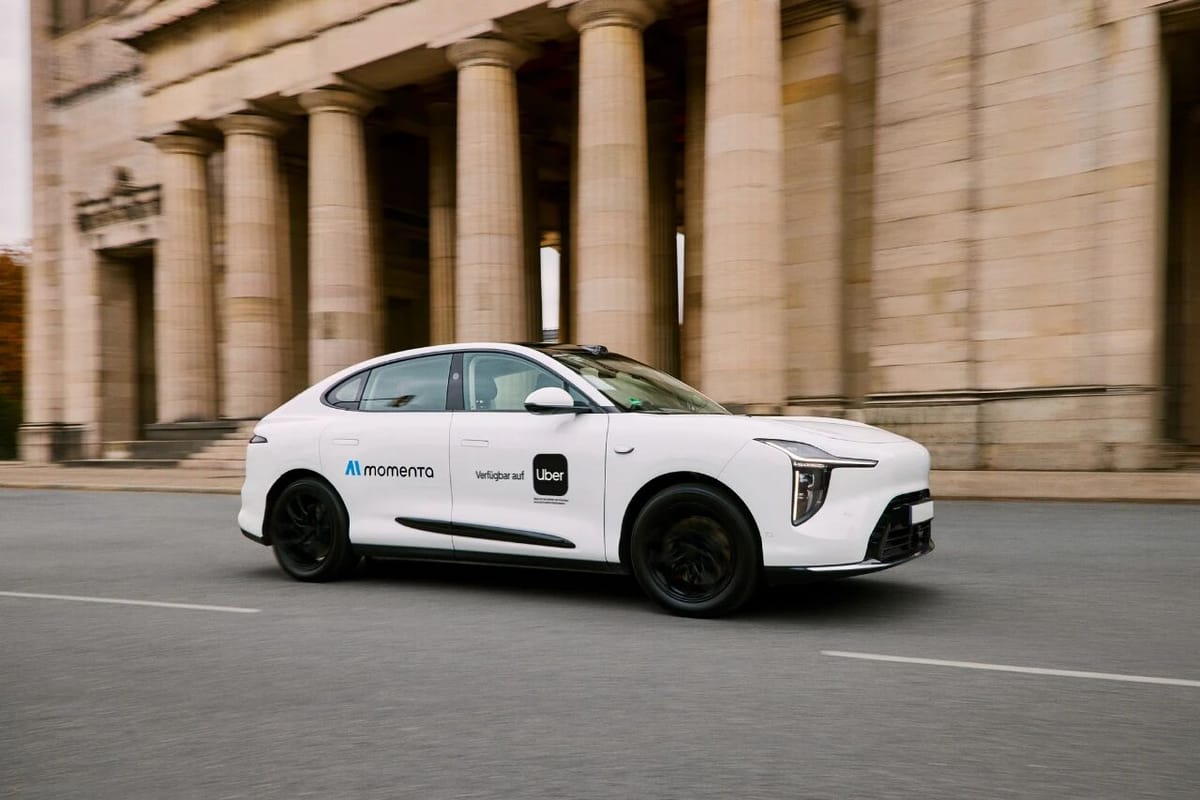
Chinese autonomous-driving companies are accelerating their expansion in Dubai, turning the city into a competitive testing ground for overseas robotaxi commercialization as Baidu, WeRide and Pony.ai pursue different operating models and compete for passengers through Uber's ride-hailing platform.
The latest development came on Nov. 18, when Uber disclosed plans to invest about $50 million over the next two years to expand autonomous mobility services and operating infrastructure in Dubai. The investment is expected to support fleet expansion and broader pickup coverage, including key commercial districts such as Downtown Dubai, the Dubai International Financial Centre and Business Bay.
The expansion comes as Dubai's robotaxi market remains small relative to the scale of investment and industry ambitions. The city's Roads and Transport Authority (RTA) reported on Aug. 19 that 144 robotaxis were registered across the city, of which 48 were actively operating. The fleet completed an average of about 50 trips a day and 7,613 passenger journeys cumulatively, with customer satisfaction reaching 97%.
Those figures illustrate the industry's central challenge: securing regulatory approval and deploying vehicles is becoming easier, but generating enough recurring demand to justify the cost of operating autonomous fleets remains unproven.
Baidu, WeRide and Pony.ai Adopt Different Expansion Strategies
Dubai has emerged as a competitive overseas market for Chinese robotaxi developers, with the three major players pursuing different approaches to fleet ownership, local partnerships and customer acquisition.
Baidu Inc. entered the market first. In August 2025, its Apollo Go robotaxi service deployed 50 sixth-generation RT6 vehicles for testing on designated roads. In January 2026, Baidu opened its first overseas operations and control center in Dubai, covering 2,000 square meters and housing fleet dispatch, charging, maintenance, simulation testing and driver-training facilities.
Dubai's transport authority said the center would support plans to expand the local fleet to more than 1,000 vehicles over the following years.
Baidu has adopted a dual-channel operating strategy. In March 2026, Dubai Taxi Company partnered with Baidu to provide fully driverless commercial passenger services through the Apollo Go app. In August, a fleet operated by New Horizon Luxury Transport was also connected to Uber.
The approach gives Baidu access to two customer-acquisition channels. Its own app provides direct access to passengers, while Uber offers an established user base and booking infrastructure. However, the latter also places Baidu in a marketplace where the platform controls customer access and ride allocation.
WeRide Inc. has pursued a more asset-light model, supplying autonomous-driving technology while relying on local partners for fleet management and operations.
The company began supervised trials in Dubai in December 2025 before launching fully driverless paid services in Jumeirah and Umm Suqeim on March 31, 2026. Local partner Tawasul manages fleet operations, while Uber provides much of the booking demand.
In February 2026, WeRide and Uber upgraded their strategic partnership, targeting the deployment of at least 1,200 robotaxis across the Middle East by 2027, covering Dubai, Abu Dhabi and Riyadh.
WeRide is also working with Chinese commercial vehicle manufacturer Geely Farizon to deliver 2,000 GXR robotaxis in 2026 for deployment in domestic and overseas markets. The arrangement could help expand its supply capacity without requiring the company to build every part of the local operating infrastructure itself.
Pony.ai Inc. has moved more cautiously. It obtained permission for public-road testing in Dubai in September 2025 and disclosed in April 2026 that it had completed driverless road tests without an onboard safety operator.
The company subsequently outlined plans to launch public paid services with a fleet of several hundred vehicles. However, its investor materials through November continued to describe Dubai commercialization as being in progress, without confirming that paid public operations had formally begun.
The differences in deployment schedules reflect more than technological readiness. They also highlight the strategic choices facing robotaxi companies: whether to invest in local infrastructure, rely on operating partners or prioritize regulatory validation before committing substantial capital.
Uber Expands Its Platform as Operators Compete for Orders
Uber's growing role in Dubai is creating a shared commercial battleground for autonomous-driving companies that otherwise operate competing technology stacks.
Passengers currently cannot select a specific robotaxi brand when booking through the platform. They are assigned a vehicle after confirming their ride, meaning Baidu- and WeRide-affiliated fleets compete for demand within the same booking environment.
For robotaxi operators, the arrangement reduces the need to build independent customer-acquisition networks. Uber already has an established passenger base, payment infrastructure and dispatch capabilities, which can help operators increase vehicle utilization during the early stages of commercialization.
But the model also creates a structural dependency. Uber controls the booking interface and passenger access, while operators compete to provide vehicles and fulfill orders. As more autonomous fleets enter the platform, competition could shift from technology differentiation toward pricing, availability and operating efficiency.
Uber's planned $50 million investment signals that it sees autonomous mobility as an opportunity to expand its transportation network. Yet the investment also strengthens the platform's position as an intermediary between autonomous vehicle developers and passengers.
The planned expansion of pickup and drop-off coverage could help address one of the market's current constraints. Wider access to residential and commercial districts would make robotaxis more useful for everyday journeys rather than limiting demand to tourists and passengers traveling within designated service zones.
However, expanding service coverage will also require additional charging facilities, maintenance capacity, remote assistance and emergency-response resources.
Dubai's Fleet Expansion Exposes a Demand Gap
Dubai's regulatory environment has made it an attractive destination for autonomous-driving companies seeking overseas commercial deployments.
The emirate introduced its autonomous transportation strategy in 2016, setting a target for 25% of all transportation journeys to be autonomous by 2030. In 2025, the government expanded the framework through its Autonomous Transportation Strategy 2025–2040, raising the target to 36% by 2040.
The target covers multiple forms of transportation, including metro services, buses and taxis. It does not mean that robotaxis alone will account for 36% of all journeys. Nevertheless, the policy provides a long-term framework for companies developing autonomous mobility services.
The RTA's August figures offer an early indication of the market's operating scale. With 144 registered vehicles but only 48 actively operating, the fleet's utilization remains an important question.
The reported average of approximately 50 daily trips also suggests that the market is still at an early stage. The authority did not disclose how those trips were distributed among operators, how many were paid journeys or how long each vehicle remained available for commercial service.
The 97% passenger satisfaction rate indicates positive feedback among existing users, but it does not establish whether robotaxis can attract sustained demand from daily commuters.
There are two competing interpretations of the figures.
On the positive side, current restrictions on operating zones and designated pickup locations may be suppressing demand. Allowing flexible pickup and drop-off services could expand the addressable market, increase booking frequency and reduce unnecessary vehicle repositioning.
On the other hand, demand from tourists and first-time users may not translate into recurring commuter trips. Expanding into additional districts before establishing sufficient order density could increase infrastructure and staffing costs without generating enough additional revenue.
Regulatory requirements also complicate fleet investment decisions. Operators must meet local licensing and insurance standards, while phased approvals and restrictions on operating areas can delay the transition from vehicle deployment to commercial utilization.
This creates a capital-allocation dilemma: deploying vehicles ahead of regulatory approval risks leaving expensive assets underused, while waiting for demand and permits to become clearer could allow competitors to secure market share first.
Overseas Expansion Tests Robotaxi Unit Economics
The financial performance of Chinese robotaxi developers suggests that Dubai's commercial potential should be assessed separately from their broader global expansion strategies.
WeRide reported that third-quarter 2026 robotaxi revenue exceeded RMB 100 million (US$13.9 million), representing year-on-year growth of 204%. More than 90% of that revenue came from overseas markets. The company nevertheless recorded a group net loss of RMB 310 million during the quarter.
Pony.ai reported an operating loss of US$68.7 million over the same period. Neither company's consolidated financial results isolate the costs and returns of its Dubai operations, making it difficult to assess the market's direct contribution to group performance.
Baidu's third-quarter disclosures highlighted an expansion of its fully driverless operating areas in Dubai and a doubling of its local fleet, but did not provide an updated vehicle count or market-specific revenue figures.
Evidence from other Chinese cities offers a useful, though imperfect, benchmark.
WeRide said its Guangzhou robotaxi operations had achieved positive unit economics, with its domestic business averaging 21 orders per vehicle per day in the third quarter. Pony.ai said its Guangzhou operations reached unit-economic breakeven in November 2025, followed by Shenzhen in February 2026.
These milestones do not mean the companies have achieved overall profitability. Unit economics at the vehicle level measure whether individual vehicles can cover their attributable operating costs, rather than whether the entire business can cover research, development, corporate expenses and expansion spending.
Nor can results from Chinese cities be directly applied to Dubai. Differences in labor costs, insurance requirements, fares, operating hours, subsidies and fleet utilization can materially change the economics of each market.
Abu Dhabi provides another regional reference point. In November 2025, local authorities announced the launch of fully driverless commercial operations, involving two groups: WeRide, Uber and Tawasul, and AutoGo–K2 alongside Baidu.
WeRide has said in its annual report that removing onboard safety operators in Abu Dhabi enabled its robotaxi fleet to reach conditions for vehicle-level breakeven. While the company has not published a complete market-level profit statement, the disclosure indicates that overseas operations can move toward economic sustainability once regulatory requirements and operating arrangements mature.
However, the differences between Abu Dhabi and Dubai underline the importance of local operating conditions. Insurance coverage, remote assistance, accident response, maintenance staffing and vehicle inspection requirements all affect the cost of each trip.
For operators, the relevant performance indicators extend beyond fleet size and cumulative passenger journeys. They include the number of hours each vehicle spends accepting orders, realized revenue per operating hour, empty-mileage ratios, electricity costs, depreciation, insurance premiums, maintenance expenses and platform commissions.
Until companies disclose more of these metrics, the commercial performance of Dubai's robotaxi market will remain difficult to evaluate.
Operators Must Convert Deployment Into Recurring Demand
Dubai is becoming an important proving ground for Chinese autonomous-driving companies seeking to demonstrate that their technology can operate beyond their domestic markets.
Baidu's investment in operational infrastructure, WeRide's reliance on local partners and Uber's distribution network, and Pony.ai's more gradual commercialization schedule represent three different approaches to managing the risks of overseas expansion.
The market's next phase will depend less on how quickly companies add vehicles than on whether they can turn regulatory access into consistent passenger demand and sustainable vehicle-level returns.
For investors, the key distinction is between deployment milestones and commercial performance. A larger fleet may demonstrate technological and regulatory progress, but it does not necessarily translate into higher revenue or better margins.
Dubai's 144-vehicle robotaxi fleet and 7,613 cumulative passenger journeys show that commercial operations have begun. The more consequential test will be whether expanded service coverage and platform access can generate enough recurring orders to support the capital and operating costs of a driverless transportation network.
Related Coverage:
Robotaxi Accident Prompts Safety Scrutiny as Chinese Operators Accelerate Expansion
Chinese Robotaxi Startups Face Market Reality Check as Losses Mount and Stocks Tumble