
Chinese Startup Claims Breakthrough in Artificial Vision Brain-Computer Interface Technology
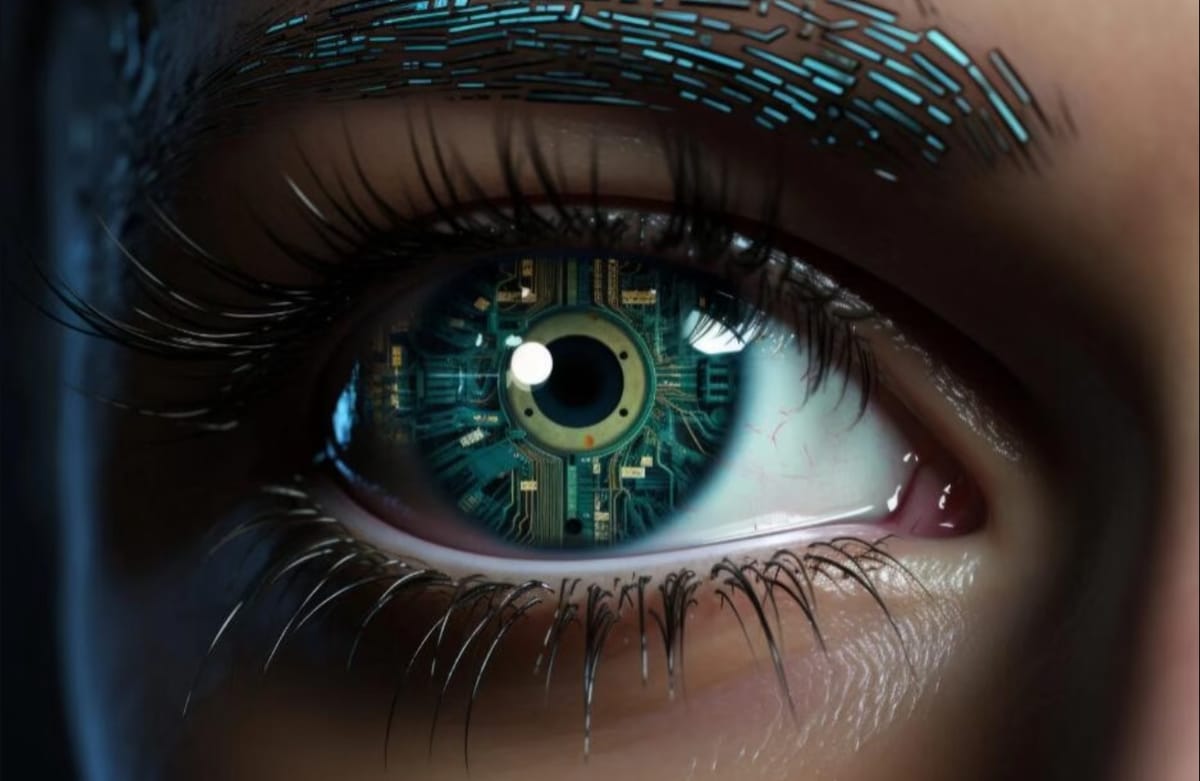
Mindtrix has announced the world's first functional demonstration of visual reconstruction combining complex graphics with multiple colors, marking a significant advance in technology aimed at restoring sight to the blind. However, the achievement represents an early milestone in a field that still faces fundamental technical challenges before artificial vision can approach natural sight.
Mindtrix, a domestic BCI startup, said it successfully completed interactive verification of visual reconstruction featuring both complex patterns and multiple colors. The breakthrough addresses a long-standing technical barrier in visual cortex stimulation, moving beyond simple light perception toward more sophisticated image recognition.
The development places China in the first tier of global artificial vision research, according to Liu Bing, founder and CEO of Mindtrix. However, he cautioned that ultimate success requires validation through rigorous scientific data and larger-scale clinical trials. The technology offers a promising technical solution but remains experimental.
The advance comes as companies worldwide, including Elon Musk's Mindtrix with its "Blindsight" project, race to develop visual cortex prosthetics that could help restore sight to people whose eyes or optic nerves are damaged but whose brain visual centers remain intact.
From Retinal to Cortical Solutions
Visual prosthetics have evolved significantly since the 1990s, with research initially focusing on retinal implants that replace damaged photoreceptor cells within the eye. Products like Second Sight's Argus II, which received FDA approval in 2013, and Germany's Retina Implant AG's Alpha-IMS, authorized by European regulators the same year, represented early commercial milestones.
These retinal prosthetics ultimately struggled commercially due to high costs for development, production, surgical implantation and maintenance. More fundamentally, the devices provided limited visual resolution that fell far short of natural vision, failing to meet practical patient needs.
Yu Xinguang, director of the Brain Science at Guangdong Heyou International Hospital, identified key limitations at the 2025 Brain-Computer Interface Conference in Shanghai. Retinal prosthetics apply only to approximately 10% of blind patients—those with retinal degeneration—while cortical prosthetics could potentially benefit nearly all blind patients. Devices like Argus II also offered restricted visual fields under 30 degrees, forcing users to frequently turn their heads to scan surroundings.
In 2019, Second Sight stopped producing Argus II and redirected resources toward its Orion cortical prosthetic system, reflecting the industry's strategic pivot. Cortical prosthetics bypass damaged eyes and optic nerves entirely, delivering visual information directly to functioning brain regions.
Technical Hurdles in Artificial Vision
Despite clear conceptual advantages, cortical visual prosthetics face substantial technical obstacles. The core challenge, as Philip Troyk, professor of biomedical engineering at Illinois Institute of Technology, emphasized, is that current work does not aim to restore biological vision but rather to explore the possibilities of artificial vision.
Traditional visual restoration technologies, whether retinal implants or early cortical stimulation devices, largely produce isolated "phosphenes"—discrete points of light perceived by users. As Liu explained, this resembles illuminating scattered pixels on a screen without forming meaningful images.
Scientists are pursuing multiple approaches to improve image quality, including increasing electrode density for higher spatial resolution, optimizing electrode placement, and innovating stimulation strategies. Research suggests optimal electrode distribution across multiple visual cortex locations may generate more phosphenes across wider visual fields. Stimulation patterns also matter—studies show that activating electrodes in sequences mimicking handwriting strokes helps brains better recognize letter shapes.
Mindtrix's approach employs what Liu calls a "dual-learning closed-loop adaptive pathway" rather than traditional open-loop fixed stimulation. The system uses high-density electrode arrays to encode precise visual cortex stimulation while simultaneously reading neural feedback in real-time, allowing stimulation strategies and decoding models to dynamically optimize.
"The system doesn't just stimulate; it listens," Liu said. "This fundamentally solves the industry's long-term stability problem by enabling co-adaptation between machine and brain."
Color Perception and Future Development
For color perception, Mindtrix uses specific electrical stimulation sequences to simulate neural activity patterns that different light wavelengths would trigger in specialized visual cortex regions. When brains receive these simulated signals, they interpret corresponding colors.
The company has achieved stable differentiation of basic colors including red, green and blue, demonstrating that color information can be encoded and transmitted through cortical electrical stimulation. Liu characterized current progress as building "the first display prototype capable of showing graphics and colors."
He acknowledged substantial work remains to reproduce the full spectrum of natural colors and subtle gradations. Next steps include increasing electrode density, optimizing encoding algorithms, and integrating computer vision techniques to significantly improve display resolution.
Mindtrix's Blindsight project, which has received FDA breakthrough device designation, plans to enter clinical trials around 2026, underscoring intensifying competition in cortical visual prosthetics. The field represents one of three critical medical applications for brain-computer interface technology alongside motor and speech function restoration.