
Chinese Startup Unveils World's First "Emotional Gait" Model for Humanoid Robots
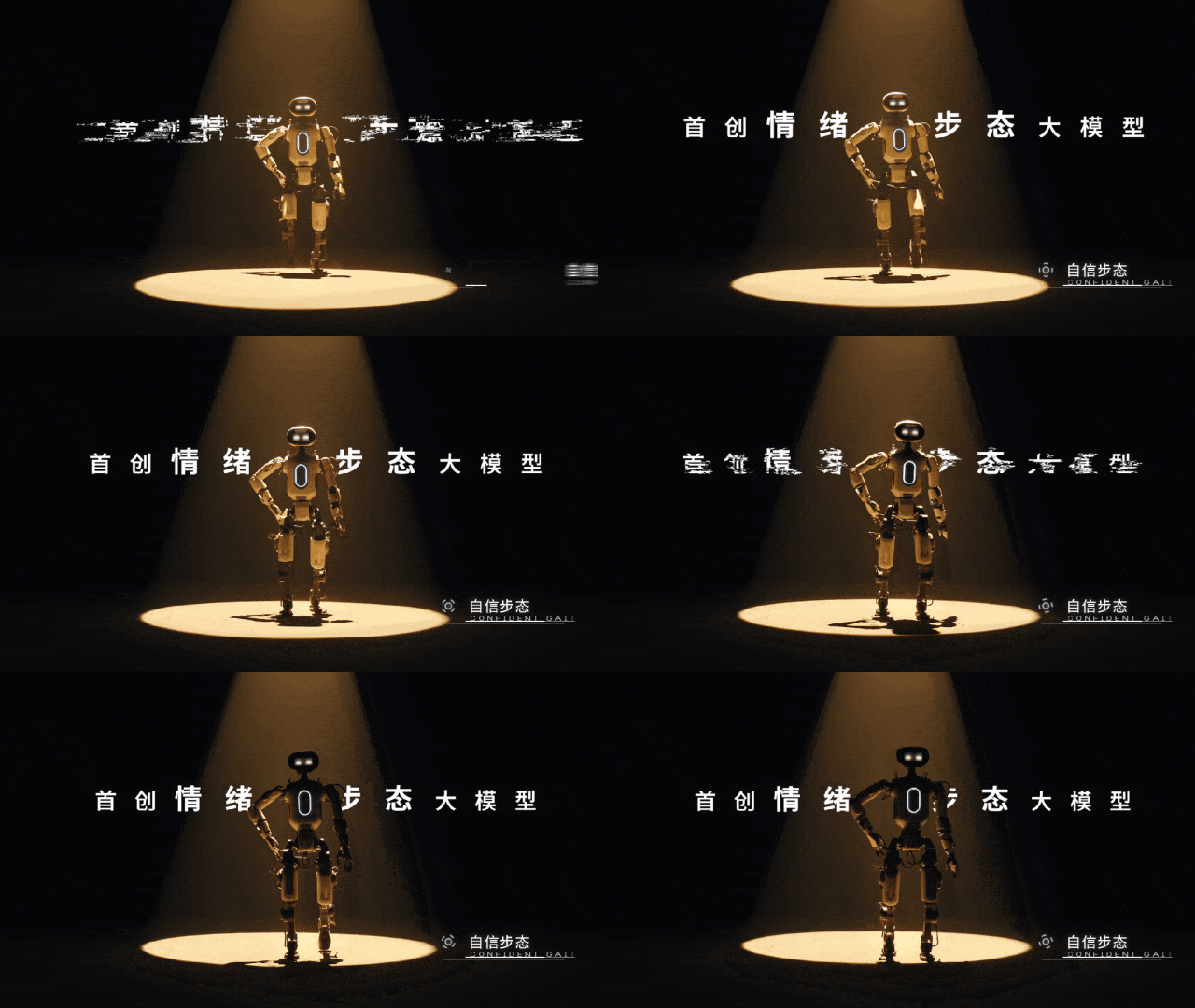
A Chinese robotics firm has launched the world's first large model enabling humanoid robots to express emotions through their walk, a technological leap that shifts the industry's focus from pure functionality to nuanced human-computer interaction.
Shanghai-based Cyan Robotics recently debuted the breakthrough technology, demonstrated by its "Orca" robot. Powered by the new model, the robot can display a range of emotional gaits, from a bouncy, happy walk to a dejected shuffle, adding a new layer of sophistication to human-robot interaction.
The innovation moves beyond the industry's conventional focus on perfecting speed and stability. "Making human-robot interaction more natural and warm" is the goal, said founder and CEO Niu Tenghao, adding that since body language constitutes over half of daily communication, it is a key step for robots to truly become "partners" in human life.
For investors, this development could open up significant commercial avenues in sectors like entertainment, education, and eldercare. It suggests the value of the humanoid robot market may increasingly be defined not just by physical capability, but by the potential to deliver emotional value and personalized experiences.
From Tool to Partner: A New Focus on "EQ"
While most of the robotics industry has been concentrating on fundamental motor skills—walking more steadily or running faster—Cyan Robotics has chosen a different path: endowing robots with the ability to express emotion. The company believes this "emotional quotient" is critical for the next stage of robotics.
"If a robot approaches you with rigid movements and a blank expression, you might find it cold, even slightly intimidating," Niu Tenghao explained. "But if it can express joy with a light step or concern with a slow pace, the interaction becomes much more natural." The Orca robot can currently express dozens of emotions through its gait, with plans to master hundreds more, effectively building a rich library of robotic body language.
The Technology Behind the "Lively" Gait
At the core of this capability is the "emotional gait" large model, which functions as the robot's brain for generating expressive movements. This model allows Orca to automatically adjust its step length, speed, and body sway in response to commands or environmental cues, coordinating these movements with simple facial expressions to create a holistic "emotional performance."
A key technical achievement is that all gait transitions occur smoothly under a single, unified intelligent control system. This ensures the robot maintains absolute balance and stability, even as it switches between complex emotional states, resolving a potential conflict between expressive movement and physical reliability.
Future Applications and Market Potential
The commercial prospects for a robot that can "walk with feeling" are broad. Industry experts view this breakthrough as a sign that humanoid robots are evolving from purely "functional bodies" that execute commands to "expressive life forms."
Potential applications span various industries. In theme parks and museums, emotionally expressive robots could serve as more engaging characters for interacting with visitors. In home education, they could become companions capable of emotional exchange with children. In the eldercare sector, such robots could serve as assistants that understand and respond to the emotional needs of seniors, providing warm companionship. This marks a potential future where robots are not just efficient tools, but "cyber partners" valued for their ability to provide emotional connection.