
Chinese Venture Capital Pivots to ‘Flying Robots’ as Embodied AI Penetrates Niche Industrial Markets
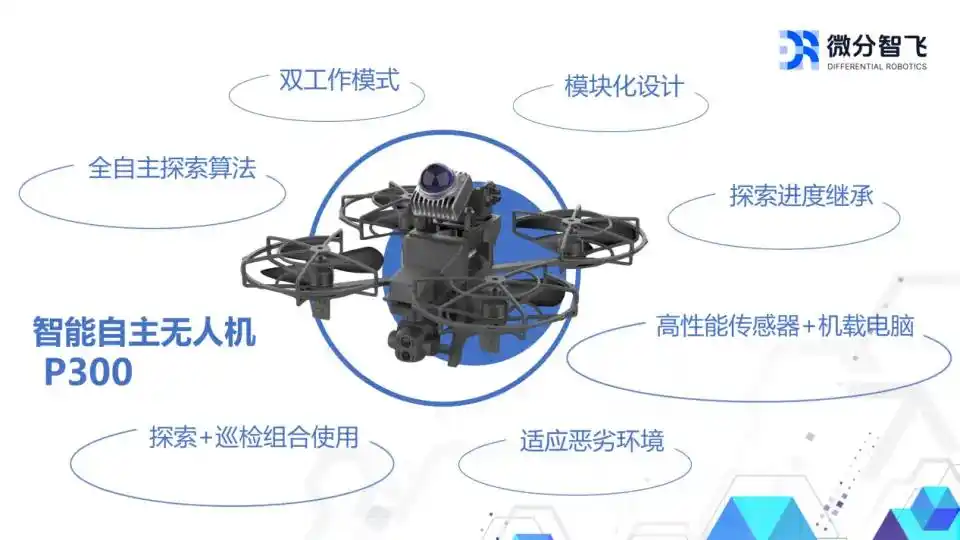
Chinese venture capital firms are pouring money into autonomous “flying robots” designed for confined industrial spaces, betting that specialized aerial systems may offer a faster path to commercialization than general-purpose humanoid robots.
The shift comes as China’s embodied AI sector moves into a more selective investment phase. After startup registrations in the sector surged 115.6% year-on-year to 388 in 2025, investors are increasingly prioritizing companies with clear deployment scenarios and revenue potential over concept-driven robotics demonstrations.
Early investment patterns suggest a widening divide in funding preferences. While many humanoid robotics startups continue struggling to prove commercial viability, companies building autonomous aerial systems for GPS-denied environments — including nuclear facilities, subway tunnels, and enclosed industrial sites — are attracting stronger institutional interest.
Bypassing DJI Demands Autonomous Navigation
Unlike traditional drones reliant on remote control or pre-programmed flight paths, the new cohort of flying robots functions as independent aerial agents. Hangzhou-based Differential Robotics recently closed a Series A1 round, bringing its total funding across six rounds to over RMB 500 million (US$69.44 million) in less than two years. The company’s P300 series utilizes onboard processing to conduct autonomous exploration and mapping without human intervention or prior environmental data.
Similarly, Guihang Intelligence, founded in 2025 by Tsinghua University and Shanghai Jiao Tong University alumni, deliberately avoids the saturated outdoor market. The company’s "Linglong" series targets enclosed, high-risk environments. By integrating proprietary multi-modal models with LiDAR and vision systems, Guihang has achieved real-world deployment in environments characterized by severe electromagnetic interference and zero GPS connectivity, securing early-stage capital and local government fund support.
Shifting VC Metrics Force Focus on Commercial Realities
The investment thesis has hardened significantly in 2026. A joint report by the China Academy of Information and Communications Technology and Tsinghua University revealed that the broader embodied AI and robotics sector absorbed RMB 73.54 billion (US$10.21 billion) across 744 deals in 2025. However, the era of securing capital with merely a team pedigree and a functional demo has ended.
Institutional investors now mandate a strict metric: true scenarios, true clients, and true revenue. This criteria forces hardware startups to demonstrate clear Product-Market Fit (PMF) before scaling. The focus has pivoted toward modular designs that lower operational friction, such as Guihang's detachable exterior components, which directly appeal to enterprise procurement budgets by reducing long-term maintenance costs.
Squeezed Margins Push Capital Toward Core Components
As the hardware ecosystem matures, commoditization is already eroding profits in legacy segments. Gross margins for standard robotic joints have compressed to 20%-30%, mirroring traditional manufacturing levels and failing to meet venture capital return expectations. Consequently, funds are migrating upstream within the supply chain.
Investors are currently mapping long-term bets on specialized thermal control solutions, dexterous manipulators, and smart wearable operating interfaces. Yet, with hardware differentiation narrowing across the board, the ultimate survival of these aerial robotics firms hinges on their founders' ability to execute commercial rollouts and solve verifiable industrial bottlenecks, rather than simply showcasing technical capabilities.
Related Coverage:
Flying Humanoid Robots Move From Science Fiction to Laboratory Reality