
Is CXMT Really China’s SK Hynix?
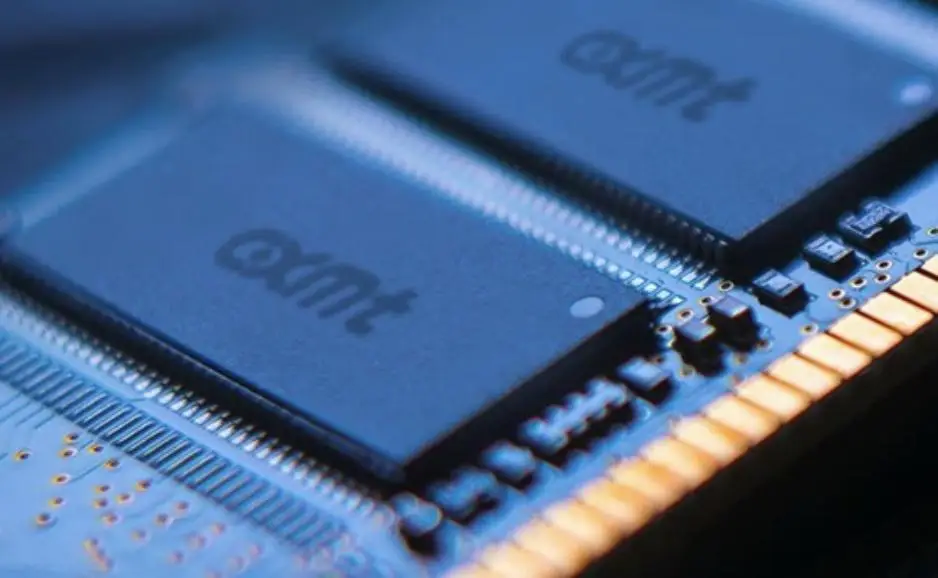
For months, investors and semiconductor analysts have increasingly referred to Changxin Memory Technologies (CXMT) as “China’s SK Hynix” — a label fueled by soaring profits, tightening global memory supply, and China’s growing push for technological self-sufficiency.
The comparison is understandable. After nearly a decade of losses, CXMT has suddenly emerged as one of the biggest beneficiaries of the global memory upcycle. Updated IPO filings released on May 17 showed the company generating RMB 61.8 billion in revenue and RMB 1.87 billion in net profit in 2025, marking its first profitable year after accumulating more than RMB 36.6 billion in losses over the previous decade.
The acceleration in 2026 has been even more dramatic. First-quarter revenue reached RMB 50.8 billion, while net profit surged to RMB 24.76 billion. The company now expects first-half net profit to land between RMB 50 billion and RMB 57 billion — figures that have transformed CXMT from a state-backed semiconductor project into one of China’s most closely watched technology companies.
But despite the market excitement, the comparison with SK Hynix remains incomplete. CXMT may be becoming a major DRAM supplier, yet it still occupies a very different position in the global memory hierarchy.
Why the Market Is Embracing the Comparison
The timing of CXMT’s breakout could hardly have been more favorable.
For much of the past decade, the global DRAM market was dominated by Samsung Electronics, SK Hynix, and Micron Technology, with few challengers capable of operating at scale. Meanwhile, China remained heavily dependent on imported memory chips despite being one of the world’s largest consumers of semiconductors.
That imbalance is now beginning to shift.
As artificial intelligence spending accelerated globally, the three dominant memory manufacturers increasingly redirected resources toward High Bandwidth Memory (HBM), the premium memory technology powering AI accelerators and high-performance computing systems. In doing so, they gradually deprioritized parts of the conventional DRAM market tied to smartphones and consumer electronics.
CXMT stepped directly into that gap.
While overseas rivals focused on AI-oriented products, CXMT continued expanding production capacity for mainstream DRAM chips. As supply tightened and memory prices climbed sharply throughout late 2025 and early 2026, manufacturers with available capacity suddenly gained enormous pricing leverage.
The company’s own filings illustrate how aggressively it scaled production. Utilization rates rose from 87.06% in 2023 to 92.46% in 2024 and further to 95.73% in 2025, while production-sales ratios remained close to full capacity.
In other words, CXMT entered the memory upcycle with both expanding output and inventory ready to ship into an undersupplied market.
That combination helped fuel one of the fastest earnings reversals seen in China’s semiconductor sector — and quickly turned the company into a symbol of China’s broader ambitions to build a more self-sufficient AI supply chain.
The valuation narrative followed just as rapidly. Some investors now estimate CXMT’s potential valuation at between RMB 1 trillion and RMB 2 trillion, driven not only by earnings expectations, but also by the belief that China may finally have a globally relevant memory champion.
Why CXMT Still Isn’t SK Hynix
Yet the most important distinction lies in where the profits are coming from.
Today’s SK Hynix is fundamentally an HBM company. Its position within Nvidia’s AI supply chain has made it one of the biggest winners of the generative AI boom, with high-margin HBM products increasingly driving both earnings growth and market valuation.
CXMT, by contrast, remains primarily a conventional DRAM supplier.
According to market research firm Omdia, the company currently holds an estimated 7.67% share of the global DRAM market. But more than 66% of its revenue still comes from LPDDR products supplied to smartphone brands including Xiaomi, Vivo, OPPO, Honor, and Transsion.
DDR products linked to AI server demand from cloud providers such as Alibaba and ByteDance now contribute more than 30% of revenue — a meaningful increase from previous years — but AI-related memory is still not the company’s dominant business.
That distinction matters because the global memory market is increasingly splitting into two separate worlds.
One is the traditional DRAM business, where pricing remains cyclical and competition is intense. The other is the HBM market, where supply remains constrained, technological barriers are higher, and AI demand continues reshaping the economics of the industry.
So far, CXMT’s IPO filings contain no direct reference to HBM products.
Its recent profitability therefore reflects a highly favorable market cycle and a supply vacuum left behind by larger competitors — not yet a breakthrough in the most strategically important segment of the AI memory market.
The Real Opportunity May Be Different
Still, that does not diminish the scale of CXMT’s achievement.
In many ways, the company’s success stems precisely from avoiding a direct confrontation with the industry’s most advanced players. Rather than competing head-on in HBM, CXMT benefited from staying focused on mainstream DRAM products just as overseas manufacturers shifted attention elsewhere.
Industry insiders describe the dynamic as a rare alignment between global market restructuring and domestic capacity expansion.
“The major players redirected technology and capacity toward advanced AI-related products,” one DRAM industry researcher said. “That created room in traditional markets, and CXMT happened to have both the products and production capacity ready.”
The result is that CXMT has become one of the clearest beneficiaries of the current memory supercycle without yet needing to compete at the very top of the technological ladder.
For investors, however, the next stage will matter far more.
The question is no longer whether China can mass-produce DRAM at scale. CXMT has already demonstrated that capability. The real test is whether Chinese memory suppliers can eventually establish a meaningful position within the AI infrastructure stack itself.
Some investors believe future collaboration between domestic GPU developers and memory suppliers could eventually support a more localized AI hardware ecosystem. One possible path could involve Chinese firms jointly developing advanced packaging and 3D-stacking solutions that reduce reliance on overseas HBM suppliers.
But for now, those remain future narratives rather than commercial realities.
Beyond the Supercycle
The biggest risk facing CXMT may ultimately be timing.
The current memory shortage has created extraordinarily favorable conditions for companies with available production capacity, and some analysts believe supply tightness could persist until at least 2028. That gives CXMT a valuable window to strengthen customer relationships, stabilize profitability, and continue expanding manufacturing scale.
Yet memory remains one of the semiconductor industry’s most cyclical businesses. Periods of undersupply and soaring profits are often followed by aggressive capacity expansion, falling prices, and sharp earnings compression.
At the same time, CXMT continues investing heavily in new production lines, meaning depreciation costs could pressure margins once the cycle cools. Competition for investor capital is also intensifying as other Chinese semiconductor firms pursue IPOs and attempt to position themselves within the country’s broader AI narrative.
For now, CXMT is benefiting from a rare alignment of supply shortages, geopolitical urgency, and China’s AI ambitions.
But becoming “China’s SK Hynix” requires more than surviving a memory supercycle. It requires becoming indispensable to the AI era itself.
Related Coverage: