
Detroit Giants Pivot to Energy Storage, With CATL's Technology Blueprint in Hand
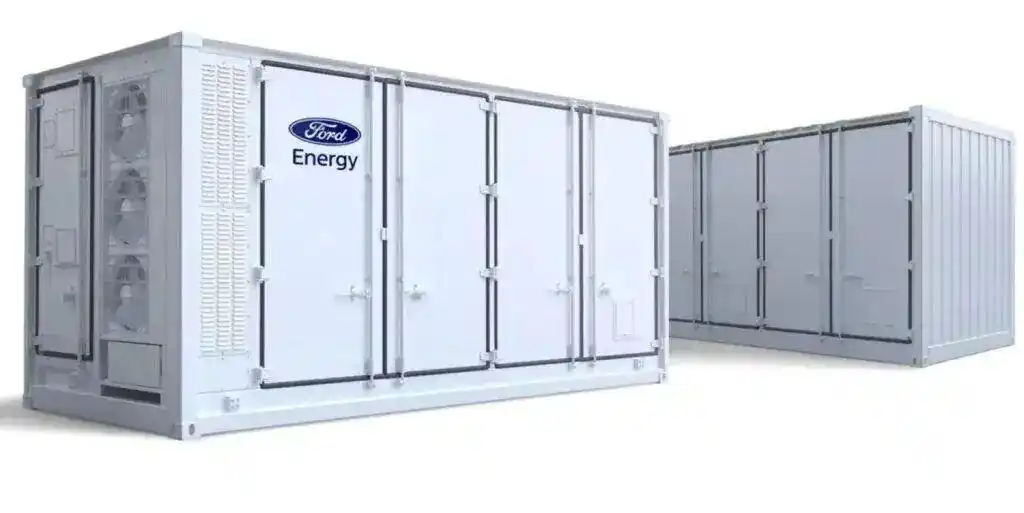
Ford Motor bets on licensed Chinese battery IP while General Motors charts a China-free path — two divergent strategies converging on the same trillion-dollar market.
The race to power America's artificial intelligence data centers is pulling Detroit's automakers into an unexpected arena: grid-scale energy storage. Ford Motor Company and General Motors, both battered by EV losses and retreating overseas market share, are repositioning themselves as energy infrastructure players — and the technology choices each has made reveal a stark strategic fault line running through U.S. industrial policy.
The pivot is not incidental. ChatGPT alone processes roughly 200 million daily requests, consuming an estimated 500,000 kilowatt-hours per day — equivalent to the daily electricity usage of approximately 17,000 American households, according to international research cited in industry reports. As AI data center (AIDC) buildouts accelerate nationwide, energy storage has transitioned from a peripheral utility product into a critical infrastructure category. Analysts at China Merchants Securities project that AIDC-driven demand could push U.S. stationary storage requirements to between 122 GWh and 245 GWh by 2030, depending on whether four-hour or eight-hour configurations become the dominant deployment standard.
Ford Energy Bets on CATL's LFP Playbook to Capture Grid-Scale Demand
In May 2026, Ford formally established Ford Energy, a wholly-owned subsidiary targeting the fixed battery storage market. The unit announced plans to invest US$2 billion to retrofit a Kentucky plant, targeting 20 GWh of annual energy storage production capacity. The move represents a direct challenge to Tesla's Megapack business, which generated US$12.77 billion in energy generation and storage revenue in fiscal year 2025, accounting for approximately 13.5% of Tesla's total revenue.
The technology underpinning Ford Energy's ambitions originates entirely from Contemporary Amperex Technology (CATL), structured as a pure licensing arrangement. CATL holds no equity stake in Ford Energy and participates in no joint venture. Under the agreement, Ford receives fifth-generation LFP cell manufacturing processes, equipment specifications, quality control standard operating procedures, and baseline battery management system algorithms. Ford's Michigan Marshall plant and the Kentucky storage facility — both slated for production between 2026 and 2027 — will be 100% Ford-owned and Ford-operated.
Industry analysts estimate CATL's licensing fees at approximately US$250 million to US$280 million per year, based on an assumed annual production capacity of 35–40 GWh and a royalty rate of roughly US$7 per kWh. The arrangement is tightly circumscribed: Ford retains usage rights only, with no reverse engineering permitted, no sub-licensing allowed, and deployment restricted to North America (the United States and Canada) for Ford's own electric vehicle and energy storage products.
The IP boundary is equally deliberate on CATL's side. China placed cathode material preparation and lithium extraction technologies on its restricted export list in July 2025, and the Ford-CATL agreement was reviewed by China's Ministry of Commerce and Ministry of Science and Technology. What CATL transferred is, by design, mature and publicly adjacent technology — not core material formulations, not advanced process parameter windows, and not next-generation R&D databases. As Academician Ouyang Minggao has framed it, technology licensing at this level represents "the highest-order business model" — authorizing one generation while retaining the next, using licensing revenue to fund continued R&D, and maintaining a structural lead of two to three technology generations.
The commercial logic for Ford is equally clear. Its EV division posted a loss of US$4.8 billion in 2025. Converting idled battery production capacity toward stationary storage — a market with favorable domestic policy tailwinds under the Inflation Reduction Act — allows Ford to monetize existing manufacturing infrastructure without requiring a greenfield technology investment it cannot afford.
GM Pursues a China-Free Dual-Track Strategy, Betting on Sodium-Ion for 2028
General Motors is constructing its storage portfolio on a deliberately different foundation. The company's near-term LFP production flows through Ultium Cells, its joint venture with LG Energy Solution, at the Spring Hill, Tennessee facility. LFP chemistry and process technology originate from LG Energy Solution; GM contributes engineering integration, while LG Vertech, an LG subsidiary, handles storage cabinet system integration.
For its longer-term position, GM announced on June 10, 2026, a strategic partnership with startup Peak Energy Technologies to co-develop next-generation sodium-ion battery cells specifically for grid-scale storage applications — explicitly not for electric vehicles. GM will retain exclusive cell manufacturing rights and conduct electrochemical R&D at its Michigan battery laboratory, with Peak Energy responsible for system integration. GM has reportedly committed approximately US$900 million (RMB 6.096 billion) to this initiative. Trial production at the Michigan facility is targeted for 2028, with the explicit goal of establishing a fully domestic North American supply chain.
The sodium-ion roadmap addresses a fundamental limitation of LFP: long-term chemical stability and thermodynamic performance under the continuous, high-cycle-count demands of grid and data center applications. GM Battery Chief Kurt Kelty has stated publicly that utility partners and hyperscale data center operators consistently prioritize long-duration, economically reliable power delivery in real-world conditions — a performance envelope that sodium-ion chemistry is better positioned to serve than current lithium-iron-phosphate formulations.
GM is simultaneously deploying second-life EV battery packs in a parallel commercial track. In a partnership with Redwood Materials — operator of North America's largest microgrid, located in Sparks, Nevada — approximately 100 repurposed GM battery modules are being installed at a Michigan plant, building a 1.5 MWh / 7.2 MWh storage system projected to save the facility more than US$3 million in electricity costs over its operational life. Redwood's Nevada facility, already incorporating GM battery packs, is providing power support to Crusoe, an AIDC developer and operator.
Two Strategies, One Market — and Tesla Already Holds the Template
The contrast between Ford and GM reflects a broader tension in U.S. industrial policy: pragmatic technology access versus supply-chain sovereignty. Ford's CATL licensing arrangement accelerates its market entry at measurable cost — both financial and political. Congressional scrutiny of the Ford-CATL deal, which began in July 2023, forced Ford to reduce initial production targets, increase localization commitments, and pledge a path toward technology self-sufficiency. Yet Ford has maintained the licensing structure because, as its own engineers have acknowledged, achieving equivalent cost efficiency and production yield domestically remains beyond current reach.
GM's approach avoids that political exposure but accepts longer development timelines and higher technology risk, particularly on sodium-ion chemistry, which has not yet been proven at commercial scale in the U.S. market.
Both strategies are chasing the same demand signal. The U.S. storage market is projected to reach 40 to 50 GWh in 2026 alone, with AIDC-related power deficits providing the structural demand floor. Tesla's Wyoming Megapack installation in May 2026 — a US$200 million project supplying Meta's AI data center — illustrates the scale of individual contracts now available to credible storage suppliers.
For investors, the valuation implication is significant. When Ford announced its entry into the storage market in late 2025, its stock rose 25% on the day of the announcement. The market is effectively re-rating legacy automakers that can credibly demonstrate a path to recurring energy services revenue — through power sales, storage-as-a-service contracts, and virtual power plant dispatch fees — rather than one-time vehicle transactions. This is precisely the business model evolution CATL has already executed: transitioning from cell manufacturing into storage infrastructure, battery swapping networks, and charging infrastructure, generating what the company internally describes as "perennial" revenue streams.
Detroit's two largest automakers are, by different routes, attempting the same transformation. Whether they arrive at the same destination depends less on technology and more on how quickly American energy infrastructure spending materializes — and whether either company can build a cost structure competitive enough to survive when Chinese storage manufacturers eventually find a path back into the U.S. market.
Related Coverage:
CATL Makes First Nuclear Fusion Bet, Leading Seed Round in Beijing-Based Beta Fusion