
DJI Undercuts Rivals with $387 Avata 360, Bringing 8K Panorama to Mass Market
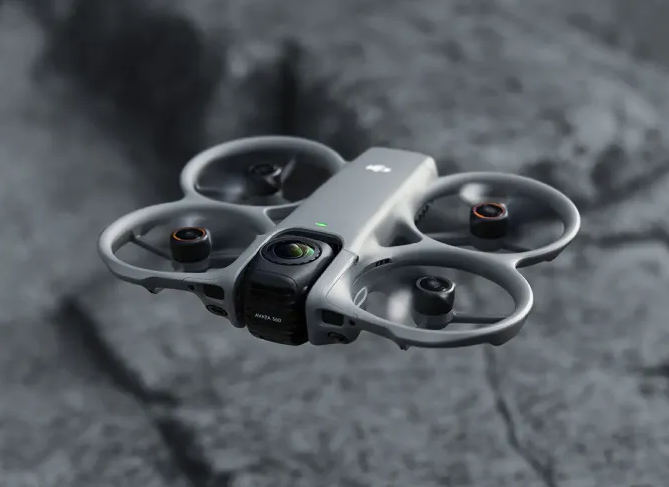
DJI escalated the price war in the consumer drone sector on Thursday, releasing the Avata 360, a hybrid FPV (First-Person View) drone that integrates high-end VR content creation capabilities for a starting price of RMB 2,788 (US$387). The aggressive pricing strategy targets the intersection of the maturing action camera market and the entry-level aviation sector.
The release marks a strategic pivot for the Shenzhen-based manufacturer in 2026. By bundling a 1-inch sensor capable of 8K/60fps HDR recording into a compact FPV frame, DJI is effectively lowering the technical barrier for creating spatial video content—a format seeing surging demand alongside the proliferation of mixed-reality headsets.
Aggressive Pricing Pressures Competitors
The pricing structure signals DJI's intent to consolidate market share in the sub-$500 category.
- Base Unit: The aircraft combined with the enhanced transmission kit is priced at RMB 2,788 (US$387).
- Fly More Combo: A bundle including the RC 2 remote controller and transmission kit retails for RMB 4388 (US$609).
This pricing undercuts several competitors in the dedicated 360-camera space while offering the added utility of flight, potentially squeezing margins for standalone action camera manufacturers.
Hardware Convergence Enhances Capabilities
The Avata 360 addresses a specific pain point in the 2026 creator economy: the complexity of dual-camera setups. Previously, FPV pilots often mounted third-party 360 cameras onto drones to achieve "invisible drone" shots. The Avata 360 integrates this natively.
The unit features a dual-mode system allowing operators to switch between 360° panoramic capture and standard single-lens recording. The inclusion of a 1-inch sensor—standard in prosumer gear—ensures the 8K footage retains dynamic range suitable for professional post-production.
Connectivity and Safety Upgrades
To mitigate signal loss, a common issue in dense urban environments, DJI has equipped the Avata 360 with its O4 transmission system backed by a built-in 4G module. This allows for seamless handover between radio frequency and cellular networks, ensuring video feed stability over extended distances.
Safety features include an integrated propeller guard design and an omnidirectional obstacle avoidance system. This reduces the risk profile for novice pilots attempting close-quarters flying, a core requirement for indoor real estate tours and dynamic vlogging.
Software Reduces Editing Friction
DJI is also leveraging AI to reduce post-production time. The system supports "One-Shot" filming which utilizes intelligent tracking algorithms to frame subjects automatically, eliminating the complex keyframing usually required for 360-degree footage.
Related Coverage:
DJI Captures 55% Global Handheld Imaging Market,outpacing Insta360 and GoPro
DJI Teases Avata 360 Launch in March 2026 with 8K Capabilities