
DJI Unveils Power 1000 Mini, Shrinking 1kWh Portable Energy Into a 14L, 11.5kg Package
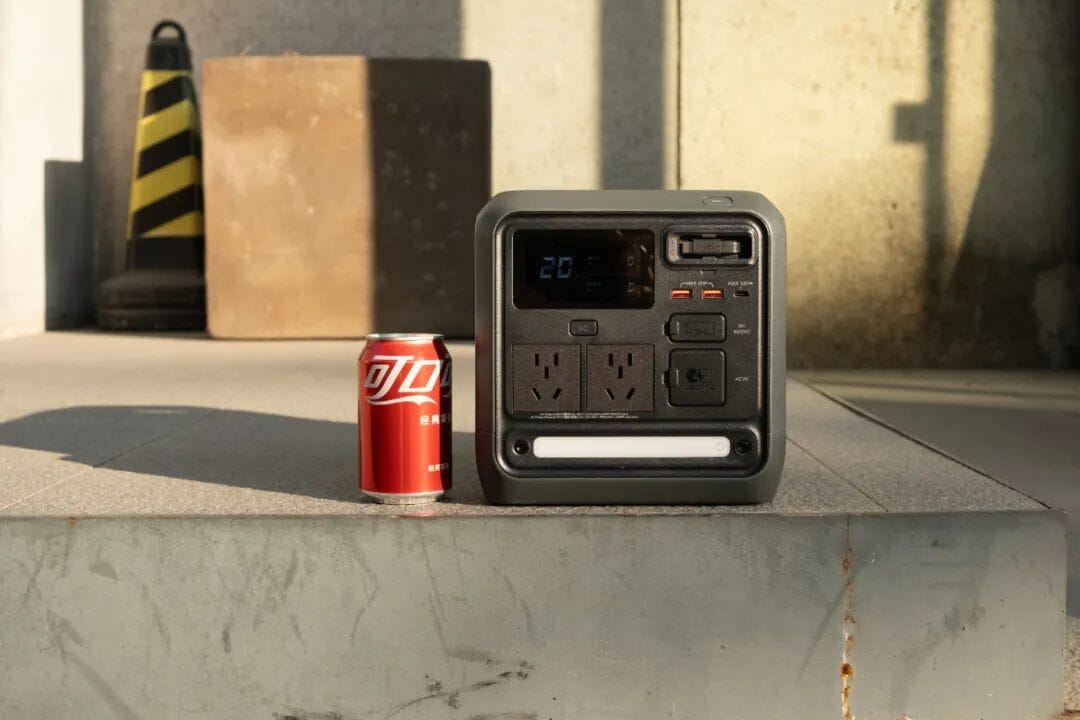
DJI has launched the DJI Power 1000 Mini, positioning it as the “lightweight” counterpart to the DJI Power 2000 and sharpening its push into portable energy storage with a smaller, more integrated design aimed at individual outdoor users.
The release, announced on Jan. 6, extends DJI Power into two clearer product tracks: the DJI Power 2000, a higher-capacity “heavy-duty flagship” with 2048Wh for professional users and home backup needs, and the new DJI Power 1000 Mini, built around a 1008Wh “sweet spot” for portable power—marketed for personal outdoor activities and light road trips.
Weight Reduction
DJI’s key bet is that tighter integration can remove friction for personal buyers. The Power 1000 Mini compresses a 1kWh-class unit into about 14 liters and 11.5 kilograms, a form factor the company is framing as easy to carry one-handed and easier to stow in a vehicle.
The unit also includes a built-in 100W USB‑C retractable cable designed to reduce reliance on separate charging accessories. DJI said the cable is modular and detachable, allowing replacement if it wears out, which could lower maintenance concerns for frequent users.
Higher Conversion Efficiency and “Overclock” Output
Despite the “Mini” branding, DJI is pitching performance as competitive for common camping loads. The Power 1000 Mini delivers 1000W of stable output and supports an “overclock” mode up to 1200W, enabling short-duration use of higher-power appliances such as an electric kettle or air fryer, according to the product description.
For everyday electronics, DJI highlighted efficiency improvements in the 250W–400W power band, saying inverter conversion optimization can extend runtime by about 10% versus the prior generation under similar capacity—an incremental gain that matters for laptop- and desktop-class usage during outdoor work.
The company is also pushing integration as a differentiator in recharging. The Power 1000 Mini embeds 400W in-car fast charging and an MPPT solar module, removing the need for external bulky add-ons. It can charge from 0% to 80% in 58 minutes via AC power, DJI said.
As part of DJI’s ecosystem strategy, the unit retains the SDC DC fast-charge interface, which DJI said can charge a DJI drone battery from 10% to 95% in 30 minutes—an explicit appeal to creators and field production users.
On safety and durability, DJI said the product uses lithium iron phosphate cells rated for 4,000 cycles, adds potting on the inverter to mitigate moisture-related short risks, and includes UPS functionality with a switchover time of less than 0.01 seconds.
For investors and competitors, the product underscores DJI’s intent to compete not by chasing headline capacity alone, but by compressing size, reducing accessory dependence, and improving efficiency in the most common load range. With the market entering what the company describes as a shakeout phase, DJI is effectively betting that integrated design—built-in modules and built-in cables—can win share in the mass outdoor segment while the Power 2000 anchors heavier professional use cases.