
EHang COO Discusses eVTOL Commercialization: Tourism Leads the Way, Emergency Rescue May Follow
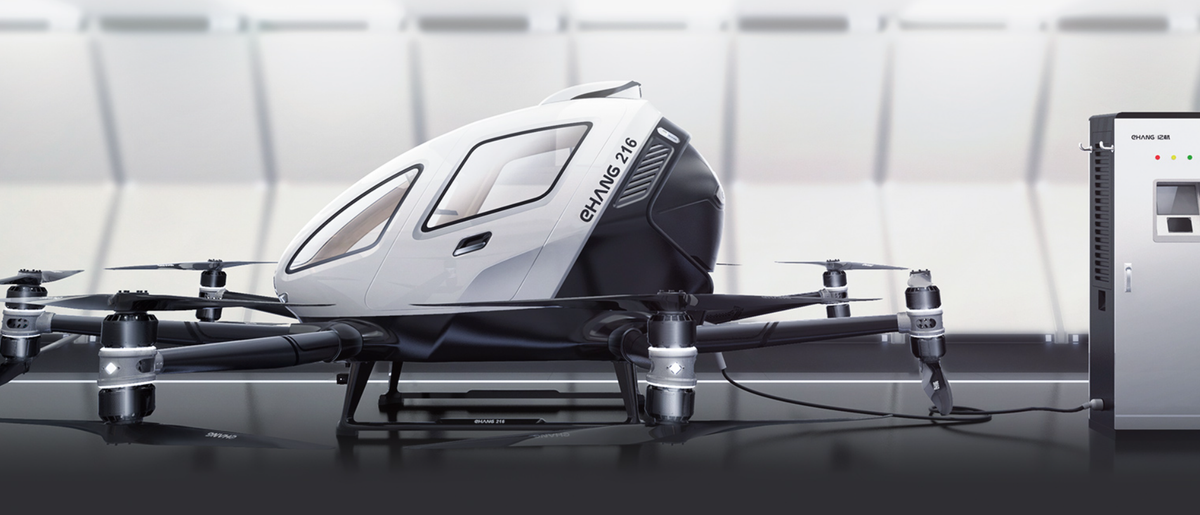
EHang, a leading Chinese eVTOL manufacturer, has been making significant strides in commercializing electric vertical takeoff and landing aircraft in China's emerging low-altitude economy sector. In an exclusive interview with National Business Daily in mid-September during the 21st Yabuli China Entrepreneurs Forum Summer Summit, EHang's Chief Operating Officer Wang Zhao outlined the company's strategic approach to commercializing autonomous eVTOL aircraft beyond the tourism sector.
On May 11, 2025, EHang and several other eVTOL manufacturers joined domestic scenic areas in announcing plans to deploy eVTOL low-altitude sightseeing projects across 100 scenic spots within the next three years. This initiative highlights the growing momentum behind China's low-altitude economy development as the country seeks to establish new transportation paradigms ahead of the upcoming National Day holiday period.
Autonomous Flight Path Creates Competitive Advantage
According to Wang Zhao, EHang's current customer base primarily consists of government entities, scenic area operators, and enterprises, with tourism-related clients forming the core clientele. Low-altitude tourism is emerging as a key scenario for early commercial deployment of eVTOL aircraft. Beyond commuting and urban transportation, Wang noted that the emergency rescue sector may achieve scaled commercial operations even earlier.
Wang explained EHang's strategic choice to pursue autonomous flight technology rather than piloted aircraft. "Through our 'preset flight routes and autonomous flight' technical approach, we can achieve safe and orderly low-altitude operations," he said. The autonomous approach offers several advantages: it reduces accident risks caused by human error, enables safer and more efficient fleet management, and provides the necessary foundation for normalized, scaled, market-oriented, and public low-altitude transportation.
The EH216 series represents EHang's flagship product line. Wang acknowledged that the EH216-S, as an entirely new category of aviation product, differs significantly from traditional aircraft in terms of technical architecture, product configuration, and performance characteristics. "Previously, airworthiness standards for this type of aircraft were completely blank worldwide, with no fully referenceable basis or standards. We needed to establish a complete, feasible, scientifically rigorous system from scratch," Wang explained.
This process involves extensive content, long cycles, and high costs. Current eVTOL airworthiness standards are still being refined, and varying standards across different countries and regions create uncertainties for overseas certification efforts. These challenges test companies' determination, patience, and financial strength. Additionally, the classification, control, and coordination of low-altitude airspace resources require further improvement, limiting eVTOL scaled operational efficiency to some extent.
Wang emphasized that EHang's choice of a "direct autonomous flight" route has provided the company with at least a three-and-a-half-year differentiated leadership window compared to global peers. This lead time has enabled regulatory and data accumulation advantages while allowing EHang to complete full-cycle capabilities spanning "airworthiness certification—mass production—operations."
Commercial Scale Operations Await Infrastructure Development
From an order perspective, Guosen Securities research reports indicate that since obtaining Type Certificate (TC) approval through the end of June 2025, EHang's domestic new procurement orders and pre-orders have reached thousands of units. Wang revealed that the company's customers are currently concentrated in the ToB (business-to-business) and ToG (business-to-government) sectors, with initial deployments primarily focused on tourism scenarios.
"Compared to helicopters, autonomous passenger aircraft demonstrate significant cost advantages for aerial sightseeing applications," Wang explained. Relative to traditional single-rotor helicopters, multi-rotor, pure electric-powered aircraft are flexible and compact, requiring smaller ground footprints while offering greater maneuverability. They can achieve fixed-point, high-frequency fleet scheduling flights along preset routes, aligning with future trends toward scenic area intelligence and enhanced sightseeing experiences.
Wang also noted that autonomous aircraft help reduce pilot training and salary costs, significantly lowering operational expenses while improving operational efficiency. EHang plans to use aerial sightseeing scenarios as an entry point, continuously accumulating flight data and operational experience to establish foundations for comprehensive urban air mobility applications.
Wang indicated that aircraft applications in commuting and urban transportation scenarios depend on infrastructure development progress—including takeoff and landing point density and digital communication network construction—as well as regulatory framework completeness. However, the emergency rescue sector may achieve scaled commercial operations earlier.
The "Development Action Plan for Key Safety and Emergency Equipment Fields (2023-2025)" jointly issued by the Ministry of Industry and Information Technology and other ministries focuses on key safety and emergency equipment applications in various natural disasters, urban special scenario fires, various accidents, and emergency medical rescue scenarios. The plan aims to achieve safety and emergency equipment industry scale exceeding RMB 1 trillion yuan (US$138 billion) by 2025.
Despite advancing technology maturity, Wang acknowledged that eVTOL large-scale commercial operations remain constrained by various objective factors. Regarding infrastructure considerations, Wang explained: "Low-altitude infrastructure includes both ground flight takeoff and landing facilities, charging equipment, terminal buildings, and commercial functional areas, as well as low-altitude digital management networks that can ensure safe and orderly flight operations when more aircraft operate simultaneously in the sky."
More detailed and standardized policies are needed for flight airspace approval, aircraft flight supervision, low-altitude economy legislation and enforcement, and ground infrastructure land use planning to accelerate industry popularization and development.
Regarding public awareness, Wang called for strengthened talent development and public education related to the low-altitude economy. He believes: "We need to increase cultivation efforts for technical, operational, and service professionals while strengthening industry education and low-altitude economy application scenario awareness initiatives."
Wang expressed confidence that eVTOL will gradually integrate into daily life, becoming a foundational transportation mode with an "invisible presence" like subways and buses. While widespread adoption of "flying taxis" similar to ride-hailing services will require time, Wang believes that coordinated advancement of technology, infrastructure, and policy is accelerating the low-altitude economy's transition from blueprint to reality.