
Europe's Record Heat Wave Tears Open a New Growth Chapter for China's Air-Con Giants
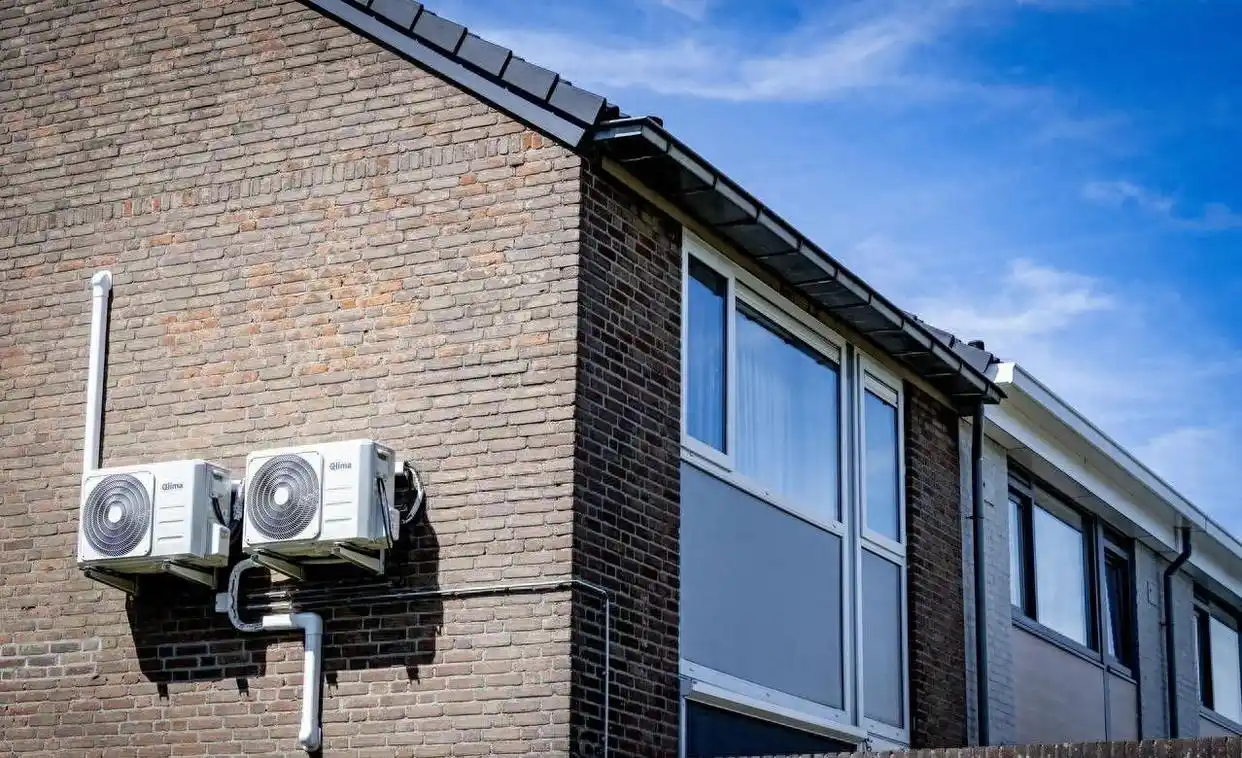
China's three dominant air-conditioner makers — Midea, Haier and Gree — command over 70% of their home market yet hold barely 22% globally, but an unprecedented European heat wave in 2026 is forcing investors to reframe the sector's growth narrative from a domestic replacement-cycle story to a genuine international expansion play.
China's exports of air conditioners to the European Union surged 43.2% year-on-year to US$3.76 billion in the first half of 2026, hitting a record high, according to industry data. The catalyst is unambiguous: Western Europe recorded its hottest June since modern records began, with average temperatures running 3°C above the 1991–2020 baseline, and parts of France, England and Wales logged daily highs more than 10°C above seasonal norms as early as May. The demand shock has been near-instantaneous — May export volumes of portable residential air conditioners to Western Europe accelerated to 116% year-on-year growth, with France, the Netherlands and Belgium each posting roughly double-digit export-value gains.
The market response at the company level is equally telling. Midea Group reported that its PortaSplit mobile split-unit — engineered specifically for Europe's heritage-building stock, requiring no wall drilling and no professional installation — shipped more than 200,000 units to business customers in the first half of 2026, doubling year-on-year. Midea's total air-conditioner sales across Germany, France, Spain and the United Kingdom rose more than 70% year-on-year in the same period; PortaSplit alone sold 60,000 units in Germany in six months. TCL Technology cleared its mobile air-conditioner inventory entirely, while Gree Electric Appliances saw regional distributors sell out across multiple European markets, with agents placing emergency replenishment orders.
Heat Wave Catalyses a Structural Demand Reset Across Europe
Europe's historically low household air-conditioner penetration rate — approximately 20%, against a global average of 37% and China's 162 units per 100 households — has long been explained away by temperate summers. That explanation is losing credibility fast. The International Energy Agency projects EU air-conditioner stock will reach 275 million units by 2050, more than double the 2019 installed base, as extreme heat events shift from anomaly to baseline.
The addressable market arithmetic is striking. Europe currently accounts for roughly 10% of the global air-conditioner market by value; if penetration converges toward global norms, that share could double to 20% over the long run. Average unit selling prices in Europe run approximately twice the domestic Chinese level, meaning the incremental revenue opportunity for Chinese exporters is disproportionately large relative to volume alone. Rough estimates from Changjiang Securities suggest Europe alone could add the equivalent of 20%–30% of China's annual domestic shipment volume, with Southeast Asia, Latin America and the Middle East-Africa region contributing at least another 50% of incremental global demand.
IndexBox projects global air-conditioner consumption will reach 359 million units by 2035 — a 60% increase over the current decade — with the market reaching US$169 billion, broadly consistent with bottom-up regional estimates.
China's Production Dominance Creates Leverage but Not Yet Profit
The supply side of this equation is structurally locked in China's favour. In the 2025 cooling year, China produced approximately 200 million of the 221 million residential air-conditioner units shipped globally, exporting more than 90 million — a production concentration rivalled only by solar panels. Domestic capacity utilization sits below 70%, meaning surplus capacity can absorb a significant portion of incremental global demand without new capital expenditure. Midea and Gree Electric Appliances together manufacture more than 70% of the world's residential air-conditioner compressors, giving the two companies structural leverage over the entire global supply chain.
Yet production dominance and brand equity are entirely separate variables. According to Euromonitor International data, Midea, Haier Smart Home and Gree held global market shares of 12.2%, 6.3% and 3.9% respectively in 2025, totalling just 22.4% — a fraction of their combined domestic share exceeding 70%. A substantial portion of Chinese-manufactured units sold overseas carry non-Chinese brand labels, reflecting an industry still operating primarily in OEM and ODM modes rather than as global branded competitors.
Three Structural Barriers Slow the Transition From Factory to Brand
Tariff and Trade-Policy Headwinds Reshape Supply Chains
The path from production leadership to brand leadership runs through a thicket of trade barriers. U.S. tariff escalation already compressed China's air-conditioner exports to North America in 2025, with volumes falling 18.4% year-on-year and export value declining 14%, forcing order diversion to third-country manufacturing bases. Thailand, India and Mexico have emerged as the primary offshore production hubs for Chinese air-conditioner companies, though European local manufacturing capacity remains almost non-existent — a gap that becomes increasingly costly as the EU tightens its regulatory perimeter.
EU Carbon Rules Erode the Cost-Advantage Model
The EU Carbon Border Adjustment Mechanism (CBAM) entered its substantive transition phase in 2025, imposing full life-cycle carbon-footprint requirements on imported goods including air-conditioners. For manufacturers whose competitive model has been built on cost leadership, CBAM represents a compounding compliance cost that directly compresses export margins and demands a fundamental rethink of supply-chain carbon accounting — extending pressure upstream to component suppliers.
Product Localization Demands Upend China's Scale-Efficiency Playbook
China's domestic market success was built on SKU rationalization and scale-driven cost reduction — a formula that does not translate cleanly into fragmented international markets. Europe's heritage-building regulations, varying national installation codes and energy-efficiency certifications make a single standardised product impractical. The Middle East-Africa region is transitioning from window units to split systems. Southeast Asia's unstable power infrastructure requires enhanced voltage tolerance. North America is a brand-loyalty market where price competitiveness is insufficient. Midea's PortaSplit success is instructive precisely because it required a full product redesign rather than a re-labelled domestic SKU.
Mapping the Winners Across a Three-Stage Globalization Timeline
Industry analysts at Guolian Minsheng Securities note that overseas revenue as a share of total sales, and commercial air-conditioning (central air) as a share of total air-conditioning revenue, both remain structurally low across China's white-goods majors — defining the two axes along which the most significant incremental value can be created.
In the near term, the 2026 European heat wave represents a demand window that rewards companies already holding European distribution relationships and product-ready inventory. Midea is the clearest beneficiary given PortaSplit's early-mover positioning; full-year European sales of the product line are tracking toward 200,000–300,000 units.
Over the medium term — a three-to-five-year horizon — the critical variable is which companies establish local manufacturing and channel infrastructure in high-barrier markets before tariff and carbon-compliance costs make pure-export economics untenable. Acquisition of established European brands has proven difficult and expensive; organic build-out is slower but potentially more durable.
Over the long term, the global air-conditioner market carries the potential to replicate the scale of China's domestic market for companies that can execute the full transition from OEM to OBM. The domestic installed base already exceeds 780 million units with replacement demand accounting for more than 60% of shipments and the top-three players holding a combined 60% share — a mature, low-growth structure that makes international expansion not a strategic option but an operational imperative. Companies that answer the globalization question correctly stand to double their addressable market; those that do not face an intensifying domestic war of attrition over a saturated base.
Related Coverage:
Midea’s European AC hit boosts sales, but AI push still lacks payoff