
Geely's Xingyuan Tops China's Auto Market, but Structural Shifts Are Already Eroding Its Throne
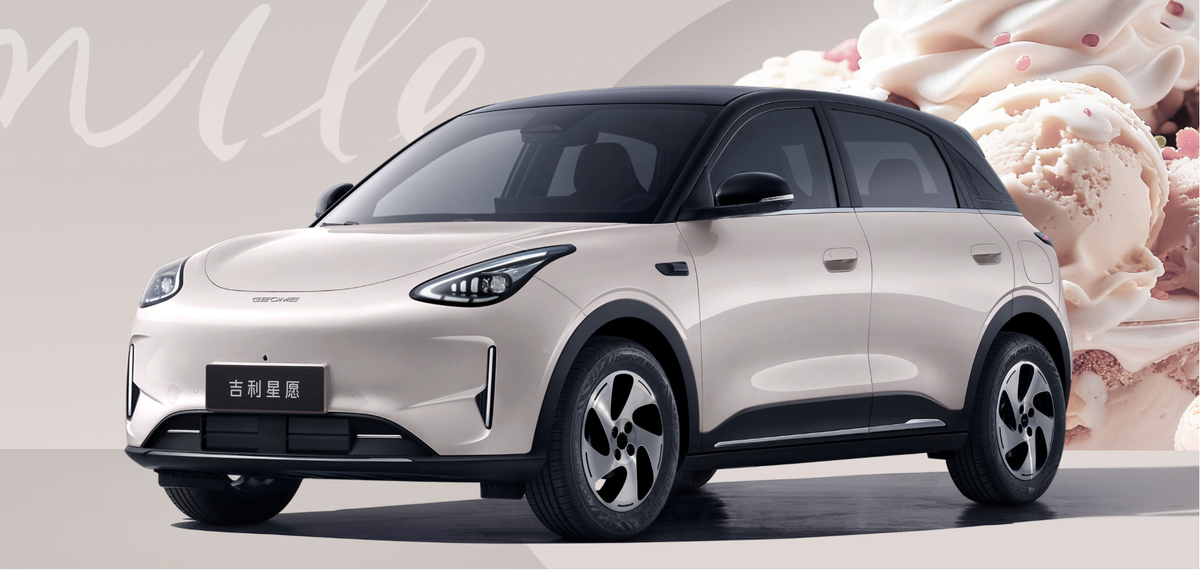
Geely' Xingyuan compact EV has outsold every other passenger car in China for 18 consecutive months, but retail data through May 2026 and a tightening policy environment suggest the window for its dominance is narrowing faster than the headline numbers imply.
According to data compiled by China Automotive Data Research Institute, Xingyuan recorded cumulative retail sales of 130,900 units in the first five months of 2026, a 18.6% lead over Tesla's Model Y at 110,400 units. The gap, while meaningful, has not widened since the start of the year — a detail that matters more than the absolute rank. Meanwhile, Li Auto's newly launched i6 has entered the mainstream family-EV segment, adding a third vector of competitive pressure that did not exist twelve months ago.
The broader question for investors tracking Geely's equity story — and for supply-chain participants in China's A0-segment EV ecosystem — is whether Xingyuan's sales leadership reflects durable product competitiveness or a time-limited arbitrage on structural tailwinds that are already beginning to fade.
Five Years, Four Champions: Decoding China's Sales-Crown Cycle
China's best-selling single nameplate has changed hands four times since 2020, and each transition has been a precise leading indicator of a broader demand-structure shift rather than a product-level accident.
Nissan's Sylphy held the crown in 2020–2021 as the last gasp of mass-market internal-combustion dominance. SAIC-GM-Wuling's Hongguang MINI EV seized the title in 2022 — the year national EV penetration broke 25% — by collapsing the price floor for battery-electric vehicles to RMB 28,800 (approximately US$4,000), making electrification accessible to rural commuters and urban plate-quota seekers simultaneously. Full-year 2022 volume reached 554,000 units.
The 2023–2024 cycle belonged to Tesla's Model Y, which sold 456,400 units in 2023 and 480,300 in 2024 after domestic localization pushed the entry price below RMB 200,000 (US$27,800). Model Y's ascent reflected a specific consumer psychology that multiple domestic OEM executives have described consistently: first-time EV switchers from combustion vehicles, particularly in tier-2 and tier-3 cities, perceived global brand validation as insurance against the adoption risk of an unfamiliar powertrain.
Xingyuan's 2025 full-year volume of 465,800 units — marginally ahead of Model Y — marks the beginning of a third-phase narrative: Chinese brands winning on comprehensive product merit at mainstream price points, not merely on subsidy arbitrage or novelty.
Battery Deflation Unlocks a New Price-Performance Frontier
The enabling condition for Xingyuan's competitive positioning is a structural collapse in battery input costs that has permanently altered the economics of sub-RMB 100,000 EVs.
BloombergNEF's 2024 battery price survey recorded global average lithium-ion pack US$115/kWh, down 20% year-on-year, with EV battery pack prices falling to US$97/kWh — the first time the industry crossed below the US$100/kWh threshold widely cited as the cost-parity milestone with combustion powertrains. Upstream in China's domestic supply chain, separator prices fell 60% on a per-unit basis through scale manufacturing, while artificial graphite anode costs declined 46%.
The practical consequence: Geely was able to price Xingyuan's 2024 model year at an effective post-incentive entry price of RMB 68,800 (US$9,556) — below BYD's Seagull at RMB 69,800 and materially below BYD's Dolphin entry variant at RMB 99,800. The product specifications do not reflect the price differential. Xingyuan's 2,650mm wheelbase exceeds the Seagull's 2,500mm by 150mm; its top-spec CLTC range of 410km matches the Dolphin's entry-level 420km; and its rear multi-link independent suspension represents a measurable ride-quality upgrade over the Seagull's torsion-beam setup — a specification gap that is immediately perceptible to consumers trading up from entry-level micro-EVs.
The Flyme Auto (Flyme Auto) infotainment system, developed through Geely's partnership with Meizu, adds seamless smartphone integration and continuous voice dialogue — features that, two years ago, were exclusive to vehicles priced above RMB 150,000. Third-party engineering assessments on Xiaohongshu have rated Xingyuan's overall build quality at 6.8 out of 10, above the Seagull's comparable score, citing interior soft-touch coverage and cockpit execution as differentiating factors.
The competitive formula — price-anchor against Seagull, product-spec approaching Dolphin — is a deliberate displacement strategy that has proven highly effective in a market where value-per-yuan is the primary purchase driver for the sub-RMB 100,000 segment.
Structural Tailwinds Quantified: Why the Crown Was Available to Win
Xingyuan's sales leadership is not solely a product story. Four macro conditions converged in a narrow time window that amplified its volume potential beyond what product merit alone could deliver.
China's vehicle ownership density stands at approximately 260 units per 1,000 people, compared with 800-plus in the United States, Germany and Japan. That gap represents a structural reservoir of first-purchase demand that has no equivalent in mature markets. In 2025, new-energy vehicle retail penetration reached 53.9% — the inflection year when electrification crossed majority share — releasing a concentrated cohort of budget-constrained first-time buyers with RMB 60,000–80,000 purchase envelopes. Xingyuan was positioned precisely at that price point at precisely that moment.
Policy amplified the effect disproportionately at the low end of the market. Purchase tax and vehicle-and-vessel tax exemptions, when applied to a RMB 68,800 vehicle, represent a consumer saving approaching RMB 10,000 — a double-digit percentage of total vehicle cost. The same fiscal incentive applied to a RMB 300,000 premium EV is barely perceptible as a share of purchase price. Green-plate traffic privileges in restricted cities add a non-monetary utility layer that further concentrates demand toward entry EVs in urban markets.
China's public charging infrastructure has surpassed 4 million installed connectors, with fast-charging access extending to county-level towns — a coverage density that removes range anxiety as a barrier for entry-EV purchasers in a way that no other major market has yet replicated at equivalent scale.
A fourth demand vector, largely unreported in mainstream coverage, is the secondary-car phenomenon. Multiple Xingyuan owners have disclosed that the vehicle is an additional purchase rather than a primary replacement — households already owning premium German or luxury SUV brands acquiring a second car for urban commuting. This incremental-purchase segment adds volume without cannibalizing the first-purchase pool.
Three Headwinds Converging Toward 2027
NIO founder Li Bin stated at the 2026 China Automotive Chongqing Forum that domestic passenger vehicle ownership has surpassed 370 million units, marking a definitive transition from an incremental-growth market to a replacement-driven one. That structural shift has direct implications for the A0-segment EV category that Xingyuan leads.
First, first-purchase demand is saturating. The cohort of households acquiring their first vehicle is finite and declining as a share of total transactions. China Zhongxin Weekly reports that upgrade-and-replacement purchases already account for more than 60% of total market transactions — buyers who prioritize interior space, ride comfort and advanced driver-assistance features over price minimization.
Second, the 2026 subsidy framework has been restructured. Flat-rate subsidies that previously benefited low-price vehicles proportionally more have been replaced by a price-proportional calculation with defined caps, concentrating fiscal support in the RMB 150,000–250,000 mid-segment. The A0 category's subsidy advantage is structurally diminished.
Third, mid-segment products are aggressively compressing downward. BYD's Song Pro DM-i has been repositioned below RMB 100,000. At the RMB 150,000 level, B-segment pure-electric sedans now ship with urban NOA (Navigate on Autopilot) and 500km-plus CLTC range as standard equipment. The incremental cost of stepping up from a RMB 70,000 A0-segment vehicle to a RMB 120,000–150,000 mid-segment vehicle with materially superior capability is narrowing — and consumer awareness of that gap is rising.
Historical precedent from mature markets reinforces the structural argument. The top-selling nameplate in the United States is the Ford F-150, in Japan the Toyota Corolla, in Europe the Volkswagen Golf — all mid-segment, all utility-optimized. A0-segment micro-cars have never sustained a top-selling position in a mature passenger vehicle market. China's current anomaly reflects the speed of electrification penetration and the intensity of early-stage policy intervention, not a permanent consumer preference shift.
China Automotive Association data for January–May 2026 frames the competitive landscape clearly: new-energy retail volume of 3.6997 million units has already surpassed combustion-vehicle retail of 3.4012 million units for the period. New-energy exports surged 117.3% year-on-year versus 35.6% for combustion vehicles. Overall NEV retail penetration is approaching 60%. The growth runway for EVs broadly remains open — but the specific A0 sub-segment's share of that growth is likely past its peak.
Mapping the Next Sales Champion
Synthesizing demand-structure data, policy direction and product-cycle timing, the next durable sales-crown holder will likely exhibit four characteristics simultaneously.
SUV body style carries structural momentum. Passenger Car Association data shows SUV market share rising from 47.5% in 2023 to 54.3% in the first quarter of 2026, while sedan share declined from 47.5% to 40.7% over the same period. An Autohome consumer survey in 2026 found that 87.3% of buyers — and a higher proportion in the RMB 100,000–200,000 budget range — ranked cabin comfort as their primary purchase criterion. Sedans face a physical ceiling on interior volume that no engineering refinement can overcome.
Advanced driver assistance is becoming a product-tier differentiator. Zuosiqi Automotive Research data shows urban NOA fitment rates rising steadily across mainstream price bands. The current industry convention — highway-only pilot assist below RMB 100,000, urban NOA reserved for RMB 150,000-plus — is likely to be disrupted by a first mover offering lightweight urban-routing assistance below RMB 100,000, creating a new competitive moat.
Domestic top-five incumbents — BYD, Geely, Changan Automobile, SAIC-GM-Wuling and Chery — collectively held 55.7% of domestic NEV retail in 2025. Brand trust, supply-chain integration and service network scale create durable competitive advantages in a consolidating market.
Two challengers beyond the incumbent top-five merit specific attention. Leapmotor, which has achieved monthly sales of 80,000 units by capturing combustion-to-electric switching demand, has demonstrated that its BC-series platform carries further volume potential. XPeng's M03, priced in the RMB 130,000–150,000 range with urban NOA standard-fitted and family-SUV proportions, is structurally positioned to capture the upgrade buyer cohort that outgrows A0-segment vehicles — the most rapidly expanding demand pool in the current market.
The consensus among China auto analysts: Xingyuan retains its sales-crown through 2026 with high probability given the gap over Model Y and the absence of a direct displacement threat this year. The more consequential question is what happens in 2027–2028, when first-purchase saturation, subsidy normalization and mid-segment cost compression arrive simultaneously. At that point, the sales leadership will almost certainly migrate upmarket — and the brand that has already secured the upgrade buyer's loyalty will be best positioned to inherit the crown.
Related Coverage:
Geely Aggressively Expands HEV Footprint as Xingrui and Xingyue L i-HEV Debuts