
Hesai Defends Hardware Strategy as Legacy Tech Generates RMB 1 Billion
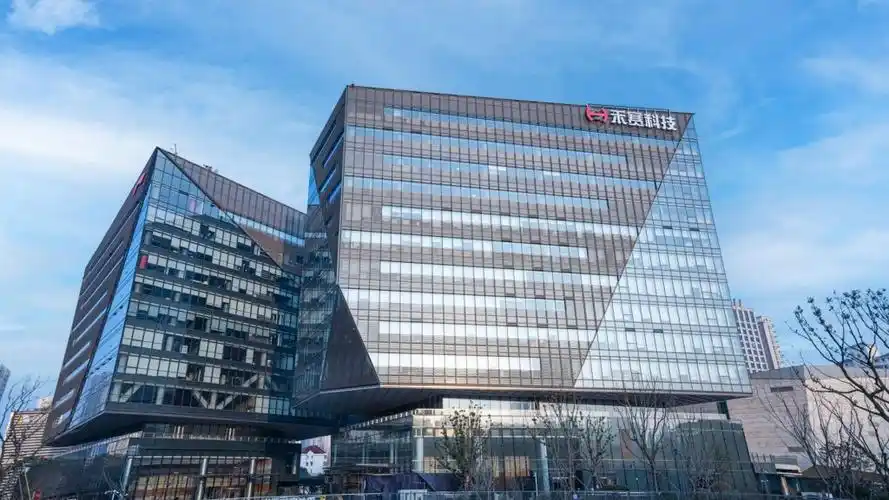
Hesai Group detailed the engineering methodology that underpins its market leadership at its Open Day on Wednesday, asserting that a strict adherence to physical first principles over prevailing industry trends has driven its financial resilience and technical direction. The company utilized the event to decode its roadmap, emphasizing a strategy of optimizing architectural logic rather than following market consensus.
The sensor maker disclosed that its mechanical LiDAR business, a technology widely dismissed by the industry as obsolete in favor of solid-state alternatives, generated RMB 1 billion yuan (US$138 million) in revenue in 2024. This financial performance validates Hesai’s contentious decision to refine the manufacturability of mature mechanical architectures, which continue to find markets in both automotive and non-automotive sectors, such as robotic appliances.
Addressing the 2025 industry pivot toward "digital LiDAR," Hesai pushed back against defining the technology solely by the adoption of Single-Photon Avalanche Diode (SPAD) sensors. Management argued that component choices must serve system-level safety—specifically addressing noise and interference—rather than chasing raw specifications, signaling a pragmatic approach to the next generation of sensor architecture.
The presentation underscores the impact of Hesai’s vertical integration strategy, particularly its early investment in proprietary chip development. By controlling the component stack from the ground up, the company claims it has secured a cost structure and supply chain stability that competitors relying on complex, non-integrated supply chains have struggled to match.
Challenging Industry Consensus
Hesai’s dominance in the mechanical LiDAR sector stems from a strategic divergence that began during the industry’s infancy. While early autonomous driving startups were dependent on Velodyne Lidar, which held a near-monopoly with complex, labor-intensive products, Hesai targeted the high-performance segment with a focus on manufacturability.
Instead of replicating the complex multi-board structures of incumbents, Hesai integrated 40 detectors onto a single circuit board for its Pandar40 series. This architectural simplification significantly reduced assembly difficulty and failure rates while improving performance. By addressing the "physics" of manufacturing rather than just optical specs, Hesai reversed the market dynamic, shifting from a landscape where Velodyne held a 90% share to one where Hesai claimed 70% by 2022.
The company applied a similar contrarian logic to the viability of mechanical radar in the automotive-grade era. Despite widespread industry belief that mechanical parts could not meet automotive durability standards or cost targets, Hesai re-engineered the technology to pass auto-grade certification in 2021. This persistence allowed the legacy technology to remain a significant revenue driver well into the current year, forcing competitors to reconsider the value of mechanical solutions.
The Chip-Level Transition
As the market moved toward mass production in 2017, Hesai established an in-house semiconductor division, betting that the future of LiDAR lay in Moore's Law-style cost reduction rather than exotic optical paths. This led to the termination of its high-performance 1550nm product line—a technically superior solution at the time—in favor of a 905nm chip-based route.
The company concluded that while 1550nm tech offered better immediate range, the scaling potential of 905nm architecture, driven by improvements in VCSEL (Vertical-Cavity Surface-Emitting Laser) power density and detection efficiency, provided a more sustainable cost-performance curve. The resulting AT series integrates self-developed core components, including drivers and analog-to-digital converters, forming a closed-loop system that balances performance with the strict cost constraints of automotive OEMs.
The Digital LiDAR Debate
With the industry coalescing around the concept of "digital LiDAR" in 2025, Hesai clarified its position on the technology, describing digitization as a capability spanning the entire signal chain rather than a specific component label. While the company successfully mass-produced an automotive-grade SPAD LiDAR in 2023 and possesses proprietary SPAD chips, it has chosen to use Silicon Photomultipliers (SiPM) for its latest ATX series.
Hesai argues that technical choices should be dictated by product requirements rather than buzzwords. While SPAD and SiPM are strictly similar as single-photon detectors, the company found that for certain long-range forward-facing applications, the SiPM architecture offered a more balanced safety profile. This parallels the "range extender vs. pure EV" debate in the auto industry, where the possession of both technologies allows a company to choose the optimal route based on market needs rather than technical necessity.
Engineering for Safety Limits
A key focus of the update was the "lower bound" of safety reliability, which Hesai prioritizes over "upper bound" specifications like total line count. The company highlighted inherent risks in traditional SPAD architectures, particularly "point cloud expansion" or ghosting, where highly reflective objects can trigger noise across multiple channels, potentially confusing autonomous driving computers.
Conventional solutions often use aggressive algorithms to filter this noise, which carries the risk of deleting real small obstacles—such as a child standing between traffic cones—from the sensor's view. To counter this, Hesai introduced an optical isolation technique that ensures channel independence, preventing cross-talk at the hardware level.
This approach requires a massive increase in laser components, which Hesai manages through a matrix-style integration on its proprietary chips, similar to the evolution of LED matrix headlights. By solving these physical problems at the silicon level, the company aims to eliminate false positives and negatives, ensuring the sensor can serve as a reliable safety backstop for visual systems.