
Honor Bets on 'Robot Phone' to Reclaim Premium Ground — But Pre-Orders Don't Pay Bills
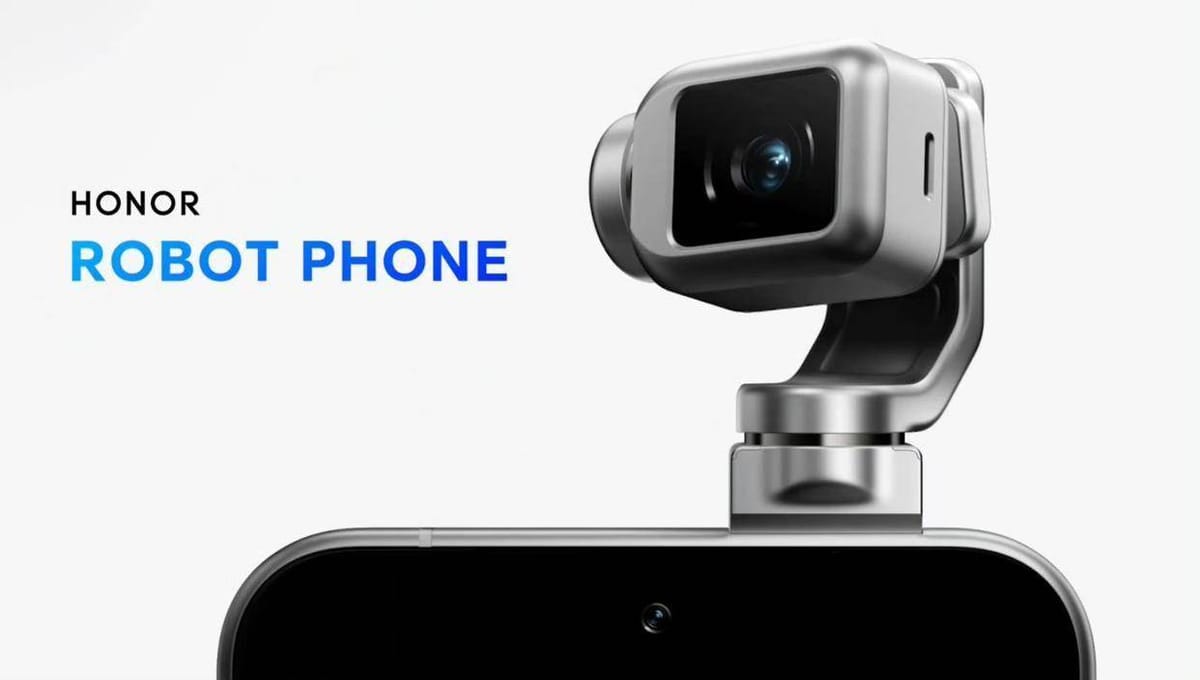
Honor is staking its premium-market revival — and its IPO narrative — on a mechanically augmented smartphone that integrates a four-degree-of-freedom titanium gimbal and an intent-driven operating system, betting that hardware novelty can accomplish what years of software-layer AI features could not.
The device, formally dubbed the Robot Phone, has generated more than 200,000 cross-channel reservations as of July 28, 2026, with first-day pre-order volumes exceeding any prior Honor flagship. The marketing moment arrived organically: players from Spain's FIFA World Cup-winning squad were photographed holding the device during post-match celebrations. The phone is scheduled for official launch on August 12. Yet pre-order heat has historically been a poor predictor of sustained premium pricing power — a distinction that matters enormously for a brand that IDC data places sixth in the domestic market, with Q2 2026 shipments declining 9.5% year-on-year.
AI Homogeneity Forces Honor to Differentiate Through Hardware
The Robot Phone's strategic logic becomes legible only against the backdrop of a commoditized AI-phone landscape. Over the past 18 months, virtually every major Android OEM — including Xiaomi, OPPO, and vivo — has shipped devices featuring on-device model inference, multi-modal interaction, and AI-assisted photography. The competitive moat, however, eroded almost immediately: capabilities such as AI object erasure, image expansion, and call summarization, once exclusive to a single vendor, typically propagate across the ecosystem within one or two software update cycles.
The underlying model layer has converged even faster. DeepSeek, Qwen, Doubao, and Tencent Hunyuan are now integrated by multiple terminal manufacturers simultaneously, effectively flattening the baseline AI capability gap between brands. Honor's own absence from China's Ministry of Industry and Information Technology's inaugural on-device large-model filing list underscores the company's relative disadvantage in pure software AI differentiation.
Honor's response is to sidestep the software arms race entirely and redefine the competitive axis around physical form factor. The Robot Phone's titanium 4DoF mechanical gimbal — mounted at the top of the chassis — is the most visible expression of this pivot. The company frames the device under its "embodied intelligence" concept, positioning the phone as a physical agent rather than a passive display.
Agentic OS Carries the Heavier Burden — and the Greater Risk
The gimbal is the attention-getter; the Agentic OS is the long-duration bet. Honor describes Agentic OS not as an AI assistant layered onto Android, but as a ground-up reconstruction of the operating system stack — spanning hardware, kernel, model, framework, interaction, and ecosystem layers — with "intent" and "task" as the organizing primitives rather than apps and notifications. Kernel-level resource management is extended to cover AI models and agents alongside conventional memory and compute.
The ambition is architecturally significant, but the execution risk is commensurately high. Honor does not control a proprietary advanced-node chip — unlike Huawei, which leverages its in-house Kirin series — and it operates within the Android ecosystem rather than a fully independent OS stack comparable to HarmonyOS. The Agentic OS proposition therefore depends on Honor's ability to extract differentiated behavior from commodity silicon and a shared kernel, a constraint that limits the depth of system-level integration competitors cannot replicate.
For sticky human-machine interaction, the evidence from Doubao's agent-phone experiment suggests that novelty alone is insufficient. Sustained engagement requires natural dialogue continuity, persistent personalized memory, low-friction interaction design, and a coherent persona — none of which are hardware-dependent. Robot Phone's gimbal provides a physical anchor for these features, but the software loop must close independently.
The Premium Gap Quantifies the Challenge
The commercial stakes crystallize in the sales data. Market intelligence circulating within the industry suggests Honor's Magic 8 series, on sale since October 2025, has accumulated approximately 1.5 million units. Over the same horizon, Huawei's Mate 80 series reached roughly 7.8 million units within eight months of launch — a ratio of roughly 5:1 in Huawei's favor within the same domestic premium segment.
Apple defends its premium position through silicon-OS-ecosystem vertical integration; Huawei through Kirin, HarmonyOS, imaging capabilities, and a deeply entrenched enterprise user base. Honor's brand equity, by contrast, remains anchored in the mid-range value segment in consumer perception — a positioning gap that no single product launch has yet bridged.
Industry consensus places the Robot Phone's top configuration between RMB 10,000 and RMB 15,000 (approximately US$1,389–US$2,083), a price band that structurally limits addressable volume relative to Honor's conventional RMB 4,000-plus flagship tier. CEO Li Jian, who has led Honor for just over a year, has publicly expressed confidence in returning the brand to the domestic top three — a target that appears aspirational given the current sixth-place ranking.
The Robot Phone's contribution to that goal will be measured on three metrics: launch-week sell-through, price stability over the subsequent six months, and whether secondary-market premiums emerge. A secondary-market premium would signal genuine scarcity demand rather than speculative pre-ordering — the single most credible indicator that Honor has shifted consumer perception.
Competitive Moats Remain Shallow as Rivals Circle
The durability of the Robot Phone's differentiation faces structural pressure from two directions. First, the mechanical gimbal concept is replicable. Honor itself has demonstrated the speed of hardware convergence: when satellite connectivity first appeared as a competitive differentiator, Honor moved quickly to match it. Competitors will apply the same calculus to the gimbal if market response is strong. Unlike proprietary chip architecture or a closed OS ecosystem, a titanium mechanical mount does not constitute an insurmountable manufacturing barrier for well-capitalized rivals.
Second, the imaging-robot concept is not Honor's alone to define. Insta360 founder Liu Jingkang has articulated a long-term vision for a "photography robot" integrating camera hardware, imaging algorithms, drone mechanics, and gimbal systems into an autonomous shooting agent — a product philosophy that converges directly with the Robot Phone's positioning. DJI and dedicated mirrorless camera manufacturers continue to raise the bar for portable professional imaging, fragmenting the addressable market for any single smartphone's camera proposition.
IDC data adds a macro headwind: China's smartphone market has contracted for five consecutive quarters, with the year-on-year decline in 2026 potentially exceeding 10%. In a shrinking market, volume gains are zero-sum, and premium pricing must be defended against aggressive discounting by rivals with stronger brand equity in that segment.
Verdict: A Strategic Bet With Long-Term Constraints
Robot Phone accomplishes the minimum required outcome for Honor: it regenerates media coverage and reframes the brand's identity around hardware innovation rather than value pricing. Under Li Jian's "Alpha Strategy," Honor is attempting to reposition from a smartphone manufacturer to an AI terminal ecosystem company — and the Robot Phone is the most concrete product expression of that ambition to date.
But the device's ceiling is bounded by structural constraints that one product cycle cannot resolve. Honor lacks the chip sovereignty, OS independence, and premium brand equity that allow Apple and Huawei to defend margin through customer lock-in. A successful Robot Phone launch — defined as stable pricing, cumulative sales meeting internal targets, and measurable improvement in brand perception surveys — would strengthen Honor's IPO story and provide a foundation for the next product generation. A stumble would accelerate the timeline pressure on management.
The 200,000 pre-orders confirm that consumers are willing to watch. The question that August 12 and the months following will answer is whether they are willing to pay — and keep paying.
Related Coverage:
Honor's ROBOT PHONE Targets August Mass Production, Setting Up Direct Clash With Apple's Q3 Cycle